Stone Fruit Season: Dairy-Free Peach, Plum, Apricot, and Nectarine Frozen Desserts
Published on August 31, 2026
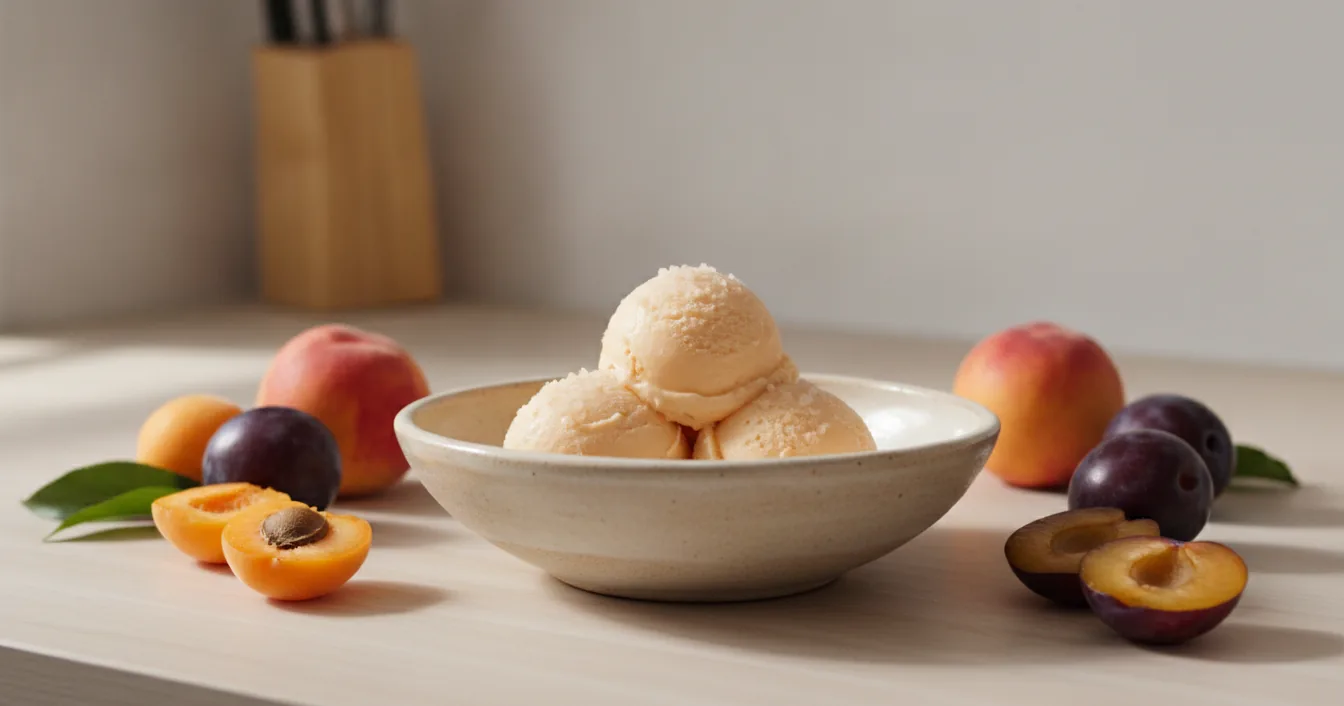
The last stretch of August is the only time of year a peach is genuinely worth freezing, and it is also the moment most people ruin one. The instinct is to treat it like the strawberries you churned in June: purée, sweeten, freeze. Do that and you get a pale icy block that tastes faintly of peach and mostly of cold.
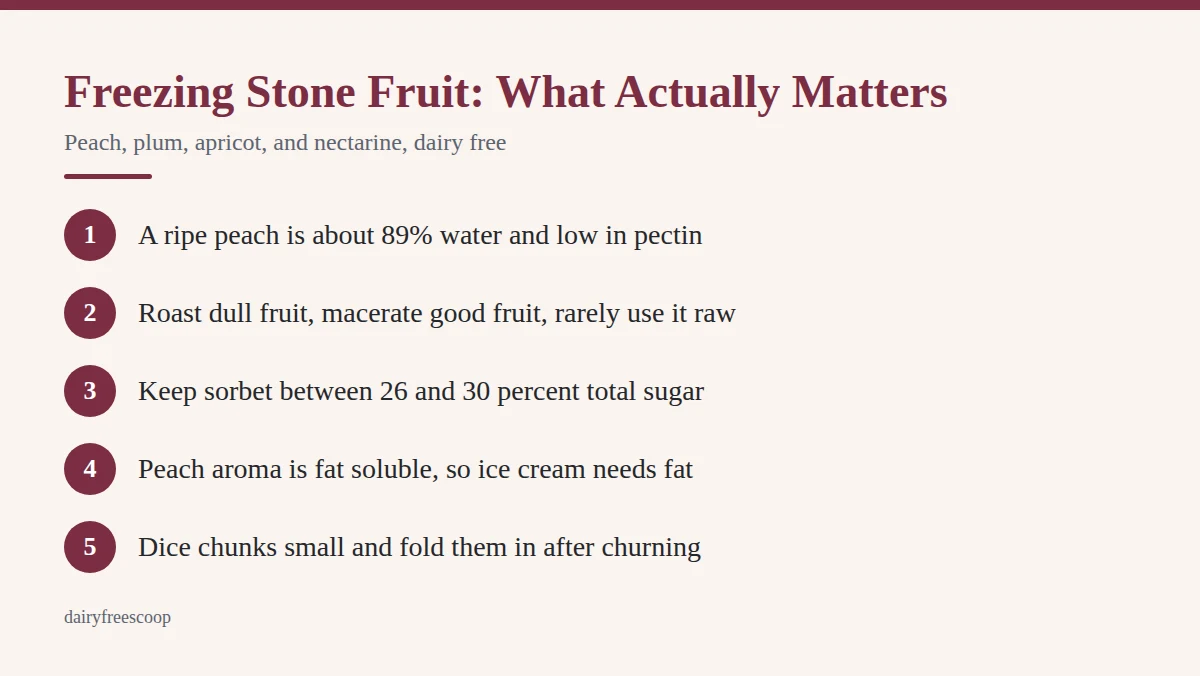
Stone fruit does not behave like berries or melon in a frozen base. Peaches, plums, apricots, and nectarines run high on water, low on pectin, and carry their aroma in a family of compounds that goes quiet the second the temperature drops. Every technique below exists to work around one of those three facts.
Why Stone Fruit Is Hard to Freeze
Water. A ripe peach is roughly 89 percent water, and that water arrives in your base as free water with almost nothing holding it. Free water is what becomes ice crystals. Berries land in a similar range but bring seeds, skins, and fiber that physically obstruct crystal growth. A peeled, puréed peach brings none of that.
Pectin. Apples, citrus, and quince carry enough pectin to thicken a purée on their own. Stone fruit does not, and the little it has sits in the skin and the layer just beneath it. This is why you press the purée through a sieve by hand rather than straining it clear: you want the pulp and fiber, not a clean juice.
Aroma. Peach smells like peach largely because of lactones, gamma-decalactone above all, and lactones are both volatile and fat-soluble. Cold suppresses volatility, so any frozen dessert reads as less aromatic than the batter did at room temperature. A sorbet, having no fat, has nowhere to park those lactones either. That single fact drives most of the decisions in this article.
Sugar is your main lever against the first problem, because it depresses the freezing point and leaves less of the water frozen at serving temperature. The working window for a fruit sorbet is about 26 to 30 percent total sugar by weight of the finished mix. Under that it sets like a brick, over it never firms up at all. Where each sweetener sits on that curve is covered in the reference on sugars and freezing.
Roast, Macerate, or Leave It Raw
Three ways to prep the fruit, and they are not interchangeable.
| Treatment | What it does | Use it for |
|---|---|---|
| Raw purée | Keeps the fresh top notes, adds the most water | Apricot, very ripe nectarine, anything you want tasting bright |
| Macerated (tossed with sugar, 30 to 60 min) | Draws juice out, firms the fruit slightly, concentrates flavor with no heat | Peach and nectarine chunks, ripples, fruit going into a churned base |
| Roasted (400°F, 25 to 35 min) | Drives off water, browns the sugars, deepens flavor, loses the fresh note | Underripe or bland fruit, peach ice cream, plums |
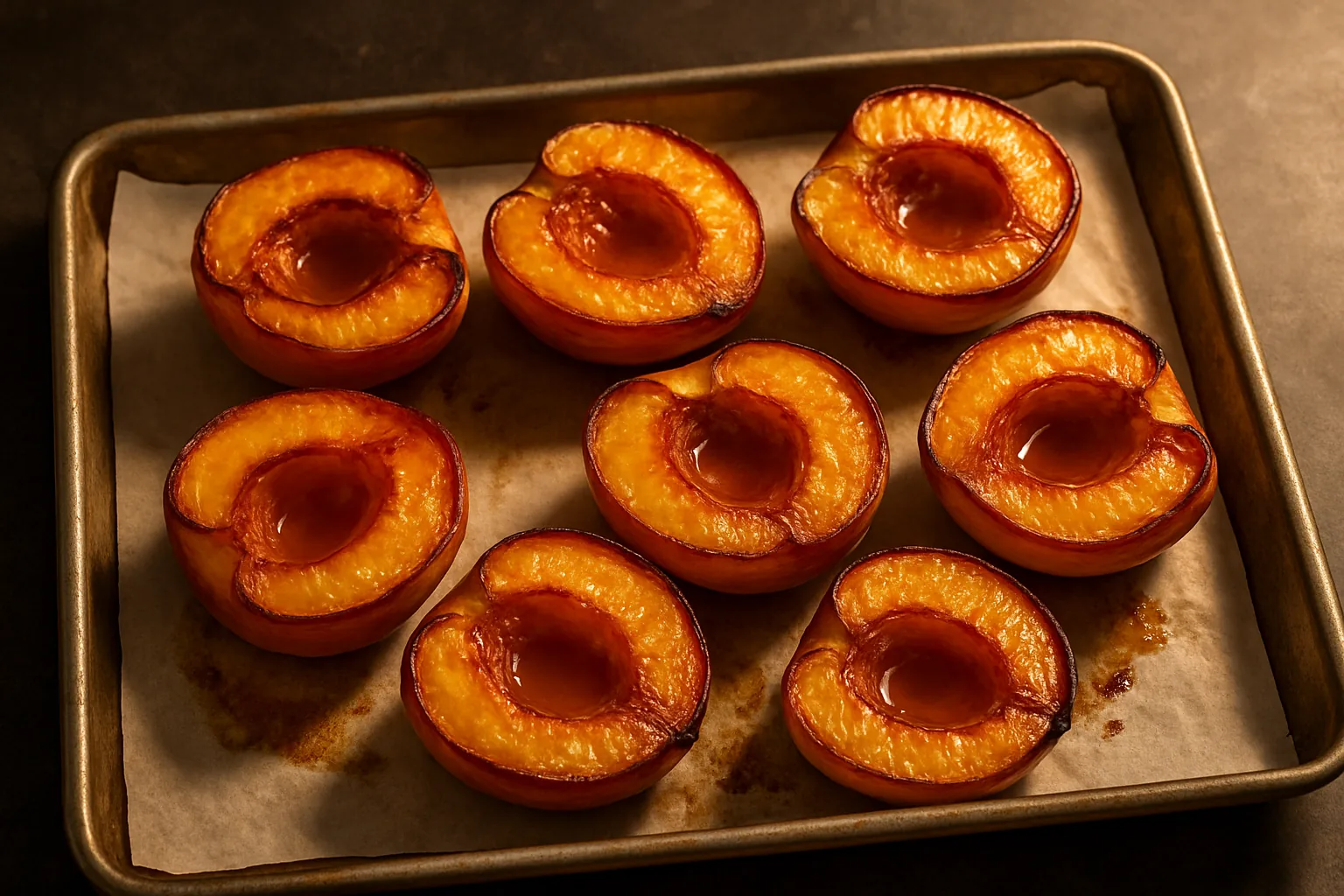
Roasting is the single highest-leverage move on a disappointing peach. Halve and pit the fruit, set it cut side up in a dish, and roast until it slumps and the edges caramelize. You lose water, gain browning compounds, and end up with a purée that survives freezing with its flavor intact. The tradeoff is real: roasted peach tastes like cobbler, raw peach tastes like summer. Some of the best batches use both, roasted purée for the base and macerated raw fruit folded in at the end.
Maceration is the underrated one. Twenty minutes of sugar on cut fruit pulls out a small pool of intense syrup and leaves the flesh a bit firmer, which is exactly what you want from anything you intend to fold into a churned base.
Apricot Sorbet: Four Ingredients and No Machine
Apricot is the stone fruit that carries a no-churn dessert best. It runs higher in acid and lower in water than peach, and its flavor is assertive enough to survive without fat propping it up.
The version worth copying is Minimalist Baker’s: 4 cups chopped apricots frozen solid on a sheet pan, then processed with 1/3 to 1/2 cup coconut cream, 1/4 cup agave nectar, and 1/2 teaspoon lemon zest. Pulse the frozen fruit to shreds first, then add the rest and run it until it turns creamy.
The reason it works has nothing to do with luck. You never let large ice crystals form in the first place, because the water is already frozen inside the fruit’s own cell walls and the blade shatters it into fragments too small to feel. The coconut cream supplies just enough fat to coat the tongue. Agave is mostly fructose, which depresses the freezing point harder than sucrose does, so the finished sorbet stays soft rather than setting into a slab.
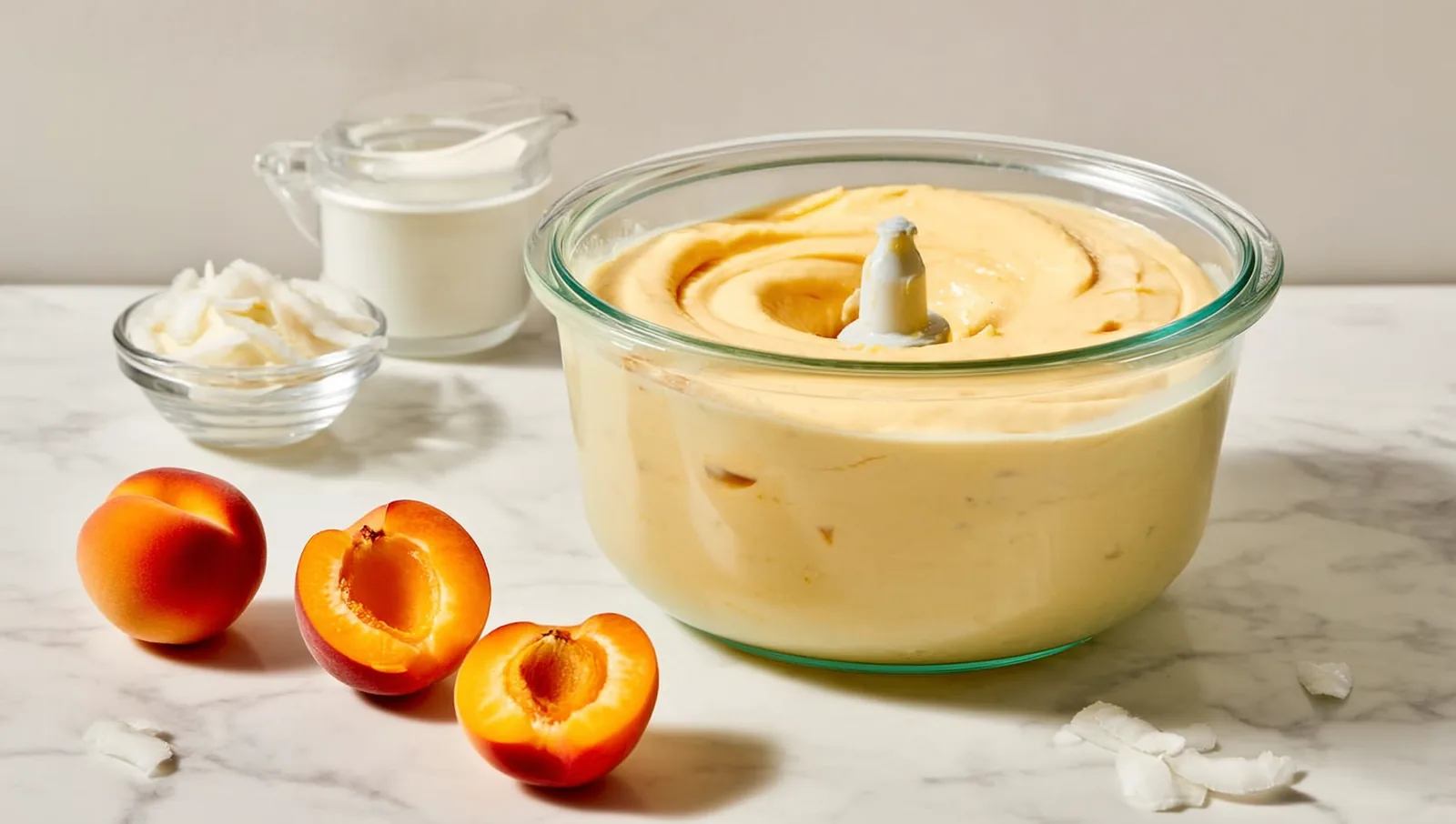
Strictly, coconut cream makes this a sherbet rather than a true sorbet, a distinction the gelato and sorbet primer sorts out. Nobody at your table will care. If coconut is off the menu, blended raw cashews thinned to cream consistency do the same job; the guide to plant bases covers the swaps and their allergen profiles.
Peach Ice Cream Needs Fat, Not More Peach
When a homemade peach ice cream tastes weak, the reflex is to add more peach. That adds more water, makes the texture icier, and barely moves the flavor. The actual fix is fat, because the lactones doing the peach work are fat-soluble and need somewhere to dissolve.
A base that holds up, sized for a standard quart machine:
- 2 lb ripe peaches, halved, pitted, roasted at 400°F for 30 minutes, skins slipped off after
- One 13.5 oz can full-fat coconut milk
- 1/2 cup coconut cream or thick cashew cream
- 2/3 cup cane sugar
- 1 tablespoon lemon juice and 1/4 teaspoon salt
- 1/4 teaspoon locust bean gum
Blend everything smooth, chill overnight (this matters more than people expect, since a warm base spends its first minutes in the machine growing crystals instead of freezing), then churn 20 to 25 minutes and harden flat for six hours. The locust bean gum is doing the pectin’s absent job of binding free water, and a quarter teaspoon per quart is the standard dose. The rundown of gums and emulsifiers explains which one suits which base.
One optional trick: a scant 1/4 teaspoon of almond extract. Stone fruit pits and bitter almonds share benzaldehyde, so a trace of almond reads to your palate as more peach rather than as almond. Overdo it and it reads as marzipan, so start under.
Plums Are a Skin Fruit, Nectarines Are Peaches Without the Fuzz
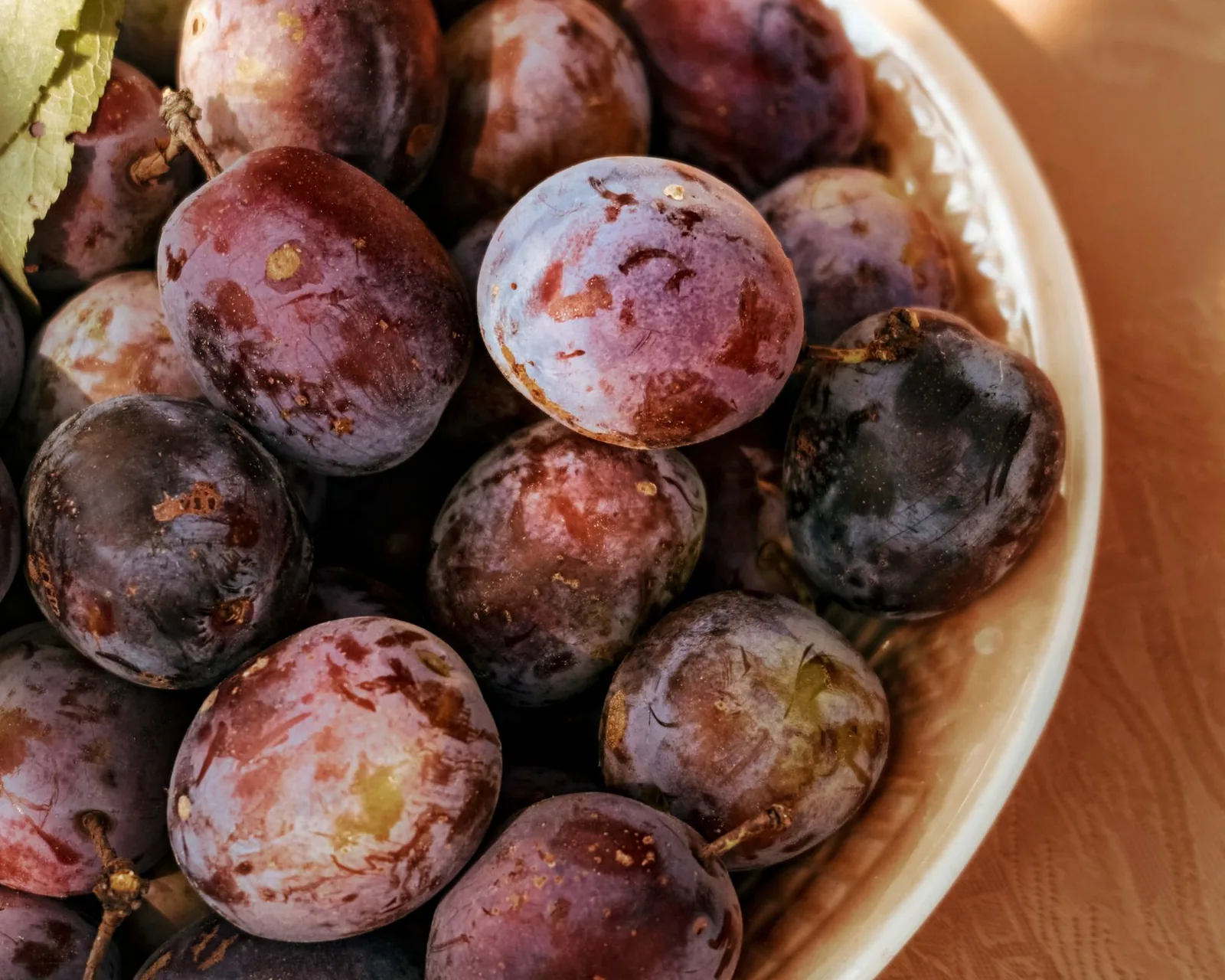
Plum keeps its color, its tannin, and most of its structure in the skin. Never peel a plum for sorbet. The skin is why a plum sorbet can hold together without any added fat, and it is also why an unroasted plum base can taste astringent. Roasting mellows the tannin and turns the color from pink to something closer to garnet. Plums vary wildly by variety, so taste before you commit to a sugar quantity.
Nectarine is genetically a peach missing its fuzz, and it behaves like one. It usually carries slightly more acid and a touch more aroma, and the skin is thin enough to leave on, which buys back a little of the fiber a peeled peach loses. Anywhere this article says peach, a nectarine works with no adjustment beyond skipping the peeling step.
How to Stop the Fruit Chunks From Turning to Gravel
This is the complaint that ends most stone fruit experiments. A chunk of raw fruit folded into a base is a lump of nearly pure water, and in a freezer it becomes a pebble of ice with a texture nothing like the soft dessert around it. Four fixes, in order of effectiveness:
- Macerate and drain. Toss the diced fruit with sugar, let it sit an hour, then drain the juice off and reduce it to a syrup on the stove. Fold the syrup into the base and the drained fruit back into the fruit. You have moved water out of the chunk and flavor into the base.
- Coat the chunks before folding. A tablespoon of bourbon or a thick syrup per cup of fruit depresses the freezing point of the chunk itself so it stays chewable. Keep the total pour small, since alcohol has a hard ceiling in frozen desserts.
- Cut smaller than feels right. A quarter-inch dice reads as texture. A half-inch dice reads as ice.
- Fold at the very end, after churning, never into the liquid base.
If none of that appeals, run a ripple instead. A thick roasted peach or plum reduction swirled through the finished ice cream gives you concentrated fruit with no free water at all, and it is the more forgiving approach for anyone still working through the homemade base fundamentals.
Buying the Fruit, and Freezing It for December
Peaches are climacteric, so they keep ripening after harvest, but they do not manufacture new sugar off the tree. What changes is that they soften, shed acid, and develop aroma, which makes them taste sweeter without actually being sweeter. So buy by smell. A peach with no scent at the stem end will never develop one, and the red blush on the shoulder is a variety trait, not a ripeness signal.
Surplus fruit freezes well if you prep it first. Slice, toss with lemon juice and a spoonful of sugar, freeze in a single layer on a sheet pan, then bag. Sugar-coated slices frozen this way go straight into the no-churn food processor method above, which means the apricot sorbet is a February dessert as easily as an August one.
Commercially, dairy-free stone fruit flavors are rare and seasonal. Sorbet lines tend to run berry, citrus, and mango year round because those purées are cheap and stable, with peach or apricot showing up as summer limited runs if at all. Jeni’s is one of the more reliable places to find a genuine fruit sorbet next to the coconut-based pints, and the breakdown of their dairy-free line covers which of those sorbets are truly free of milk and which share equipment with the dairy flavors. For anything else on the shelf, the sorbet label is a style descriptor, not a dairy-free guarantee.
Further reading (sources)
- Minimalist Baker on the four-ingredient apricot sorbet that skips the machine entirely
- International Journal of Food Science and Technology for the review of peach aroma volatiles and where lactones fit
- Kitchen Projects with Nicola Lamb on sorbet sugar percentages and why the window is narrow
- Sense & Edibility on why pressing purée through a sieve by hand saves the texture
- Iowa State University Extension on which fruits actually ripen after picking and which only soften
- The Yummy Life for what roasting does to a mediocre peach before it hits the base