Plant Milk Bases in Dairy-Free Ice Cream: A Complete Guide to Coconut, Oat, Almond, Cashew, Soy, and Pea
Published on June 7, 2026
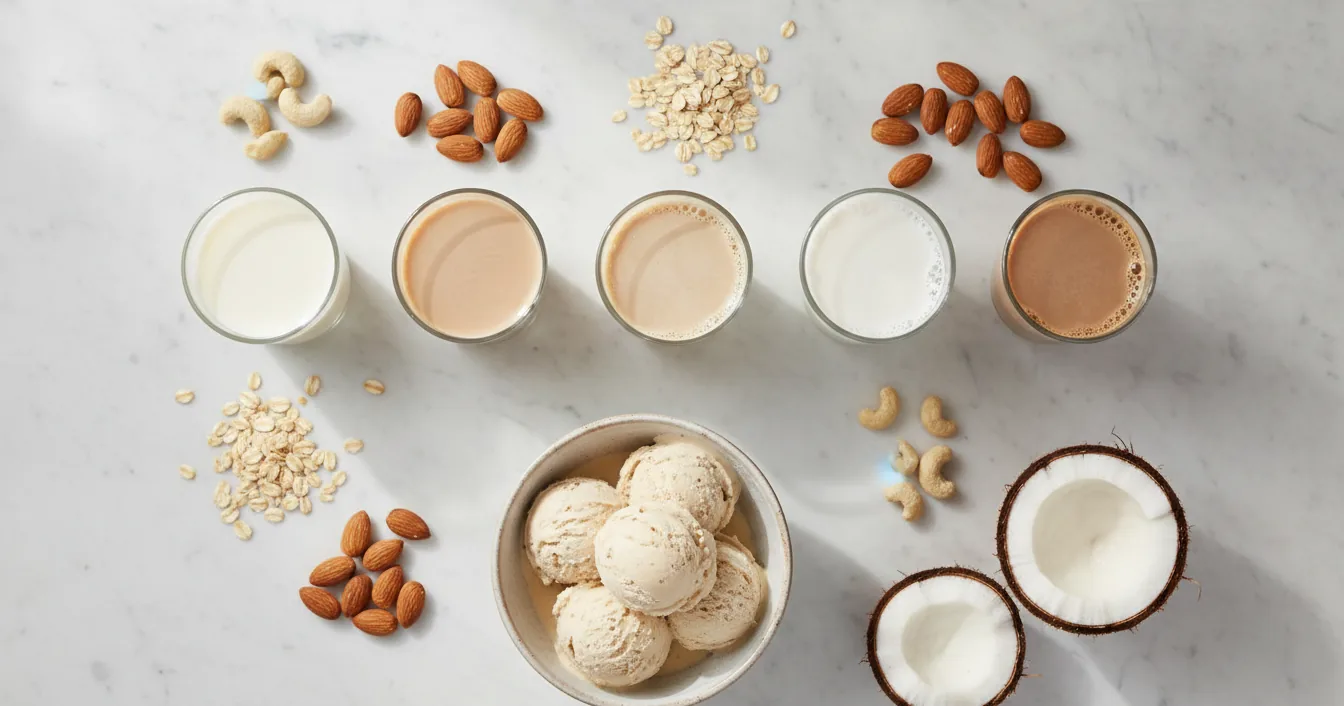
Before a dairy-free pint has a flavor, a sweetener, or a single stabilizer, it has a base. The plant milk or cream underneath everything else is the first and biggest decision a formulator makes, because it sets the fat, the protein, the natural flavor, and the allergen profile that every later ingredient has to work around. Coconut scoops nothing like almond. Soy freezes nothing like oat. The plant-based dairy category is expanding quickly, with one 2023 review projecting production growth above 18 percent, and the freezer case now carries at least six common bases that behave in genuinely different ways. Here is a plain-English guide to all six, what each one does to the scoop, and which base to reach for depending on what you are making.
What the Base Actually Does
In dairy ice cream, milk brings two things at once: butterfat for richness and slow melt, and casein and whey protein for structure. A plant base has to supply both jobs from a single ingredient, and almost none of them balance the two the way milk does.
Fat is what makes a scoop feel creamy and melt slowly on the tongue. It coats the ice crystals and keeps them small, so a high-fat base like coconut or cashew tastes rich with very little help. Protein builds firmness and body, which is why a soy or pea base sets dense and resists melting even at lower fat. A thin, low-fat, low-protein base like almond or rice brings neither in quantity, so it freezes hard and icy unless a formulator adds oil, extra solids, or a stabilizer system to compensate.
Two things the base does not do, worth clearing up now. It does not set the sweetness or, more importantly, the freezing point. That is the sugar’s job, covered in the sweetener reference. And it does not, on its own, guarantee a smooth scoop, which is where the stabilizer and emulsifier system earns its keep. The base sets the raw material. Everything after it shapes that material.
The High-Fat Bases: Coconut and Cashew
These two arrive with the most fat, which is why they dominate the premium end of the freezer case.
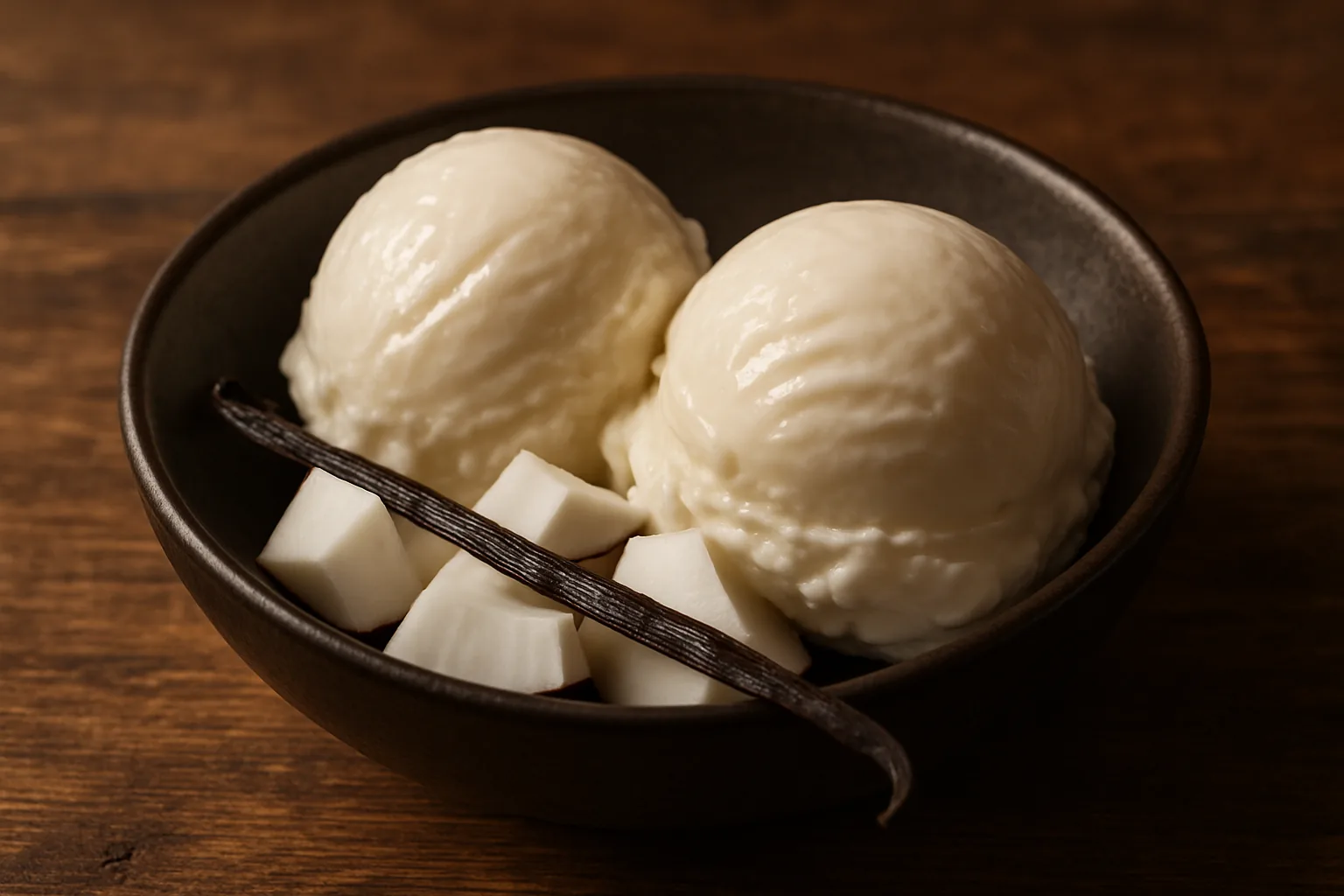
Coconut is the richest and most widely used base in the category. Full-fat coconut cream carries enough saturated fat to stand in for butterfat almost directly, giving a dense, slow-melting scoop with very little engineering. A 2023 study in Foods showed that even a low-fat coconut base, built from cold-pressed coconut oil by-product, could be tuned to hit full-fat quality on texture and sensory scores, which tells you how forgiving the fat is to work with. The trade-offs are two. First, that fat is highly saturated. A survey of the Swedish market found coconut-based frozen desserts ran higher in saturated fat and energy than the dairy versions they replaced, a point the healthier-than-dairy breakdown takes apart axis by axis. Second, coconut carries a flavor. It reads as coconut, faint in a good formula but never fully neutral, which is why it pairs better with chocolate, caramel, and tropical fruit than with a delicate vanilla. For labeling, the FDA treats coconut as a tree nut, so it appears on the allergen statement even though most tree-nut-allergic people tolerate it.
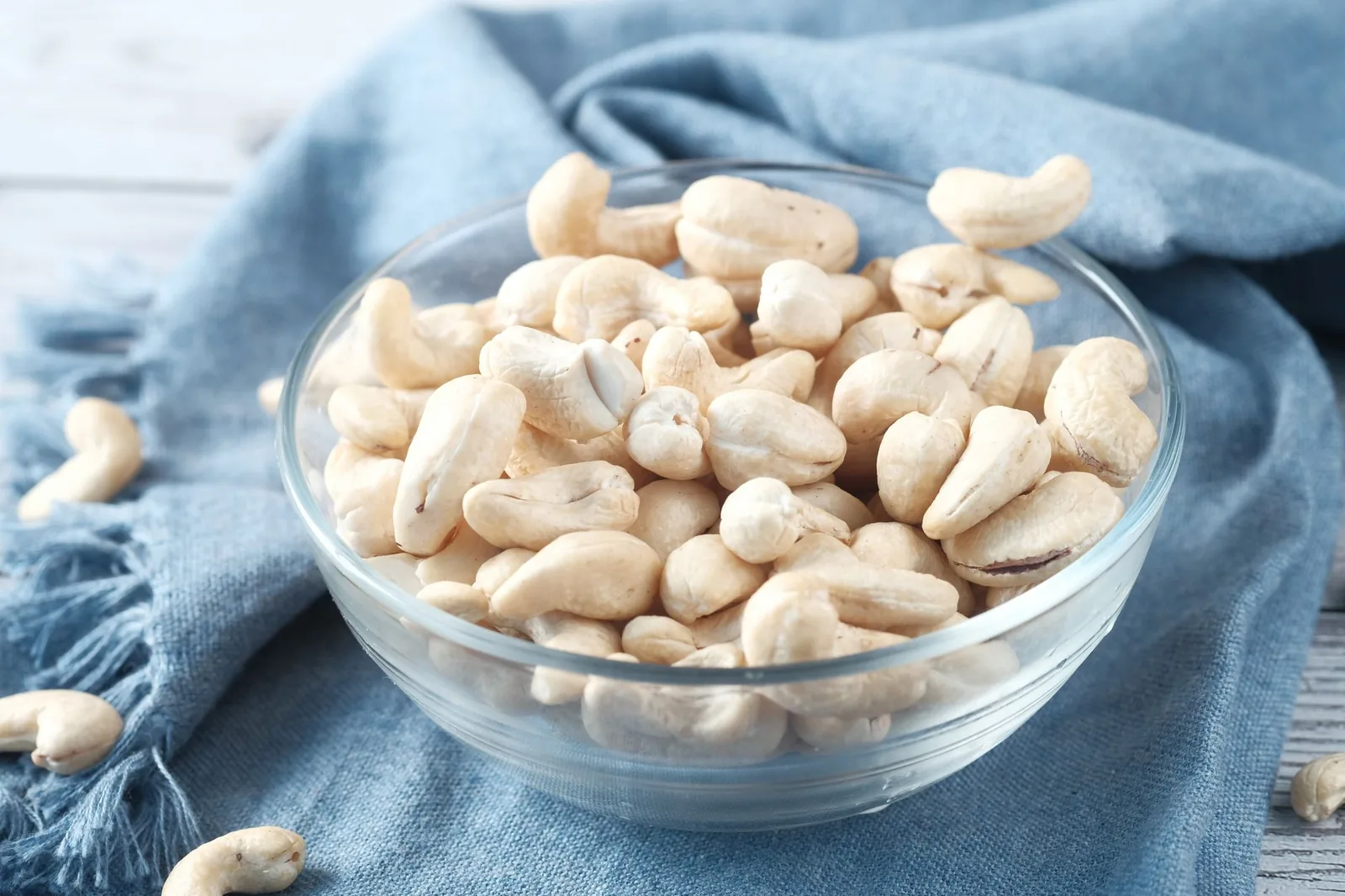
Cashew is the other rich option, and the creamiest of the nut bases. Blended whole from soaked nuts, cashews make a smooth, neutral cream with none of the chalkiness of almond, which is why so many no-churn and small-batch recipes lean on them. The flavor is mild enough to vanish behind vanilla or fruit. The catch is cost (cashews are expensive, so cashew pints sit at the top of the price range) and the tree-nut allergen flag. A sensory study pairing cashew with pea protein found the blend scooped more cohesive and less slippery on the spoon than a dairy reference, a useful trick for adding backbone to an otherwise soft nut base.
The Light Bases: Oat and Almond
Lower in fat, lighter on the tongue, and the two friendliest to common allergies.
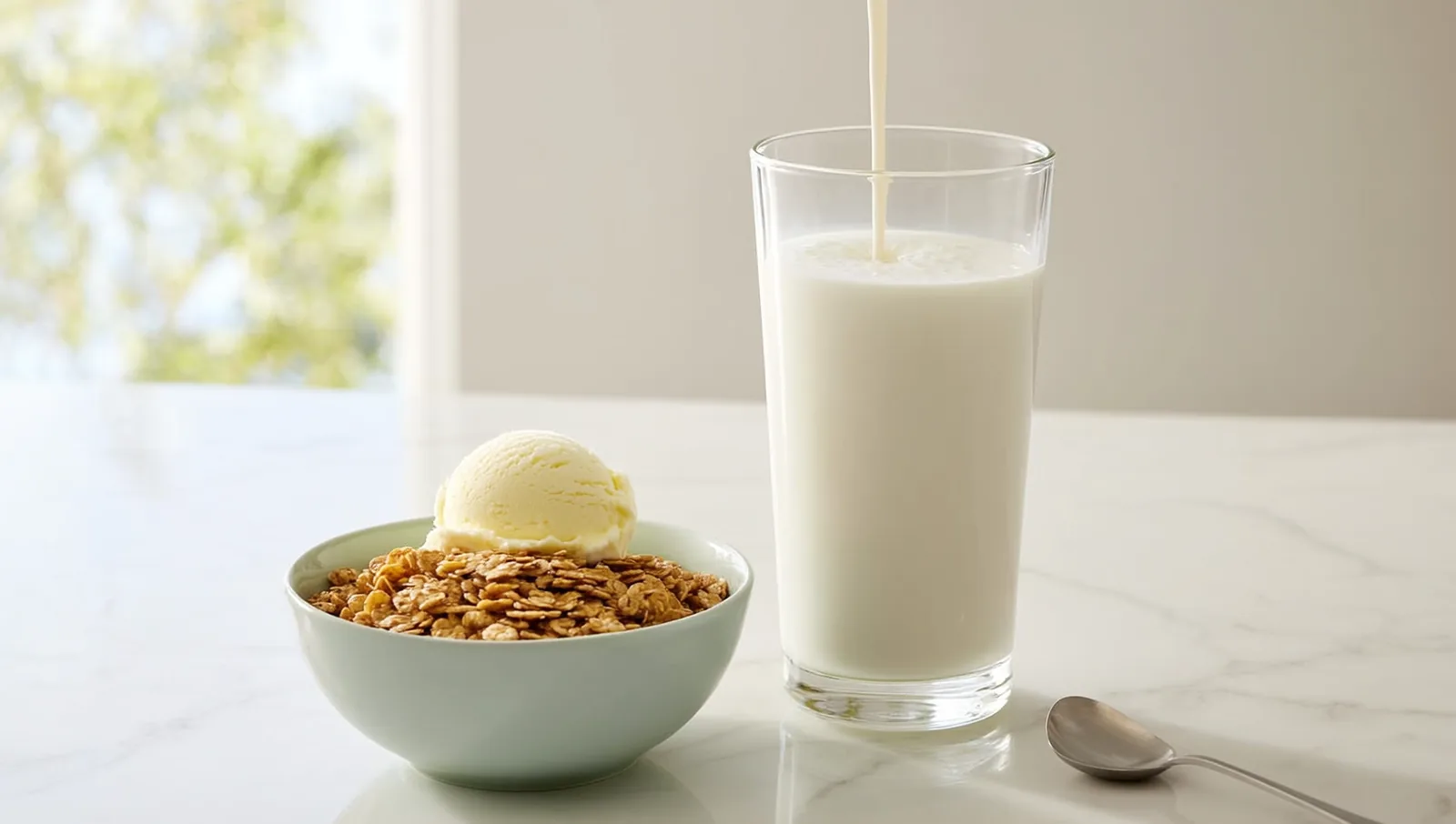
Oat has become the default neutral base, for good reason. It is naturally creamy for its fat level, thanks to starch and beta-glucan that lend body, and enzyme-treated oat milk carries a gentle sweetness that flatters almost any flavor. It is free of the major nut and soy allergens, and it has one of the lightest environmental footprints of the common bases, using far less water than almond. The one allergen caveat is gluten: oats are often cross-contacted with wheat during milling, so only certified gluten-free oat pints are safe for celiac eaters, a distinction the multi-allergy family guide walks through. Oat is the safe pick for a clean, crowd-pleasing scoop, and it shines in soft serve.
Almond is the lightest and thinnest base on the shelf, and the most demanding to work with. On its own, almond milk is mostly water, so an almond base freezes hard and icy unless it is boosted. A 2026 study found exactly that: an almond formula enriched with date fruit gained real melting resistance and the longest first-drip time in the trial, while the plainer versions ran softer and melted fastest. The flavor is mildly nutty and clean, which suits fruit and lighter profiles. Two cautions come with it: almond is a tree-nut allergen, and it carries the heaviest water footprint of any base here, which dents its eco-friendly reputation.
The Protein Bases: Soy and Pea
These two lead with protein instead of fat, so they set firm and melt slowly even when lean.
Soy is the original plant base and still the nutritional standout. It is the one plant milk whose protein content rivals dairy, which is why the Swedish market survey singled soy out as the exception to the rule that plant alternatives run lower in protein. That protein builds structure. A study of soy-based ice cream found it scooped harder and more consistent than the dairy control, with a lower glass-transition temperature and more frozen water in the mix. The downsides are a faint beany note that needs masking and soy’s status as a major allergen. On cost and sustainability it does well, sitting among the cheaper, more efficient bases.
Pea is the newest arrival and, in many ways, the cleverest. Pea protein brings the same firm, slow-melting structure as soy without being one of the top allergens, which has made it a favorite for allergy-conscious brands. It is usually blended with a fat source rather than used alone, since pea protein on its own is lean. Paired with coconut or cashew it adds cohesive body, and it is the same protein doing structural work in many of the firmest dairy-free pints on the market. The one knock is flavor: raw pea protein can carry a vegetal off-note, so a pea base lives or dies on how well the formula masks it.
Beyond the Big Six
A few less common bases round out the shelf. Rice milk is naturally sweet but very thin and low in protein, so it usually plays as a blend partner rather than a solo base. Sesame has been studied as a creamy, protein-bearing option, often combined with soy. Avocado is an emerging novelty: a 2021 study built a stable probiotic ice cream on an avocado base, trading on its natural fat and smooth texture. And many of the best commercial pints are not single-base at all but blends, marrying a fat source to a protein source to capture the strengths of both. If you churn at home, you can do the same thing by starting from a homemade nut or oat milk and custom-blending it to taste.
At a Glance
| Base | Fat / richness | Natural flavor | Allergen | Rough cost | Best for |
|---|---|---|---|---|---|
| Coconut | High | Coconut note | Tree nut (FDA) | Mid | Chocolate, caramel, rich pints |
| Cashew | High | Neutral | Tree nut | High | Smooth no-churn, premium vanilla |
| Oat | Low to medium | Mild, lightly sweet | None (gluten cross-contact) | Low to mid | Neutral flavors, soft serve |
| Almond | Low | Light, nutty | Tree nut | Mid | Fruit, lighter scoops |
| Soy | Low to medium, high protein | Faint beany | Major allergen | Low | Protein, firm structure |
| Pea | Low, high protein | Vegetal if unmasked | Not a top allergen | Mid | Protein, allergy-friendly firmness |
Which Base Wins for Which Job
- Chocolate and caramel: coconut. The richness stands up to bold flavors and the coconut note disappears easily.
- Vanilla and delicate flavors: cashew or oat, both neutral enough to let the flavor lead.
- Fruit and sorbet-style scoops: almond or oat, light bases that do not fight the fruit.
- High protein: soy or pea, the only bases that deliver real protein and firm structure together.
- Soft serve: oat, for its naturally smooth, neutral body.
- Allergy-friendly without nuts or soy: oat or pea, the two that dodge the biggest allergen flags (mind the gluten cross-contact on oats).
The Label Lens
Next time you turn a pint around, read the base first. It is usually the front-of-pack headline (made with coconut, oat, almond) and it tells you more about how that pint will scoop than any other single word. Coconut and cashew signal rich and creamy. Oat signals neutral and easy. Almond signals light and possibly icy. Soy and pea signal firm, slow-melting, and protein-forward. None of that settles whether the pint is sweetened well, smoothed properly, or genuinely vegan as well as dairy-free, but it is the right place to start. Read the base, then read the rest.
Further reading (sources)
- Foods on how a coconut oil by-product base reaches full-fat texture at low fat
- Food Science and Nutrition for the firm, slow-freezing structure of a soy and sesame base
- Plant Foods for Human Nutrition with why almond milk ice cream leans on dates to resist melting
- Current Research in Food Science on where plant bases beat and trail dairy on nutrition
- Journal of Texture Studies covering how cashew-pea and coconut-pea blends scoop against dairy
- Foods for a probiotic ice cream built on an avocado base
- Foods in a review of where the plant-based dairy market is heading
- Minimalist Baker on making your own dairy-free milks at home