Is Dairy-Free Ice Cream Actually Healthier? What the Research Says About Sugar, Fat, Protein, and Micronutrients
Published on May 16, 2026
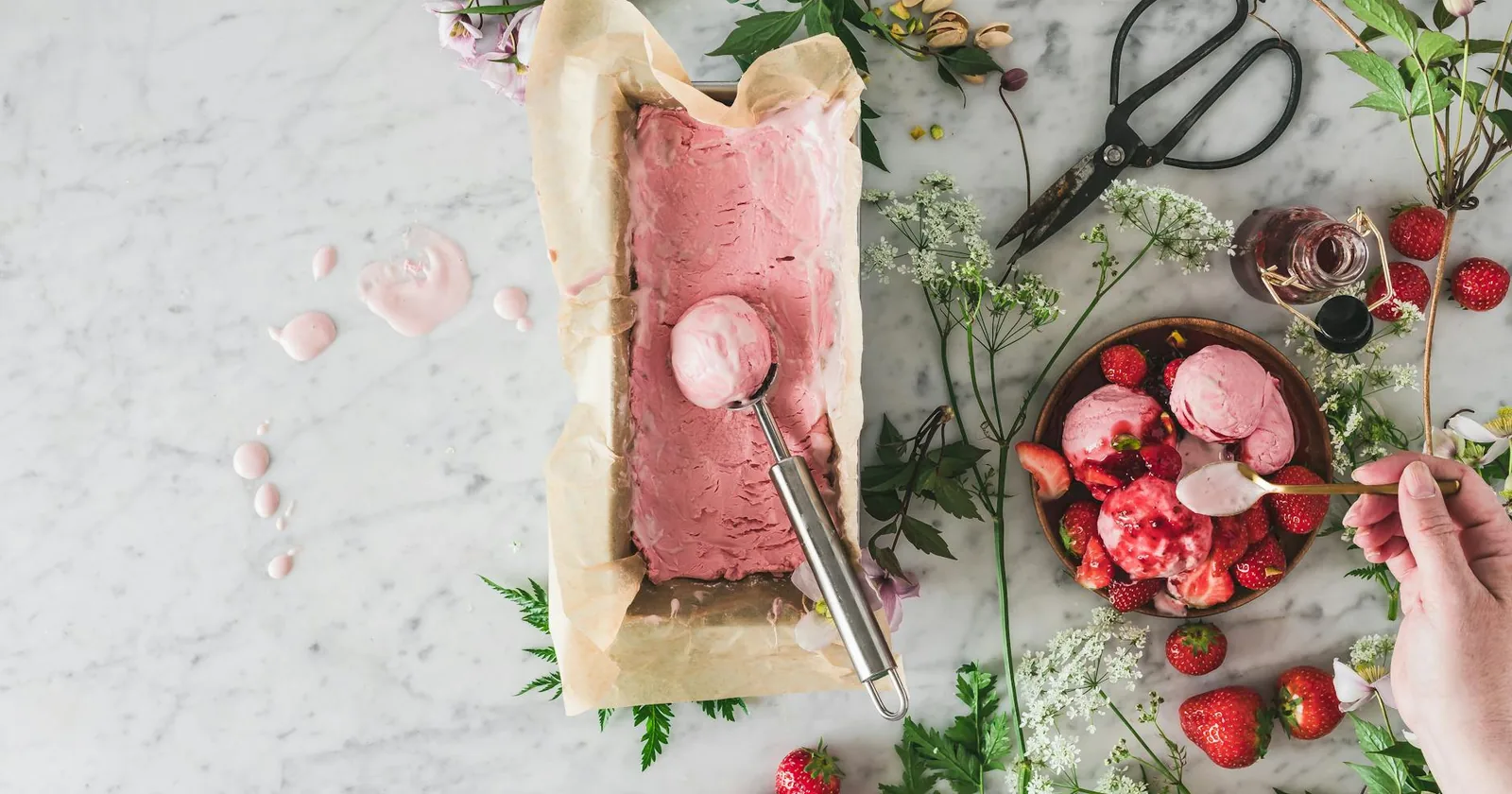
The front of a dairy-free pint sells a story. “Plant-based,” “made with oat milk,” “no dairy,” and an icon or two that hint at virtue. Walk that pint over to a fluorescent kitchen light, flip it, and the nutrition panel often tells a quieter story: as much sugar as a regular pint, more saturated fat than you would guess, and not a milligram of fortified calcium or B12. So the honest question, the one the marketing rarely answers, is whether dairy-free ice cream is actually healthier than the dairy version. The short answer from the peer-reviewed work: it depends on what you mean by “healthier,” and on which pint you picked up.
What “Better-For-You” Actually Means to Shoppers
A 2021 survey published in the Journal of Dairy Science asked 1,051 ice cream and frozen dessert consumers what makes a frozen dessert feel “better-for-you” (Li and others, 2021). The attributes that ranked highest were sweetener claims (naturally sweetened, reduced sugar, no added sugar), an “all natural” tag, and a short ingredient list. Plant base versus dairy base also mattered to the 578 buyers who already chose better-for-you pints. The catch came in the follow-up tasting: when 186 consumers actually tried four better-for-you pints, purchase intent dropped after the first spoonful. Flavor outweighed the health story. The takeaway worth carrying into the freezer aisle is that the labels we treat as proxies for healthier (short list, plant base, alternative sweetener) drive perception more than they drive nutrition.
Sugar: The Single Biggest Surprise
The largest survey of non-dairy frozen desserts to date analyzed 358 commercial pints across coconut, oat, almond, cashew, soy, and ten other bases (Pham and others, 2022, Nutrients). Ninety percent of those pints carried high sugar levels by the authors’ threshold. Plant milks do not contain lactose, so the natural milk sugars present in dairy ice cream are absent, and manufacturers tend to compensate with added cane sugar, agave, or syrups to hit the sweetness and freezing-point targets shoppers expect. The result is a category where “dairy-free” frequently means “the same sugar load, just from a different jar.”
Brands working the no-added-sugar angle lean on stevia, erythritol, monk fruit, and allulose. They can pull total added sugar down, but the 2021 tasting study found that pints sweetened with monk fruit plus allulose or stevia plus erythritol lost ground on flavor and purchase intent compared with regular sugar. Sorbet sits in a different lane (no fat, but typically heavy on added sugar), as I cover in gelato versus sorbet. If sugar is the metric that matters most to you, the panel matters more than the base.
Saturated Fat: Coconut Oil Is Doing the Heavy Lifting
The same 358-pint survey found that 73 percent of plant-based frozen desserts were high in saturated fat, and the authors traced the cause squarely to coconut oil (Pham and others, 2022). Coconut was also the single most common base in the dataset, 126 of 358 pints, because it freezes and scoops in a way that mimics dairy fat better than the alternatives.
A 2024 analysis of 222 plant-based dairy alternatives sold in Sweden found that, on average, plant-based products had similar or lower saturated fat than their dairy counterparts (Karlsson and others, 2024, Current Research in Food Science). The exceptions were the coconut-based items, which ran higher, and plant-based ice cream specifically, which had higher total energy than conventional dairy ice cream. In other words, the dairy-free pint can be the more calorie-dense choice in the freezer, especially when coconut is the base. Oat, soy, almond, and emerging avocado or hemp formulations tend to land lower on saturated fat. If you are tracking saturated fat for a cardiovascular reason, the choice of plant base matters at least as much as the choice to go plant-based at all. I touch on the same divide from the consumer-experience side in vegan versus dairy-free ice cream.
Protein: A Real Gap, With Exceptions
Dairy ice cream brings whey and casein along for the ride, so a typical scoop carries roughly 2 to 5 grams of protein per half-cup. The 358-pint survey reported that only about one in six non-dairy pints reached protein levels similar to regular dairy ice cream (Pham and others, 2022). The Swedish dataset showed the same pattern at a base level: plant-based alternatives had lower protein than dairy across the board, with one consistent exception, soy (Karlsson and others, 2024).
A 2025 review in the Journal of Nutrition examined protein supplementation strategies in ice cream more broadly (Patel and Lima, 2025). The authors mapped the landscape of milk-derived, plant, microbial, insect, and aquatic proteins, and concluded that plant proteins remain underexplored in frozen matrices because pea, fava, and similar isolates carry sensory and textural baggage (off-notes, sandiness, freeze-thaw instability) that are still being engineered out. The practical implication for shoppers in 2026 is that high-protein dairy-free pints exist, but they are typically built on soy or pea protein, are still relatively niche, and are worth identifying by reading the panel rather than the front label.
Calcium, B12, and Vitamin D: The Quiet Hole
This is where the marketing and the panel diverge most sharply. Of the 358 non-dairy frozen desserts surveyed, none were fortified with calcium, vitamin D, or B12 (Pham and others, 2022). One in six did carry iron at 10 percent of the Daily Value or more, a modest bright spot, but the headline finding stands: the category as a whole is not picking up the micronutrients that dairy traditionally contributes.
The Swedish market analysis adds a useful nuance. Fortification of plant-based dairy alternatives is most common in milks, yogurts, and cheeses, less so in ice cream, cream, and spreads (Karlsson and others, 2024). Dairy ice cream is not a major calcium source either, so switching one pint for another rarely creates a deficiency on its own. The risk is the assumption shoppers carry into the freezer that “dairy-free” means “vitamin-equivalent,” which it does not. Anyone replacing daily dairy across the board should think about calcium, B12, and vitamin D from fortified plant milks, yogurts, or supplements, not from the pint.
A Framework for Picking a Pint That Actually Fits
Lining up the research, four lenses tend to be more useful than the front-of-carton claim:
- Sugar: Read the Added Sugars line, not just total sugars. Pints sweetened with allulose, monk fruit, stevia, or erythritol can land much lower, with a real flavor trade-off documented in the tasting work.
- Saturated fat: If this is your priority, lean toward oat, soy, almond, avocado, or hemp bases over coconut. The Swedish data and the Nutrients survey both flag coconut as the outlier on saturated fat and total energy.
- Protein: If you want protein from your pint, scan for soy or pea protein in the first three ingredients and aim for at least 4 to 5 grams per serving. Most non-dairy pints will not clear that bar.
- Calcium, B12, vitamin D: Don’t expect your ice cream to provide them. Build them into the rest of your day.
Building those four checks into a quick scan takes about as long as the 60-second freezer-case routine for label-reading. And if you want full control over base, sweetener, and protein, a homemade dairy-free shake lets you set the panel yourself.
Healthier than dairy ice cream? On saturated fat, often yes (just not the coconut ones). On sugar, rarely. On protein, only for the soy and pea pints. On micronutrients, almost never without a separate plan. “Dairy-free” answers a question about allergens and ethics. “Healthier” is a separate question, and the panel is where it gets answered.
Further reading (sources)
- Nutrients on the nutritional content of 358 non-dairy frozen desserts
- Current Research in Food Science for a nutritional profile of plant-based dairy alternatives in the Swedish market
- Journal of Dairy Science with a consumer-perception study of better-for-you frozen desserts
- Journal of Nutrition reviewing protein supplementation strategies in ice cream
- Foods for an industry overview of plant-based dairy alternatives
Feature photo by Micheile Henderson on Pexels.