The Complete Guide to Dairy-Free Ice Cream Flavors: Which Base Carries Which Scoop
Published on September 2, 2026
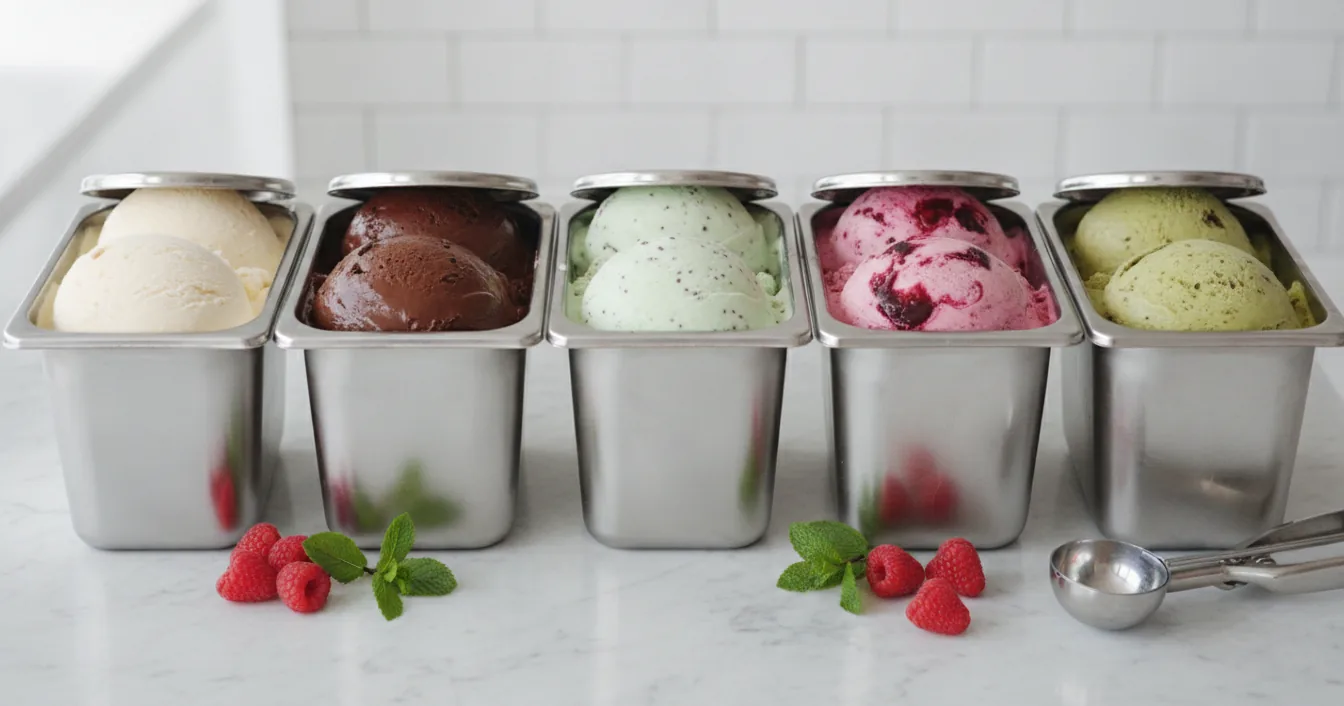
Flavor is the thing you actually choose. Nobody stands at a freezer case thinking about hydrocolloids. You want mint, or you want coffee, or you want something with hazelnut in it, and the base is somebody else’s problem. Except in dairy-free it is not, because the plant base is doing half the flavor work, and picking the wrong one is the difference between a coconut ice cream that tastes faintly of mint and a mint ice cream that tastes like mint.
This is the map of the whole flavor universe, family by family: which base carries it, what goes wrong, and how to keep the flavor from fading out in the freezer.
The Two Rules That Govern Every Flavor
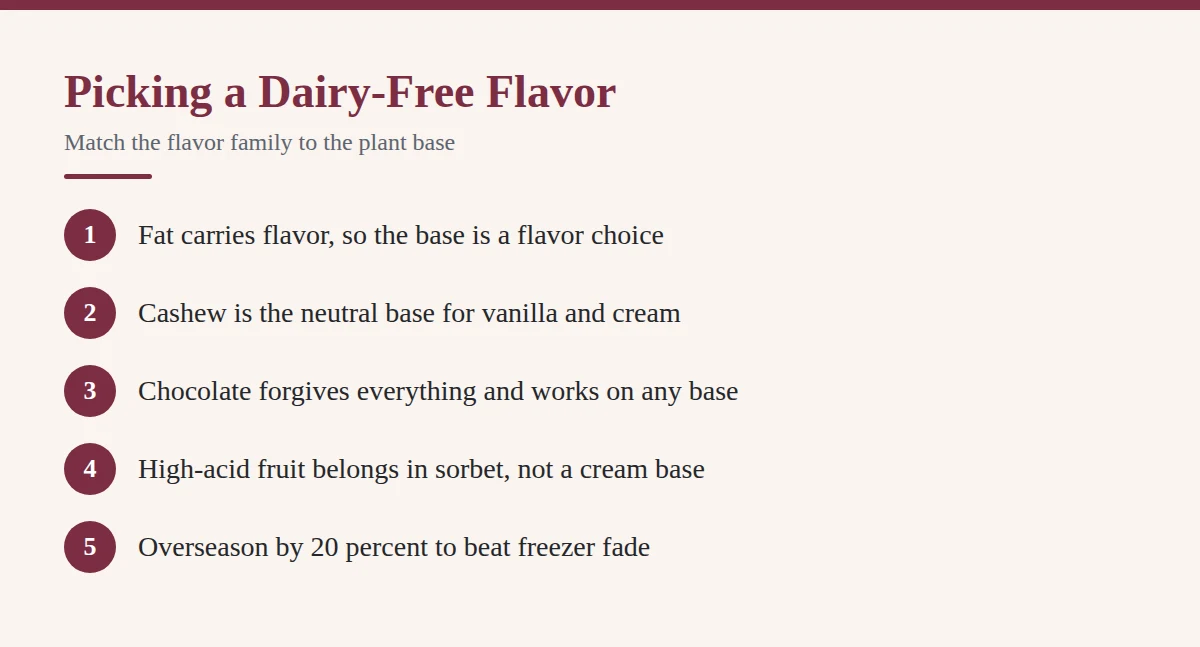
Rule one: fat carries flavor, and plant fats are not neutral. Most aroma compounds are fat-soluble, so the fat in your base is the vehicle the flavor rides on. Butterfat is close to flavorless. Coconut fat is not, cashew brings a soft sweetness, oat has a cereal note, and almond is thin but clean. That means every plant base contributes a flavor of its own before you add anything, which is why the base you pick is a flavor decision and not just a texture one.
Rule two: cold mutes everything. Volatile aromatics go quiet as temperature drops, so a base that tastes perfectly seasoned at room temperature reads flat at serving temperature. Then the batch sits in a home freezer for two weeks and loses more. Every technique in this article is aimed at one of those two problems.
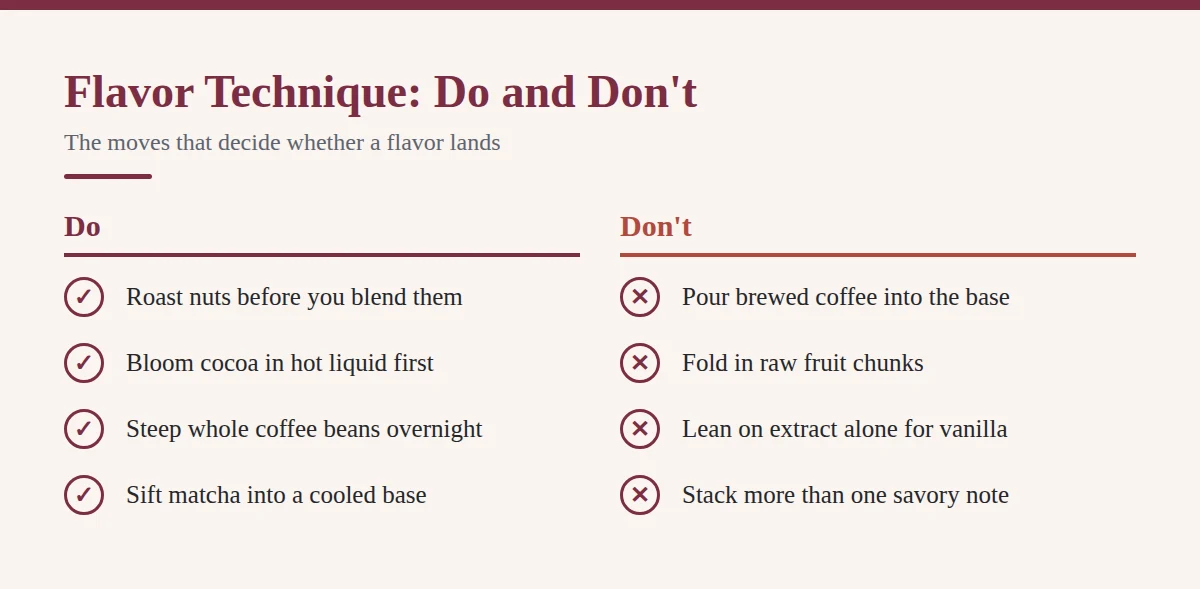
The working fix for rule two is simple: overseason the base. Taste the liquid before churning and push the flavoring about twenty percent past the point where it tastes right warm. It will land correctly cold.
Vanilla and Cream: Nowhere for the Base to Hide
Vanilla is the hardest flavor in dairy-free, not the easiest, because there is nothing in the bowl to cover the base. Coconut fat announces itself immediately in a vanilla, which is why so many coconut vanilla pints taste like a pina colada nobody ordered.
Cashew is the strongest choice here: high fat, genuinely mild, and the closest plant base to the neutral richness butterfat provides. A cashew and light coconut blend works too, since the cashew softens the coconut without giving up fat. Use vanilla bean paste or scraped pods rather than extract, because the alcohol in extract flashes off some of the aroma and the seeds give visual signal that reads as flavor before you taste it.
Cream-adjacent flavors sit in the same family: sweet cream, cheesecake, buttered pecan, cookie dough. All of them want the most neutral, highest-fat base you can build. If you need to skip coconut entirely, the coconut-free base options hold up here better than anywhere else.
Chocolate and Fudge: The Most Forgiving Family
Chocolate is where dairy-free wins outright, and it is the family to start with if you have never churned a batch. Cocoa is loud enough to bury any base note, so coconut, oat, almond, and soy all work. It is also the only family where a low-fat base can succeed, because cocoa solids add body on their own.
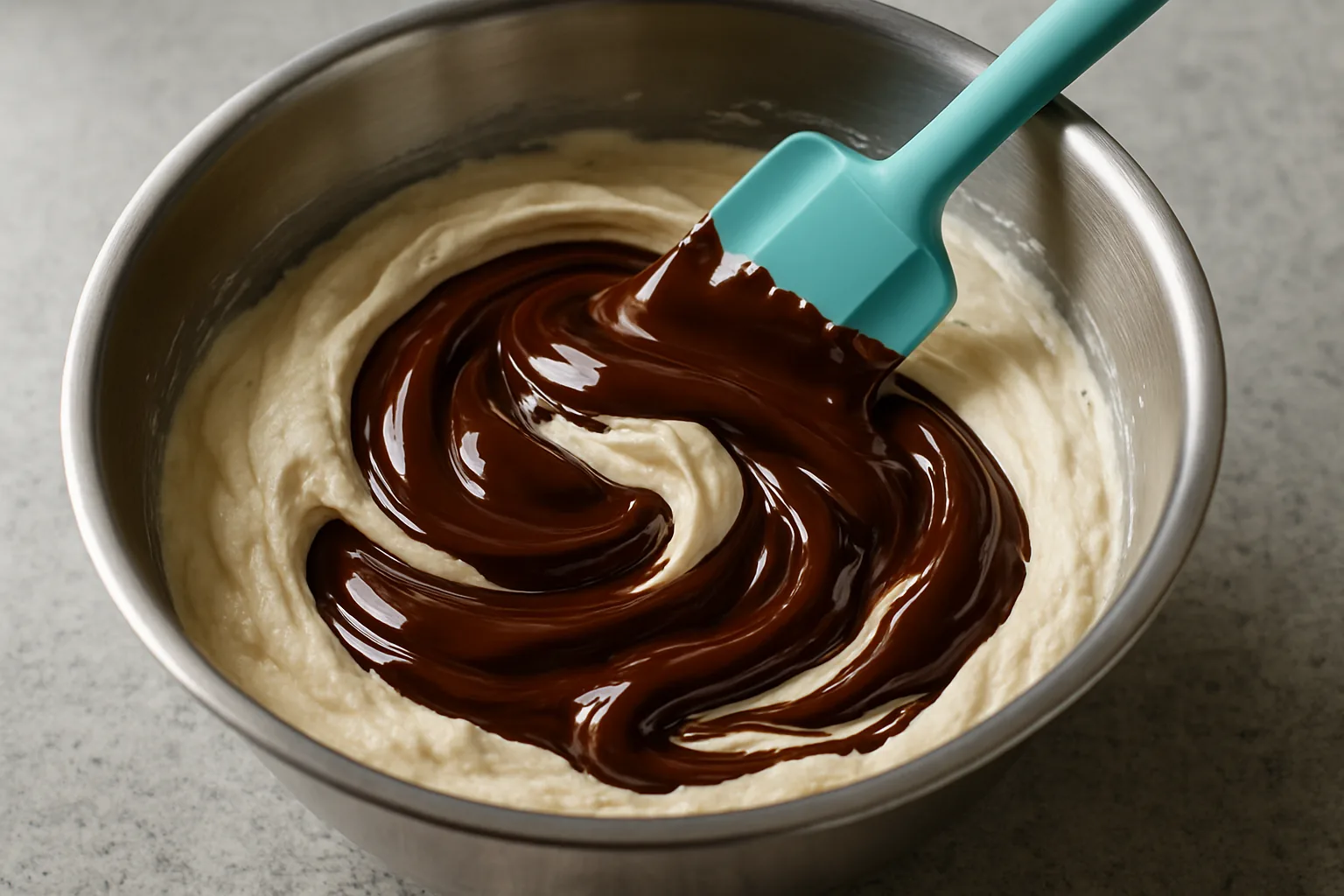
Two technical points matter. Bloom the cocoa in a little hot liquid before it goes into the base, which unlocks aroma the way it does in a cake batter. And use both cocoa powder and melted chocolate if you want depth, since cocoa gives the roast note and the melted chocolate gives the fat and the smooth finish.
Fudge ripples are their own problem: a plain ganache freezes into a hard shard. Add a spoonful of a liquid sweetener like corn syrup, golden syrup, or glucose to the swirl so it stays soft at freezer temperature. Which sweetener you reach for changes how firm the whole batch sets, and the sweetener reference covers where each one sits on that curve.
Coffee and Mocha: Steep, Do Not Brew
Coffee is the family most often ruined by the obvious approach. Brewed coffee is mostly water, and adding water to a frozen base means adding ice. Espresso powder dissolved directly into the warm base gives you the flavor with almost no added liquid, which is the reliable method.
The better version is a cold steep: crack whole beans, steep them in the base overnight in the refrigerator, then strain. You get a rounder, less bitter coffee character and no water at all. Oat is a natural partner here because its mild cereal sweetness reads like the oat milk in a latte. Mocha is simply the chocolate rules and the coffee rules stacked, and it is one of the most forgiving flavors on this whole list.
Mint: Two Sources, and a Color Decision
Mint splits into two very different desserts depending on where the mint comes from. Peppermint extract gives the bright, cool, candy-shop mint most people picture. Fresh mint leaves steeped in warm base give something greener, softer, and more herbal.
The best batches use both, which is exactly what Minimalist Baker’s cashew and coconut mint brownie ice cream does: fresh leaves steeped into the base plus peppermint extract for the top note. Cashew handles the fresh-leaf version best because a strong coconut note fights the herbal one.
Then there is color. Naturally made dairy-free mint ice cream is off-white or pale beige, not green, and a fresh-leaf steep gives at most a grey-green tint. If you want green, spirulina or a spoonful of spinach purée does it without affecting flavor. If you are buying rather than churning, the deep green pint is colored, and the color source will be on the label. That is a good reminder to read the ingredient list rather than the front panel.
Fruit and Berry: Decide Sorbet or Cream First
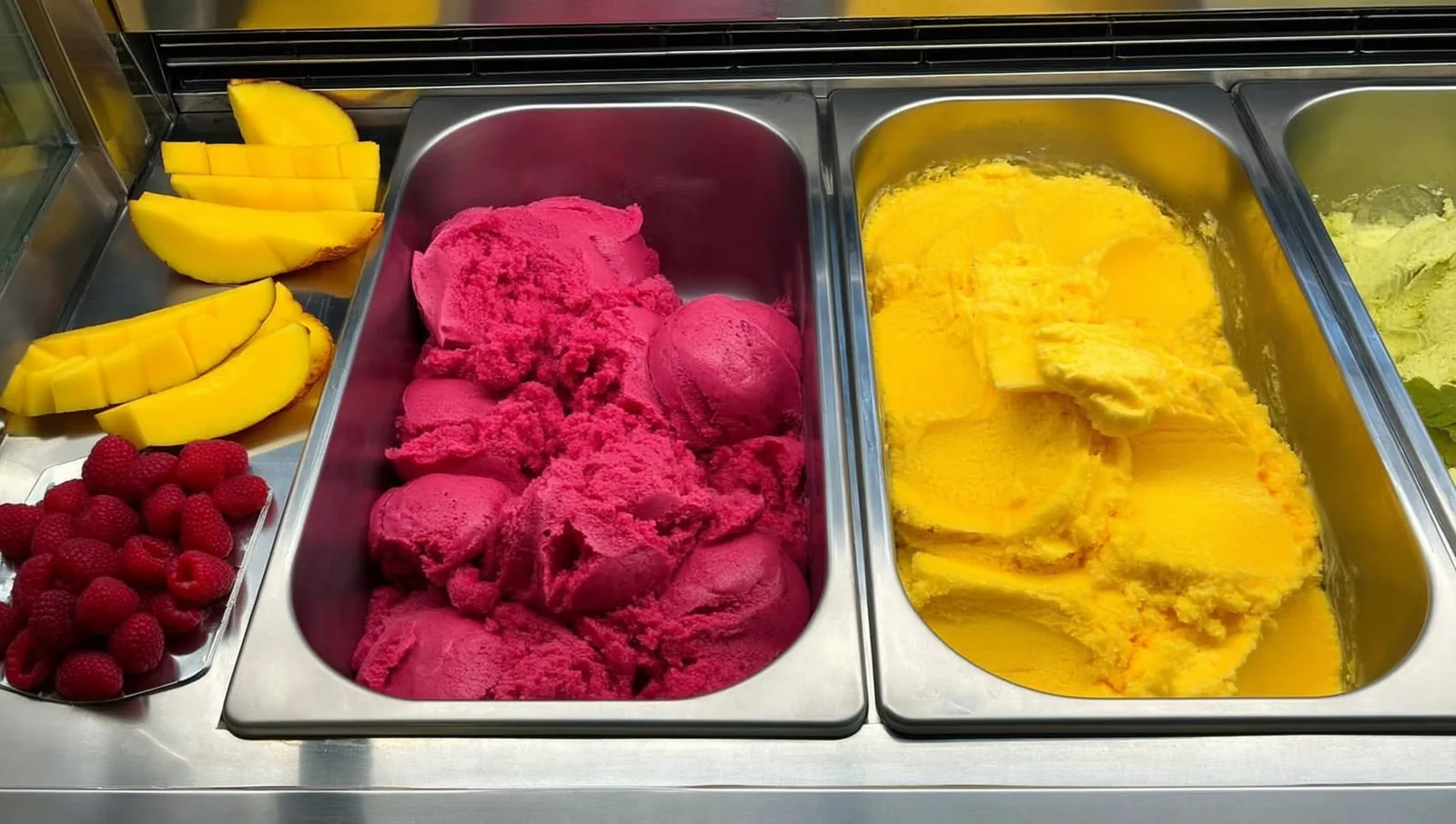
Fruit is the largest family and the one with a fork in the road at the start. Fruit plus water plus sugar makes a sorbet, which is bright, clean, and naturally dairy-free. Fruit plus a fatty base makes a fruit ice cream, which is rounder and softer but mutes the fruit, because the fat that carries aroma also blunts acidity.
Match the fruit to the format. High-acid, high-flavor fruit (raspberry, passionfruit, lime, blackcurrant) is best as a sorbet, where nothing gets in its way. Low-acid, delicate fruit (banana, mango, avocado) wants the cream base. Stone fruit sits awkwardly in the middle and needs its own handling, which the guide to peaches, plums, and apricots works through in detail.
Two universal fruit fixes: add a pinch of salt and a squeeze of lemon to any fruit base, because both sharpen perceived flavor without tasting of themselves. And never fold in raw fruit chunks, which freeze into flavorless gravel. Macerate or roast them first.
Nut Butters and Gianduja: The Family Built for Plant Bases
Nut flavors are the quiet advantage of dairy-free ice cream, because the base and the flavor come from the same place. A cashew base under a peanut butter swirl is a coherent dessert in a way a milk base is not.
Roast the nuts first. Minimalist Baker’s vegan Nutella ice cream starts by roasting hazelnuts to warm the oils and loosen the skins before blending them with melted chocolate, and that roasting step is the whole flavor. Raw hazelnut tastes like almost nothing. The same principle drives their four-ingredient homemade Nutella, which is really just roasted nuts and chocolate.
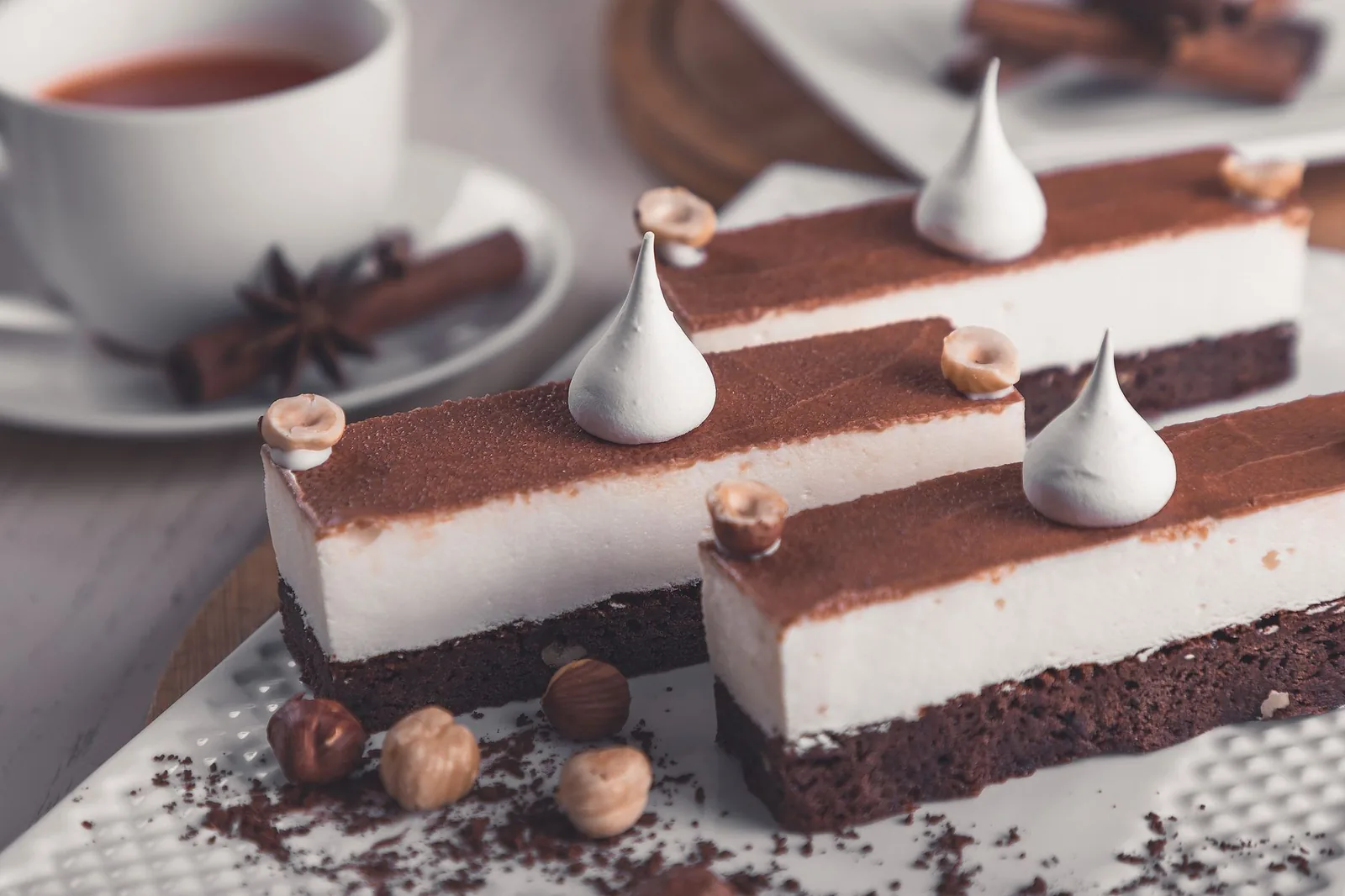
Gianduja (hazelnut and chocolate) and pistachio are the two that most reward the effort. Real pistachio is grey-green and subtle; a bright green pistachio pint is colored. Because this entire family runs on tree nuts, it is the one family to skip outright in a household managing a tree nut allergy.
Matcha, Tea, and Chai: Infusion Flavors
Tea flavors are infusions, and the technique is the flavor. Matcha is whisked directly into the base as powder, so use ceremonial grade rather than culinary if you want it to taste of tea rather than of grass, and sift it or you get bitter clumps. Matcha browns and dulls with heat, so whisk it into a base that has already cooled.
Chai, Earl Grey, and Thai iced tea are steeps: warm the base, add loose leaf, hold it about ten minutes, then strain. Steep longer and you extract tannins that read as astringent. Coconut suits chai and Thai tea because the spice load absorbs the coconut note. Matcha, which is more delicate, does better on cashew, and matcha’s affinity for strawberry (a pairing Minimalist Baker builds a whole chia pudding around) transfers directly to a strawberry matcha ripple.
The Adventurous End: Savory, Spice, and Umami
The frontier is savory. Olive oil, black sesame, miso caramel, corn, tahini, sweet potato, halva, and chile-spiked chocolate are all appearing in scoop shops, and dairy-free bases handle them well because plant fats already sit closer to these flavors than butterfat does. Mexican hot chocolate, cayenne and all, is a good entry point. Two rules keep it from going wrong: pick one savory element per batch, and raise the salt slightly, because savory flavors need salt to read as intentional rather than accidental.
Fighting Flavor Fade
Flavor fade is a storage problem, not a recipe problem, and it is what makes week-three ice cream taste like sweetened cold.
- Overseason the base. Twenty percent past correct at room temperature.
- Store it deep and flat. Press parchment onto the surface, lid it, and keep it at the back of the freezer, not in the door where the temperature swings.
- Do not let it thaw and refreeze. Every cycle grows crystals and strips aroma.
- Layer mix-ins rather than dumping them. Scoop, sprinkle, scoop, sprinkle, then fold, so the additions distribute instead of sinking, a technique the cookbook author Hannah Kaminsky recommends for exactly this reason.
- Eat it inside two weeks. Aromatics keep leaving no matter what you do.
Give the process time as well. A base needs to cool completely, chill for several hours, churn, and then harden for three to four hours before it is honestly finished. The master guide to churning at home walks through the full sequence.
Matching a Craving to a Scoop
- Want it to taste of nothing but itself? Cashew base. Vanilla, cream, delicate tea.
- Want it foolproof? Chocolate on any base. Start here.
- Want it bright and clean? Sorbet. High-acid fruit, no fat.
- Want it rich and nutty? Cashew or hazelnut base, nuts roasted first.
- Want something nobody expects? One savory note, more salt, coconut or oat underneath.
The flavor sets the target. The base decides whether you hit it.
Further reading (sources)
- VegNews on expert tips for churning vegan ice cream at home
- Minimalist Baker for a cashew and coconut mint ice cream that uses fresh leaves and extract
- Minimalist Baker with a hazelnut and chocolate ice cream built on roasted nuts
- Peer-reviewed research on the microstructure and melting behaviour of plant-based frozen desserts