Vanilla Is the Hardest Flavor to Get Right Dairy-Free (and How to Fix It)
Published on September 6, 2026
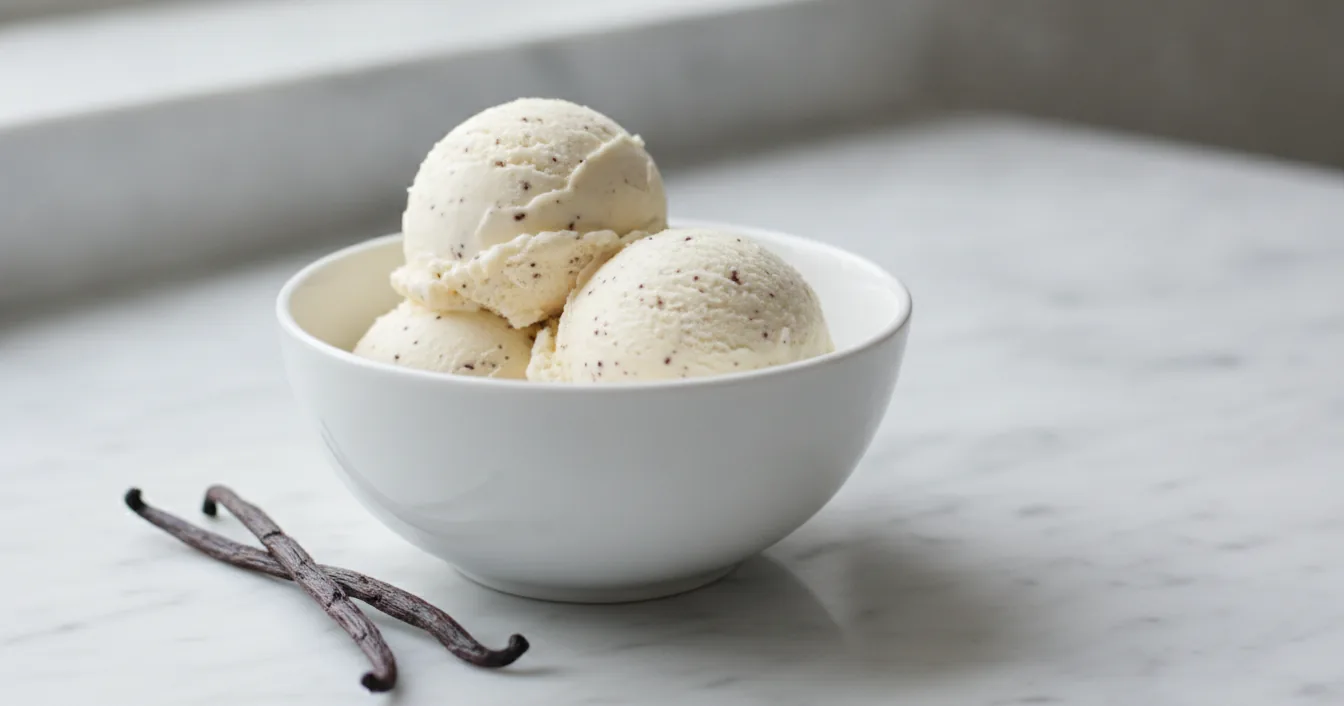
When Simply Recipes asked four food editors to name the best vanilla ice cream on the market, all four named the same brand, and it was a dairy pint. Around the same time, Wirecutter worked through 47 vegan pints, ten of them vanilla, and came back underwhelmed by every single vanilla in the set. Their conclusion is the most useful sentence anyone has written about this category: vegan ice cream needs assertive flavors to distract from the unfamiliar tastes and textures of alternative milks, oils, and thickeners.
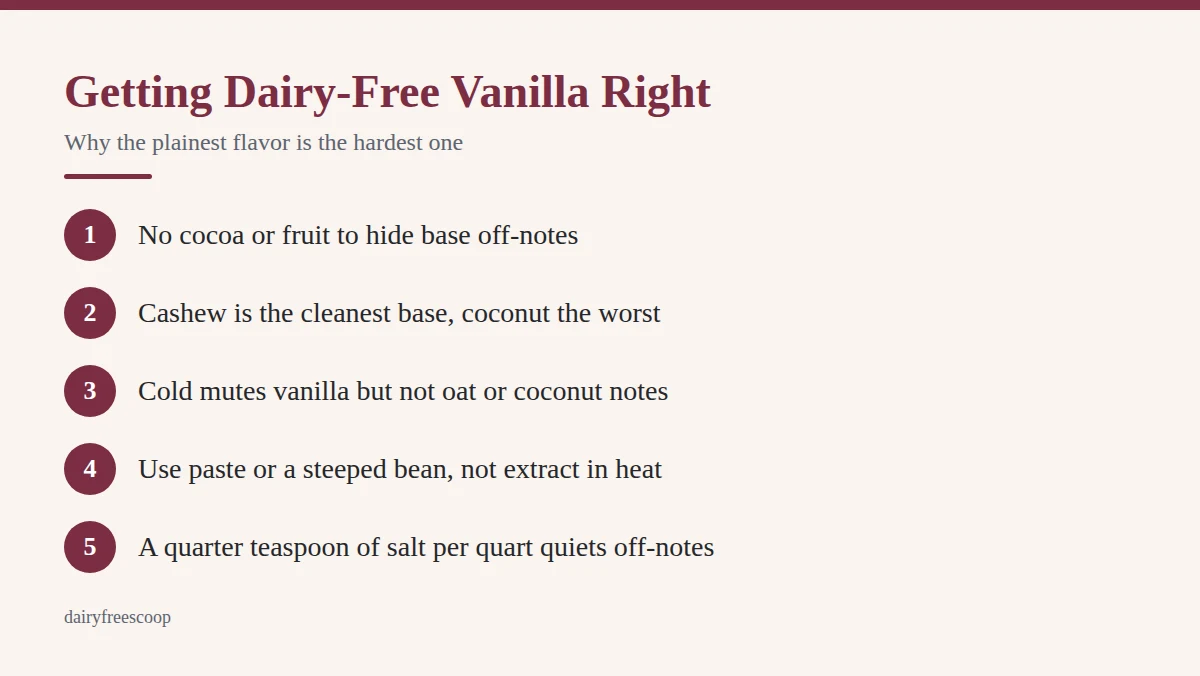
That is the whole problem in one line. Chocolate has cocoa to hide behind. Strawberry has acid and fruit. Coffee has roast. Vanilla has nothing, which is exactly why it is the honest test of a base. If you want to know what a plant milk actually tastes like, put vanilla in it and see what comes back.
Why Vanilla Exposes a Plant Base
Butterfat is close to flavorless. That is the quiet advantage dairy has held in vanilla for a century: cream contributes richness, mouthfeel, and a faint sweetness, but almost no flavor of its own, so the vanilla is the only thing in the bowl with an opinion.
No plant fat behaves that way. Coconut fat is aromatic and tropical. Oat brings a cereal sweetness that reviewers reach for the word “cardboardy” to describe when it goes wrong. Soy carries a beany note. Almond is thin and slightly bitter. Each of those is a flavor competing with the one you paid for, and cold makes it worse: freezing mutes volatile aromatics like vanillin far more than it mutes the heavier, fattier background notes. Chill a base and the vanilla recedes while the coconut stays exactly where it was.
There is a second problem specific to the aisle. Most dairy-free pints run on a short list of the same industrial parts, coconut oil plus a gum system plus pea or soy protein, and the gums and plant emulsifiers doing the smoothing have their own textures and faint flavors. In a mint chip nobody notices. In a vanilla, that is most of what you are tasting.
Which Bases Carry Vanilla Cleanly
Ranked by how little they get in the way:
Cashew is the winner. High fat, genuinely mild, and the closest plant base to the neutral richness butterfat provides. Go Dairy Free’s vanilla taste test gave its Best Overall to a cashew milk pint, and the panel’s note is telling: the cashew reads as caramel warmth rather than as nut, so it flatters vanilla instead of arguing with it. The catch is cost and the tree nut flag.
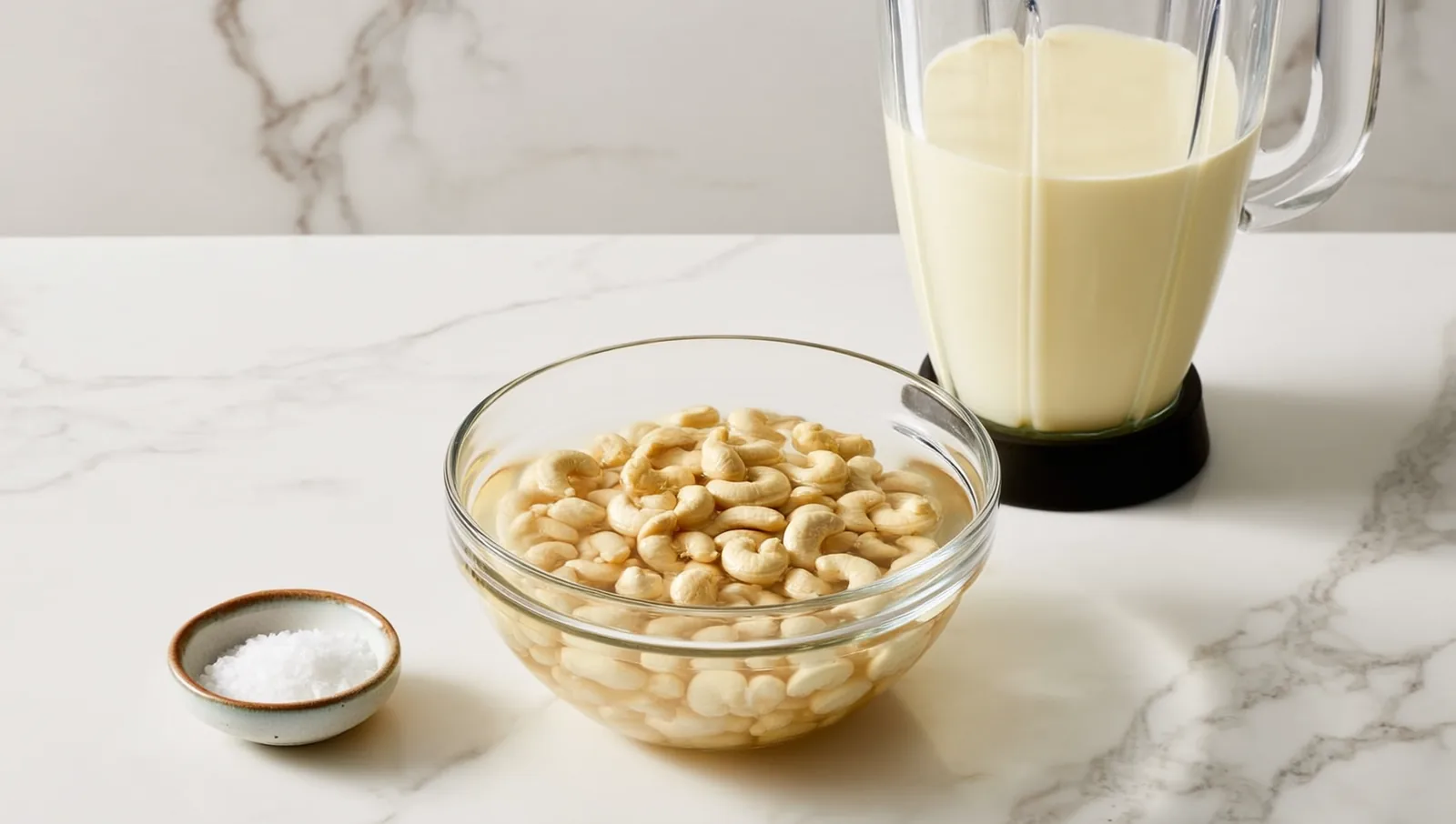
Oat is the surprise runner-up, but only in the sense that it is bland rather than clean. Wirecutter found the oat pints the most neutral of the vanillas they tried and still called them serviceable and a bit bland. Oat is the base to pick when your goal is a scoop for the top of a pie rather than a scoop worth eating alone.
A cashew and coconut blend is the smart compromise. Coconut brings fat that cashew is expensive to supply, and cashew mutes the coconut. Several of the better small-batch vanillas are built exactly this way.
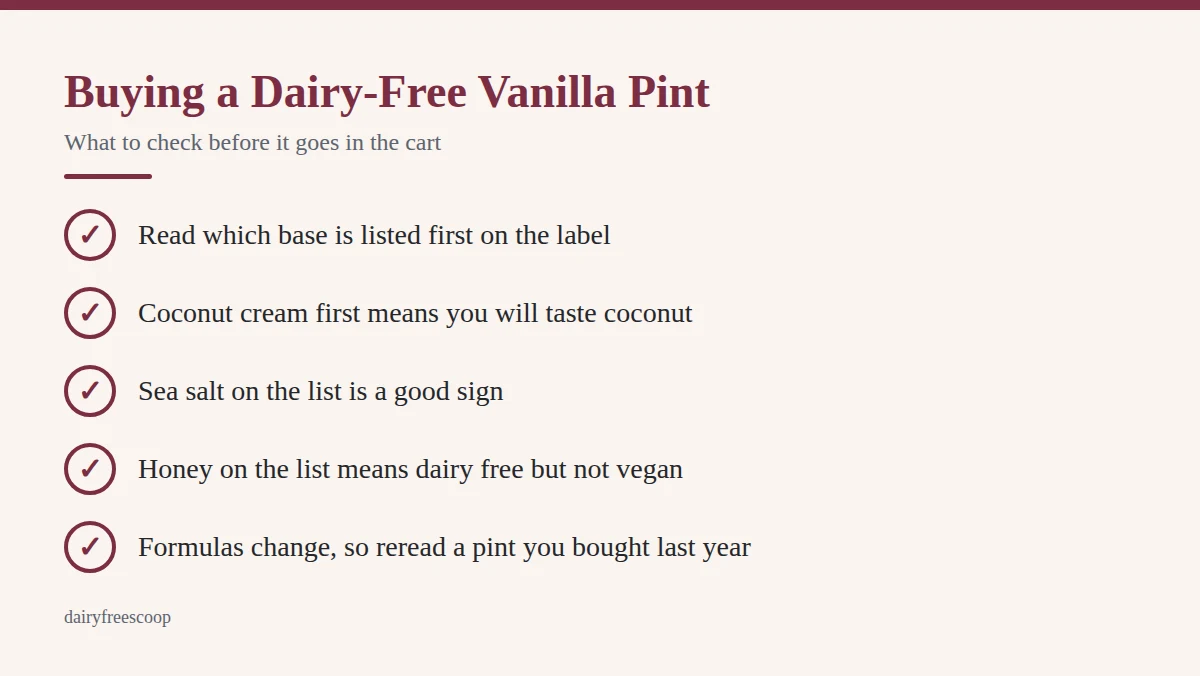
Coconut alone is the trap. It is the richest and most forgiving base for almost everything else, which is why brands default to it, and it is the worst possible partner for vanilla. Taste testers describe straight coconut vanillas as tropical, coconut forward, and short on any actual vanilla. If a vanilla pint lists coconut cream first, expect to taste coconut.
Soy and almond both compete. Soy’s beaniness builds as you eat, starting subtle and gradually overtaking the vanilla. Almond is worse in a different way, thin enough that the vanilla has no fat to ride on, and its own faint marzipan note lands next to the vanilla instead of underneath it. The full base by base comparison covers what each one is good for, and vanilla is not what these two are good for.
Vanilla Bean, Paste, or Extract
The form matters more here than in any other flavor, because there is nothing else in the bowl to cover a weak choice.
Extract is the default and the weakest option for a cooked base. US law requires pure vanilla extract to be at least 35 percent alcohol by volume, and that alcohol is a carrier: heat it and a share of the aroma leaves with the evaporating ethanol. Add extract to a hot base and you lose some of what you paid for. Add it after the base has chilled and you keep nearly all of it. That single change of timing is the cheapest upgrade available to a home churner.
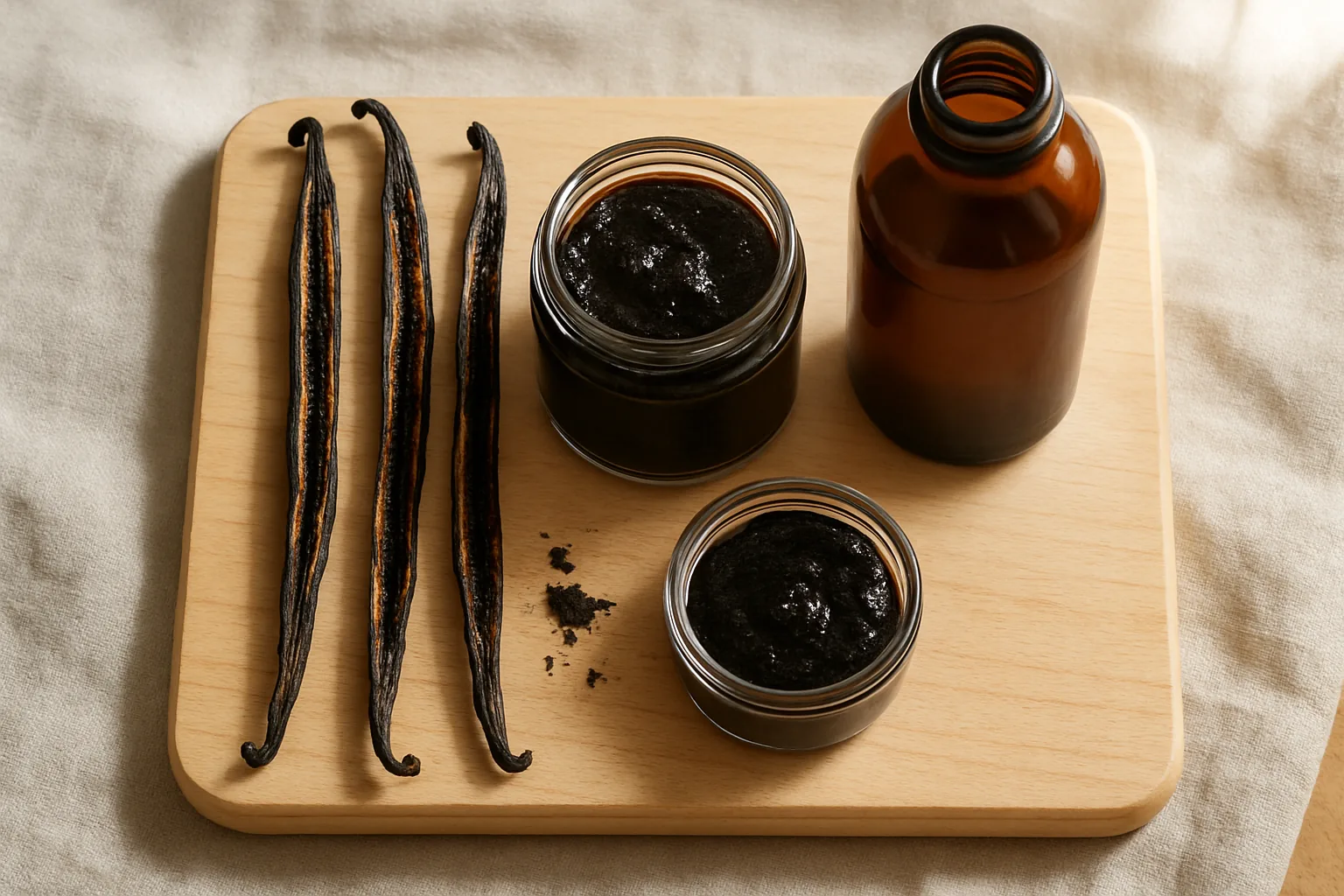
Paste is the best value. It is seeds and bean extractives suspended in a syrup, so you get visible flecks, more of the rounded bean character, and a little extra sugar that helps the freeze rather than hurting it. Use it roughly one for one with extract.
Whole bean gives the most complete flavor and the most work. Split the pod, scrape the seeds, and steep the whole thing in the warm base for at least thirty minutes before straining. Real vanilla carries hundreds of trace aromatic compounds beyond vanillin, and steeping is what pulls the ones that give bean vanilla its depth. If you have gone to the trouble of a cashew base, this is the form that rewards it.
One myth worth killing: the alcohol in extract will not stop your ice cream from freezing. A tablespoon of 35 percent extract in a quart of base works out to under half a percent ethanol by weight, well under the roughly 2 percent ceiling where alcohol genuinely starts fighting the freezer. Aroma loss to heat is the real cost of extract, not texture.
Salt and Fat: The Two Off-Note Maskers
Two levers reliably move a mediocre dairy-free vanilla toward a good one, and neither involves adding more vanilla.
Salt. A quarter teaspoon per quart is not a seasoning decision, it is a suppression trick. Salt suppresses bitterness and vegetal notes at the receptor level while lifting perceived sweetness, which means it quiets the oat cardboard and the soy beany edge at the same time as it makes the vanilla read louder. Almost every good commercial dairy-free vanilla has sea salt on the label, usually just after the gums. Taste your base, add salt, taste again. The vanilla will seem to have doubled.
Fat. Aroma compounds are fat soluble, so fat is the vehicle vanilla travels on. A lean base does not just feel icy, it tastes weaker, because there is less for the aroma to dissolve into. Pushing a cashew base from roughly 12 percent fat to 16 percent does more for perceived vanilla intensity than another spoonful of extract will.
The third lever is the one from every flavor in the category: overseason the cold. Volatiles go quiet as temperature drops, so a base seasoned to taste at room temperature will land flat at serving temperature. Push the vanilla about twenty percent past correct while the base is still liquid. The same principle governs every family in the full flavor guide.
Which Store Pints Actually Pass
The honest answer, from the two most rigorous public taste tests available, is that no dairy-free vanilla currently matches a good dairy vanilla. What exists is a set of pints that are good for particular jobs.
| Pint | Base | Best for | The catch |
|---|---|---|---|
| So Delicious Very Vanilla Cashewmilk | Cashew | Eating straight | Reads more butter pecan than vanilla |
| So Delicious Vanilla Bean Plant-Based | Oil and pea blend | À la mode, sundaes | Sweet, thin on depth, whipped texture |
| Planet Oat Vanilla | Oat | Topping pie and cobbler | Neutral to the point of bland |
| McConnell’s Dairy-Free Vanilla Bean | Oat with refined coconut oil | Real bean punch, allergy-friendly | Pricey and hard to find |
| Breyers Non-Dairy Vanilla | Oat with soy protein | Feeding a crowd cheaply | Cool Whip texture, contains soy |
Two things to notice. The cashew pint wins on eating quality and loses on vanilla accuracy, which is the trade the whole category makes. And Fronen’s Madagascar Vanilla, which testers praised for its three ingredient simplicity and clean flavor, is made with honey, so it is dairy free but not vegan. That distinction catches people constantly, and it is the same reason a label read beats a front-of-pack claim every time. Formulas also change, So Delicious already rebranded its Wondermilk line as Plant-Based Blend, so verify the current label before you buy.
The Bottom Line
Vanilla is not the easy flavor you make first. It is the diagnostic you make last, once you can build a base clean enough to survive being tasted on its own. Pick cashew or a cashew and coconut blend, use paste or a steeped bean instead of extract in a hot base, salt it properly, and push the fat up. If you want the technique from the beginning, the homemade master guide covers the whole build.
And if a pint disappoints you, taste it again and ask what you are actually tasting. It is almost never the vanilla that failed.
Further reading (sources)
- Go Dairy Free on a blind taste test of every dairy-free vanilla they could buy
- Wirecutter for why ten vegan vanillas all underwhelmed a panel
- Simply Recipes with the dairy vanilla four food editors agreed on