Soy Ice Cream Deserves a Second Look: The Original Dairy-Free Base and Where It Still Wins
Published on September 16, 2026
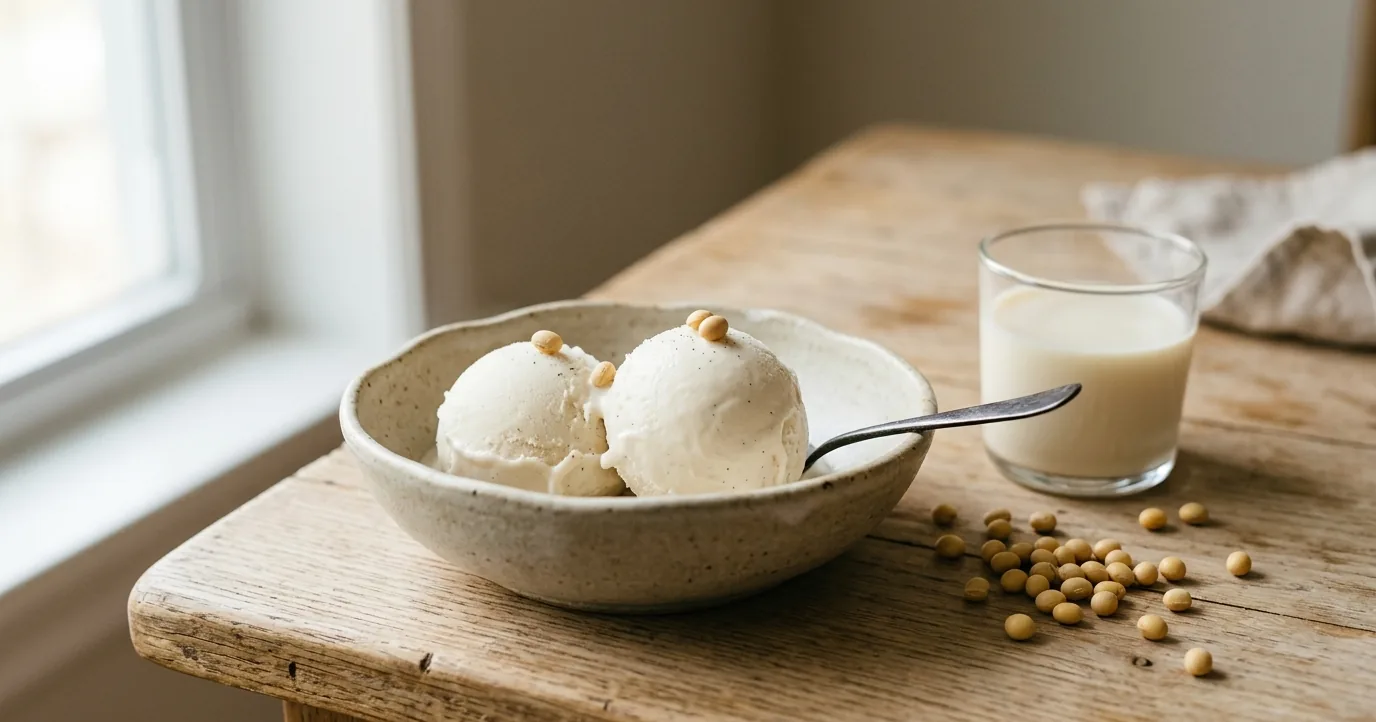
Soy was the plant milk that first turned dairy-free ice cream into a real business, and during the boom of the 1980s it was close to synonymous with the category. Now it is close to a rarity. When researchers catalogued the labels of 358 plant-based frozen desserts for a survey published in 2022, coconut accounted for 126 of them, oat for 63, almond for 42, and cashew for 25. Soy came in at 11.
That slide had more to do with fashion and fear than with how soy performs in a churn. Soy milk carries about as much protein as cow’s milk, which most plant milks do not, and protein is what gives a lean base body and a slow melt. If you avoid coconut, cannot eat tree nuts, or gave up on soy after one beany batch, here is the case for a second look: where the base came from, what its protein does in the freezer, how to buy or make a soy scoop that does not taste of beans, and a plain read of the isoflavone and thyroid research.
How Soy Built the Freezer Case, Then Lost It
Soy ice cream is mostly an American story, and the Soyinfo Center’s history of the category offers three reasons why: the country ate more ice cream per person than anywhere else, the counterculture of the 1960s and 1970s produced a wave of food entrepreneurs, and kosher law, which keeps meat and dairy apart at the same meal, gave observant households a reason to want desserts with no milk in them.
The first commercial soy ice cream went on sale in Washington, DC, in 1930, sweetened with honey. That made it dairy-free but not vegan, a gap that still catches shoppers nearly a century later. The breakthrough came in 1981, when a soft-serve tofu dessert launched at a kosher deli on Manhattan’s Upper East Side. A leaflet the deli produced the next year holds the earliest use of the phrase “dairy free” in the Soyinfo Center’s records. By the summer of 1985 at least 26 soy ice cream brands were on American shelves, and when the 1984 to 1988 boom cooled, four national names were left.
Soy had one more peak. In 2004 a soy dessert line was the best-selling ice cream brand of any kind, dairy included, in the American natural foods channel. A year later its maker took the word soy out of the brand name, and by 2008 it was shipping coconut milk desserts nationwide. The 2022 survey shows where the rest of the aisle went.
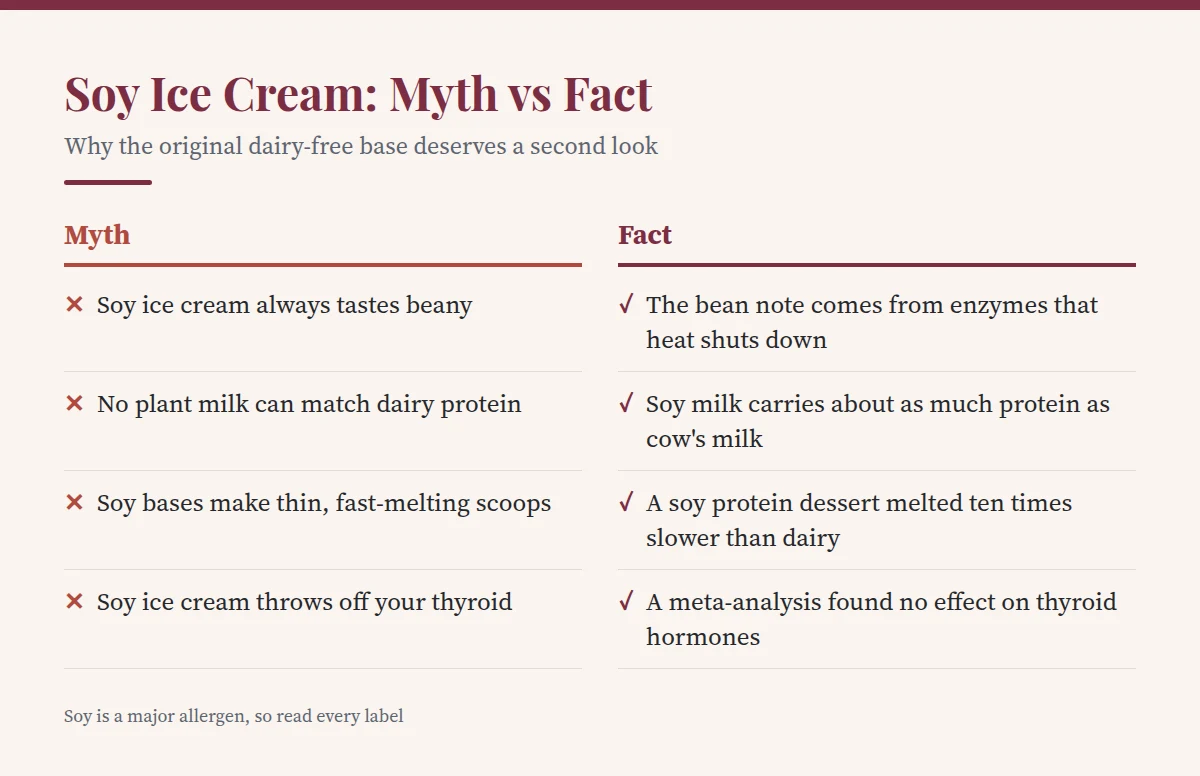
No single decision retired soy, but the pressures are easy to name. Coconut fat behaves like butterfat, so a coconut pint scoops rich with little engineering. Soy is one of the nine major food allergens the FDA requires on labels, which makes it a hard sell to allergy households. Hormone and thyroid worries clung to it. And a carelessly made soy base really does taste like beans.
What Soy Protein Does in the Freezer
In 2023 the FDA pointed out that soy beverages fortified with calcium and vitamins A and D are the only plant-based alternatives nutritionally close enough to milk to count in the dairy group. Protein is a big part of that. In the 17 trials pooled by a 2024 meta-analysis, the typical daily half liter of soy milk carried 22 grams of protein, against 24 grams in the cow’s milk it replaced.
In a frozen dessert, protein binds loose water, steadies the fat and air, and builds body. A 2024 study that made dairy-free frozen desserts from plant oils and three plant proteins shows the effect. The soy version melted at 0.19 percent per minute, against 1.95 percent for an ice cream made with milk protein, about ten times slower. On overrun, hardness, and melt rate it sat between the other two: firmer and slower to melt than brown rice protein, lighter and softer than pea. Tasters scored the soy and pea desserts above brown rice, with all three behind the dairy version but still acceptable.
Protein is not fat, though, and plain soy milk is lean. A 2021 study of ice creams made with soy and sesame milks found the straight soy version held more frozen water than a dairy ice cream, the makings of a hard, icy scoop. The optimized soy and sesame blend did better, trapping more air and giving the most stable structure of the plant samples. Soy supplies the backbone. It scoops best when something else brings the richness.
Who Soy Is Actually For
Coconut avoiders. Soy is one of the simplest routes to a creamy base with no coconut in it. Read the fat line anyway, because coconut oil shows up in pints whatever the carton front says, as the coconut-free pint guide lays out.
Tree nut allergies. Soy is a legume, so it sidesteps the cashew and almond problem. Shared factory equipment is a separate question, and the multi-allergy family guide covers how to ask it.
Protein seekers. Soy and pea are the two bases that put real protein in the bowl, and soy has decades more experience in frozen desserts.
Who should pause. Anyone with a soy allergy, obviously. Parents of children with a milk allergy should also check before switching. In a study of 93 young children with IgE-mediated cow’s milk allergy, 14 percent were allergic to soy as well. Most tolerated it, but that is a question for the allergist, not the freezer aisle.
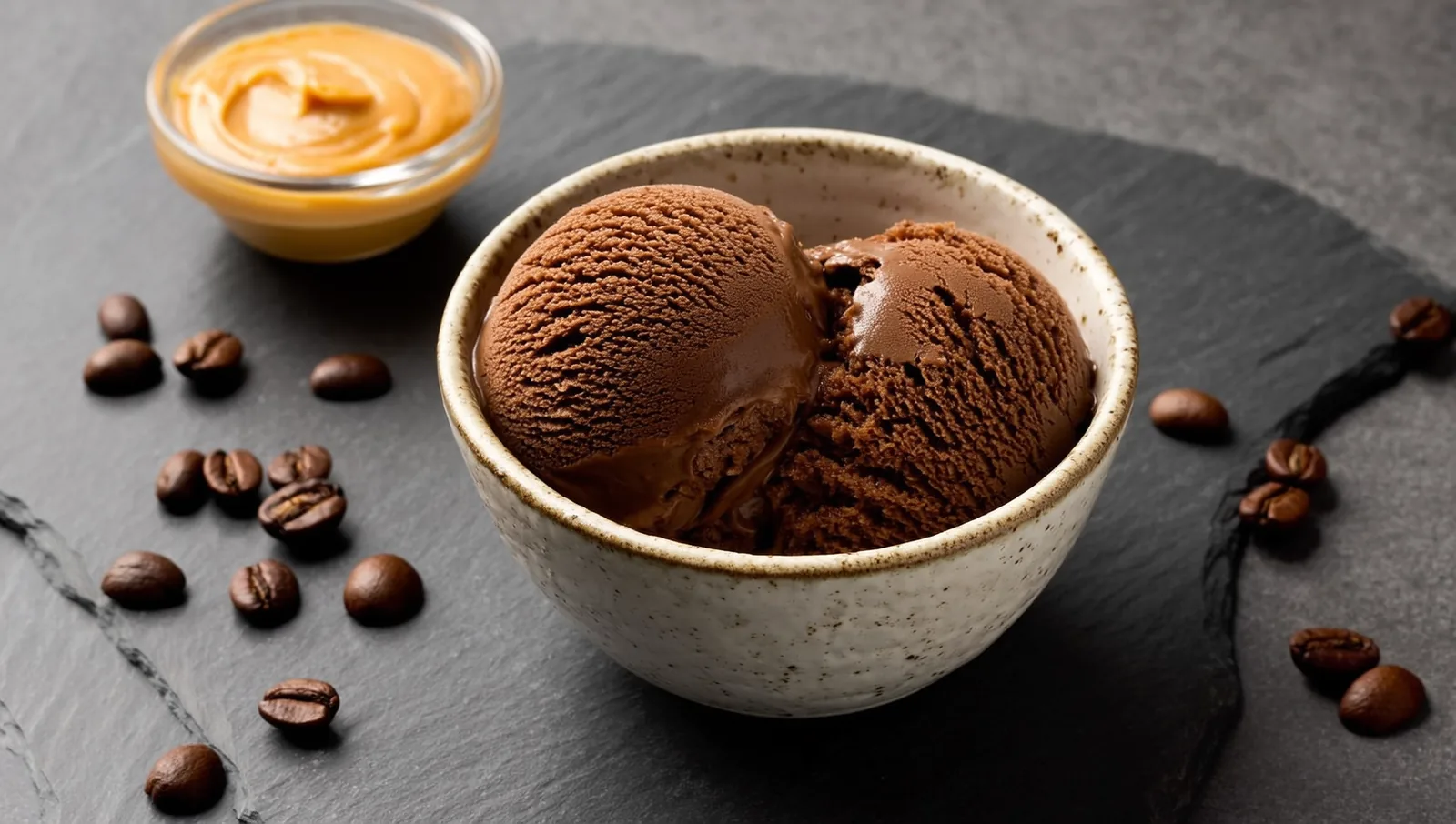
Flavor settles the rest. Soy’s bean note tends to build as you eat, which is why it struggles under plain vanilla, the least forgiving flavor for a plant base. It disappears behind chocolate, coffee, peanut butter, black sesame, matcha, and warm spices.
Buying a Soy Pint
Soy pints take some hunting, and a carton that mentions soy is not necessarily built on it. Check three things.
The top of the ingredient list. A true soy base leads with soymilk, or water and whole soybeans. Soy protein isolate further down an oat or coconut list means a blend borrowing soy for structure. That is fine, just not a soy base.
The fat. Soy milk brings very little, so the formula has to add some. If coconut is your issue, this is the line that matters.
The allergen statement. Soy must be declared and milk should not appear at all. The words “non-dairy” prove nothing on their own, because a non-dairy product can legally contain caseinate, a milk protein, as the label-reading guide explains. Nor is lactose-free a synonym: a soy pint has no lactose by nature, but “lactose-free” on a carton usually means real dairy with the lactose broken down.
Making a Soy Base That Does Not Taste Beany
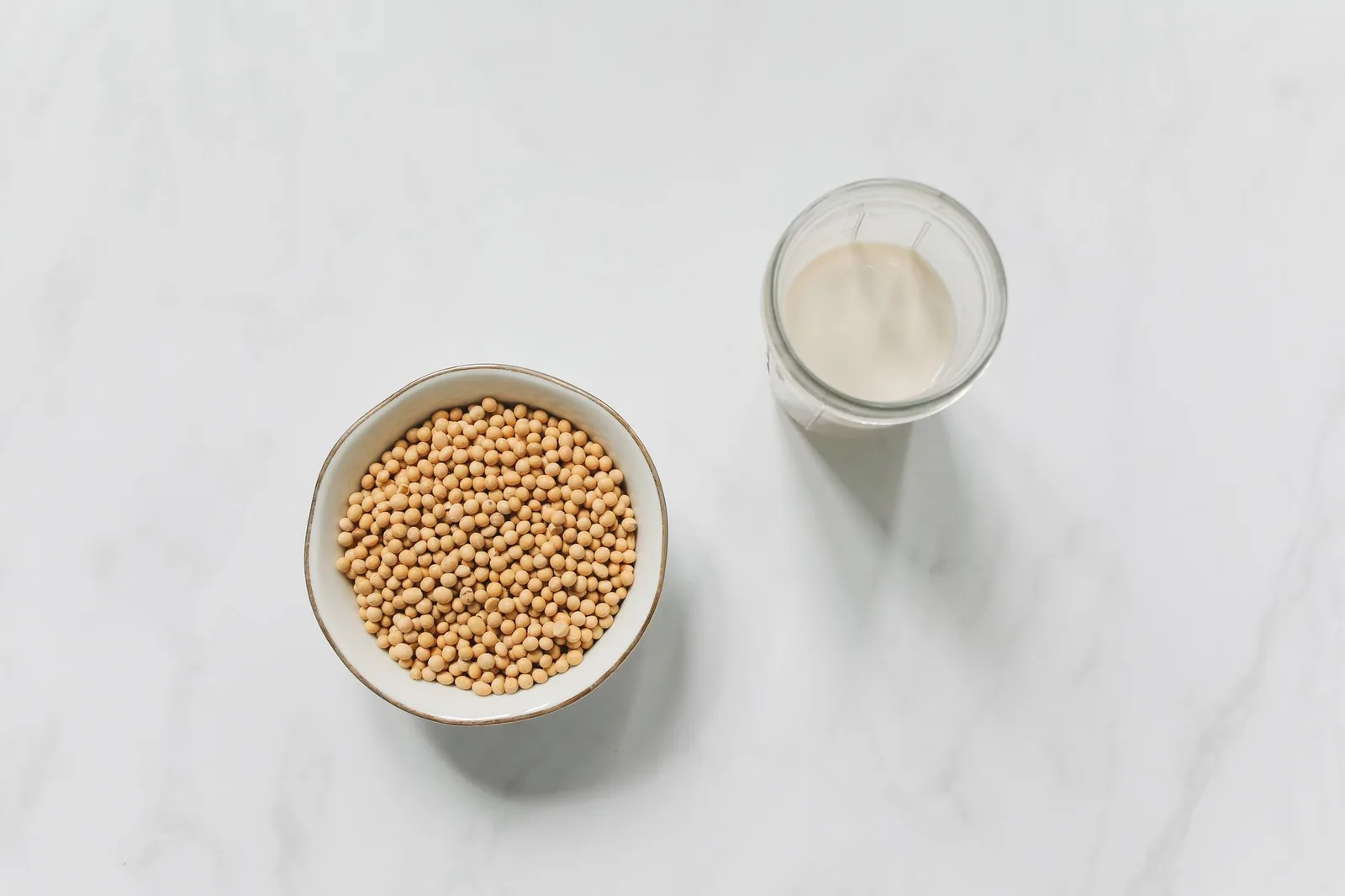
The beany note is less the soybean’s natural flavor than damage done in processing. Soybeans contain enzymes called lipoxygenases, and once raw beans are crushed in water those enzymes oxidize the bean’s fats into grassy-smelling compounds such as hexanal. Heat shuts them down. In one processing study, blanching soaked soybeans at 80°C for two minutes before grinding produced a soy milk with no hexanal. Breeders have also developed soybeans without the enzymes, and a trained panel rated soy milk from them lower in rancid, grassy odor and sweeter than the standard kind.
At home, that comes down to four habits:
- Taste the milk first. Sip plain, unsweetened soy milk cold. Freezing dulls flavor but will not erase a bean note, so if it tastes beany in the glass it will taste beany in the bowl.
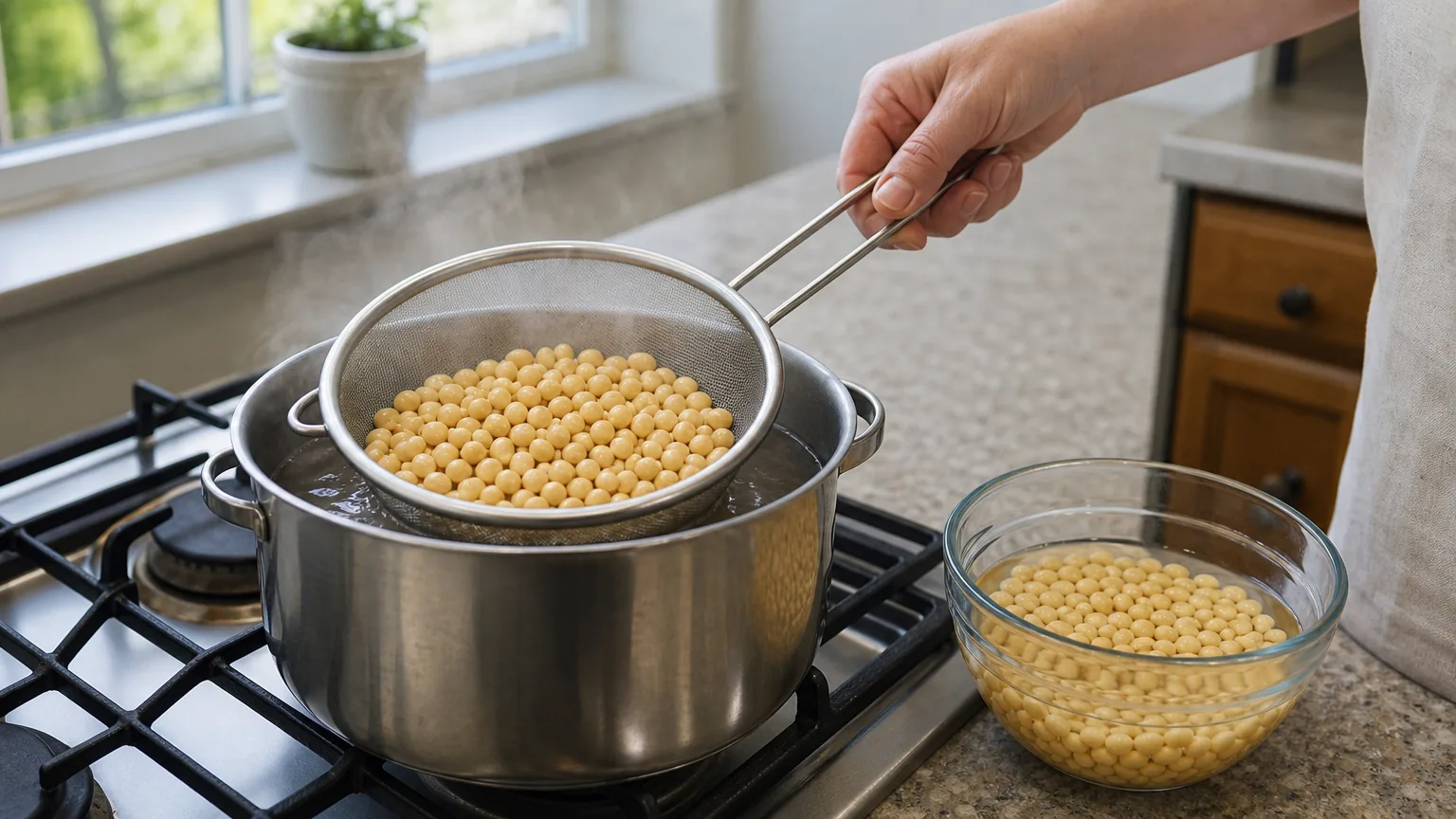
- Heat homemade beans before grinding. Hold the soaked beans in water at about 80°C (176°F) for two minutes, then drain and blend. Grinding them raw and cold gives the enzymes their chance.
- Add the fat soy lacks. A fat that sets firm when cold brings richness and helps keep ice crystals small.
- Choose a loud flavor, and salt it. A quarter teaspoon of salt per quart quiets vegetal notes and lifts sweetness.
A base to start from: whisk 2 1/2 cups unsweetened soy milk, 3/4 cup sugar, 2 tablespoons tapioca starch, and 1/4 teaspoon salt in a saucepan and bring to a gentle simmer, stirring, until slightly thickened. Blend it hot with 1/3 cup melted deodorized cocoa butter (refined coconut oil works if coconut is no concern) and 1/2 teaspoon sunflower or soy lecithin until smooth. Chill overnight, then churn. For more body and protein, swap 1 cup of the soy milk for 1 cup of silken tofu, blended in while hot. For chocolate, whisk 1/3 cup cocoa powder in with the sugar and melt 3 ounces of dark chocolate into the hot base, reading its label first, since some dark chocolate contains milk.
The Isoflavone and Thyroid Question, Plainly
Isoflavones are plant compounds shaped like estrogen, which is where the worry starts. A similar shape is not the same as acting like the hormone, and the evidence on the two fears raised most often is calmer than the internet.
Thyroid. A 2019 meta-analysis of randomized trials, drawing on 18 published studies, found soy made no difference to thyroid hormone levels and nudged TSH, the pituitary’s signal to the thyroid, up only very slightly, by an amount of unclear clinical significance. An earlier review in the journal Thyroid found little evidence of harm in healthy people who get enough iodine. The real caveat is medication. Soy can reduce absorption of synthetic thyroid hormone, so people taking it may need a dose check, though that review says they need not avoid soy. Cleveland Clinic’s advice is to leave several hours between the pill and the soy.
Estrogen and cancer. In 2015 the European Food Safety Authority reviewed food supplements containing isolated isoflavones, taken by post-menopausal women, and found no evidence of harm to the breast, uterus, or thyroid. The NIH notes that among Asian and Asian-American women, higher soy intake is associated with lower breast cancer risk. One exception deserves respect: anyone in treatment for estrogen receptor positive breast cancer should ask their oncologist before adding soy, because it can interact with some of those medications.
None of this turns a pint into a health food. Nine in ten of the plant-based frozen desserts in that 2022 survey were high in sugar. Choose soy for texture and protein, and enjoy it as dessert.
The Bottom Line
Soy did not lose the freezer case because it scooped badly. It lost ground to coconut’s butterfat-like richness and oat’s easygoing image, while carrying a flavor problem that careful processing fixes and a hormone reputation the evidence does not support for most people. If you need a base without coconut or nuts, want protein in your bowl, or simply like a dense, slow-melting scoop, soy has earned another pint. Read the fat and allergen lines, give it a flavor big enough to carry it, and see the plant milk base guide for how it compares with the other five.
Further reading (sources)
- Craig and Brothers on how few of 358 plant-based frozen desserts are built on soy
- Soyinfo Center for a chronology of soy ice cream from the first pints to the coconut era
- FDA with why fortified soy is the one plant milk counted in the dairy group
- Erlich and colleagues on the protein in soy milk versus cow’s milk across 17 trials
- Hasan and colleagues for how soy protein compares with pea and brown rice in a frozen dessert
- Ghaderi and colleagues on frozen water and structure in soy and sesame milk ice creams
- Zeiger and colleagues with how often milk-allergic young children also react to soy
- FDA listing the nine major food allergens, soybeans among them
- Yuan and colleagues on blanching soybeans to stop the enzymes behind the beany note
- Yang and colleagues for soy milk made from beans bred without lipoxygenases
- Otun and colleagues with a meta-analysis of soy and thyroid hormone levels
- Messina and Redmond on soy, thyroid function, and thyroid medication
- Cleveland Clinic for soy milk nutrition and timing it around thyroid pills
- EFSA reporting no evidence of harm from isoflavone supplements after menopause
- NCCIH on what research shows about soy’s usefulness and safety