Animal-Free Dairy and Hybrid Blends: Two 2026 Trends That Still Put Milk Protein in the Pint
Published on September 30, 2026
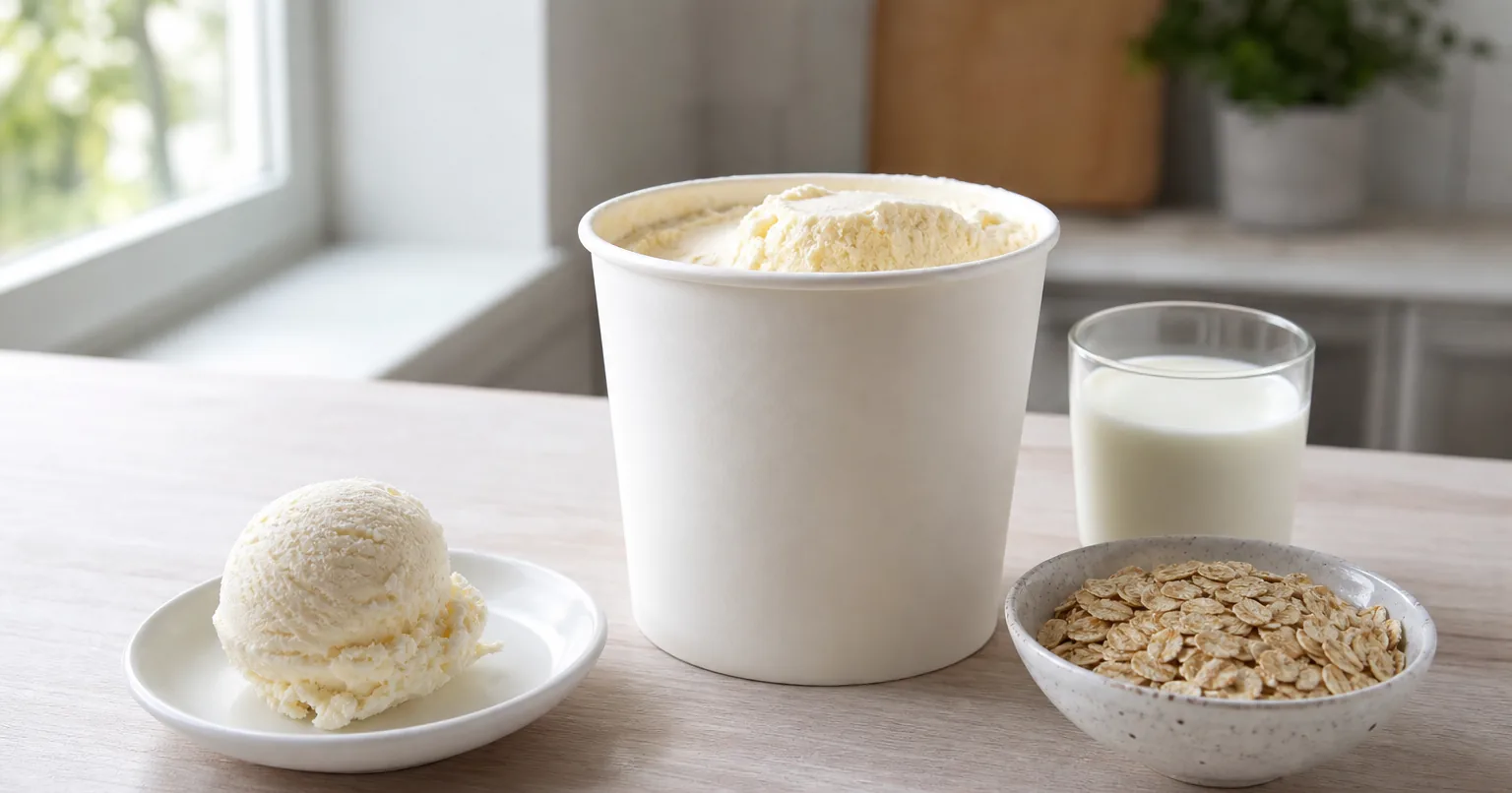
For as long as there has been a dairy-free freezer case, one shortcut has mostly held: if a pint was sold on its plants, or on having no animals in it, milk was not part of the recipe. Two ingredient shifts that the food trade press has tracked this year break that shortcut from opposite directions. The first is milk protein made without a cow, brewed by microbes and sold as animal-free dairy. The second is the hybrid, a product that blends real dairy into a plant base on purpose, for protein, texture and cost. Neither is a labeling failure. Both are legal, properly labeled foods that put real milk protein into products a dairy-free shopper could mistake for their own.
How much that matters depends on why you avoid dairy. With a milk allergy, both are off the table. With lactose intolerance, one of them may suit you well. If you are vegan, one is plainly not for you and the other is a judgment call. Here is what each one is, why US regulators treat a protein that never saw a cow as milk, how these products get labeled, and the exact wording to scan for on the panel.
Two Trends, One Shared Ingredient
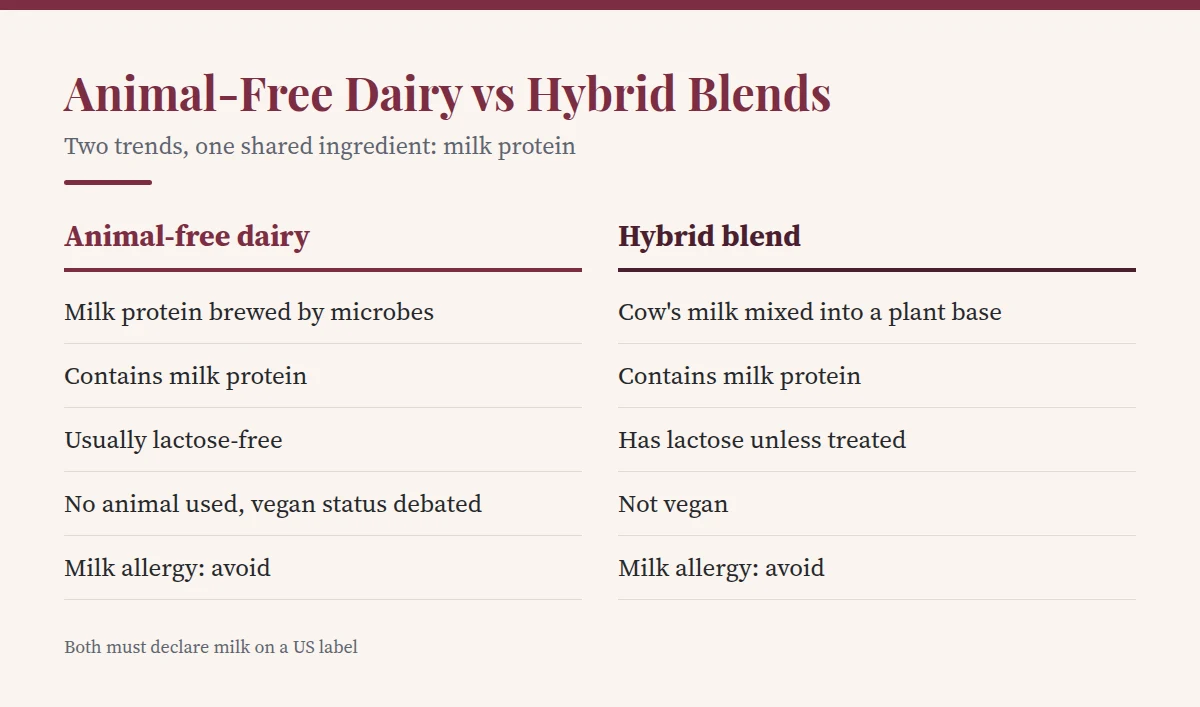
Both trends trade on the same weakness: plant-based ice cream still loses to dairy on taste. Nectar, a nonprofit that promotes alternative proteins and runs blind tastings of them, put 98 dairy-free products in front of 2,183 American consumers for its 2026 report. FoodBev’s account of the results has milks and creamers closest to matching dairy, with ice cream and cheese furthest behind. The industry’s two fixes reach for the same ingredient, which is milk protein. One grows it in a tank. The other pours it in from the cow.
That is a different thing from the failure behind the 2026 vegan ice cream recall, where milk got into a plant-based tub by accident. Here it is in the recipe, and declared.
Animal-Free Dairy: Milk Protein Brewed in a Tank
Precision fermentation borrows the microbial fermentation long used to make food enzymes. A yeast or fungus is given the gene for a single cow’s milk protein and grown in a tank on sugar, and the protein it releases is filtered out and dried to a powder. The first to reach the US market was beta-lactoglobulin, the main whey protein in cow’s milk. In March 2020 the FDA closed its review of one company’s safety notice with a letter saying it had no questions. The letter describes a fungus, Trichoderma reesei, carrying a gene for a beta-lactoglobulin identical to the one domestic cattle make, to be used as a protein source at up to 35 percent of a food.

It was not a one-off. A review published this month by Ham and colleagues counted eleven such FDA letters as of September 1, 2026, all for milk or egg proteins: six for beta-lactoglobulin, two for lactoferrin (another milk protein) and three for egg white proteins. Casein, the protein that gives cheese its melt and stretch, is coming next. FoodBev’s August feature names three startups at work on animal-free casein, and in July the food regulator for Australia and New Zealand opened a consultation on a fermentation-made beta-casein meant for dairy substitutes, protein drinks and baked goods.
Because the ingredient is a purified protein, it arrives without lactose, so products built on it are sold as lactose-free. Because no animal is milked, they are sold as animal-free, and some carry a vegan claim. None of those words is an allergen statement.
The branded pints came and mostly went. In July 2025 DairyReporter cited Circana data showing two early animal-free ice cream brands with no sales in tracked retail channels that year, and called the category nearly wiped out from supermarket shelves. The protein makers turned to supplying food manufacturers and foodservice, and by February 2026 the same outlet reported investment picking up again. For a shopper that shift is the real news. An ingredient sold business to business does not need its name across the front of the tub, only a line in the ingredient list.
Why a Protein Made Without a Cow Still Counts as Milk
A milk allergy is an immune reaction to the proteins in milk, the caseins and the whey proteins, and beta-lactoglobulin is one of the best known of them. The immune system responds to the protein itself, not to where it was made. The company behind that first notice told the FDA as much: because its protein is identical to the one in cow’s milk, “it will produce a milk protein allergy when consumed by individuals with milk allergies.” The agency’s letter then says the ingredient “requires labeling” under federal law “because it contains protein derived from milk.”
In January 2025 the FDA wrote the reasoning into its allergen labeling guidance. The law treats any ingredient containing protein derived from milk as a major allergen, and the agency considers a fermentation-made copy to be derived from milk because it is “produced in a manner that uses the major food allergen’s DNA sequence.” Its worked example is a cow’s milk protein made by genetically engineered yeast.
The research comes with one caveat. Ham and colleagues found no published human study of the fermentation-made whey proteins now on the market, and the allergy assessments that do exist sit in non-public regulatory files. They also note that the copies can differ subtly from the original, since the host microbe can attach sugar chains of its own. Neither point is a loophole. As the authors put it, the question is not whether the protein triggers an allergy but whether the copy behaves as the original does. The FDA, Health Canada and the Australian and New Zealand regulator have each treated these proteins as milk allergens, and with a milk allergy so should you.
Hybrid Blends: Real Dairy in a Plant-Forward Product
The second trend needs no biotechnology. A hybrid (the trade also says blended or balanced) mixes conventional dairy with plant ingredients in a single product. “Consumers are no longer making binary choices between dairy and plant-based,” Cargill’s R&D category leader told Food Ingredients First in June, describing rising interest in “hybrid approaches, where dairy and plant-based ingredients are combined.” In the same piece a marketing manager at ADM said that combining whey or milk concentrates with plant proteins “can improve affordability,” and the company had already told Dairy Foods it can make that pairing in blended dairy drinks, yogurts and frozen treats.
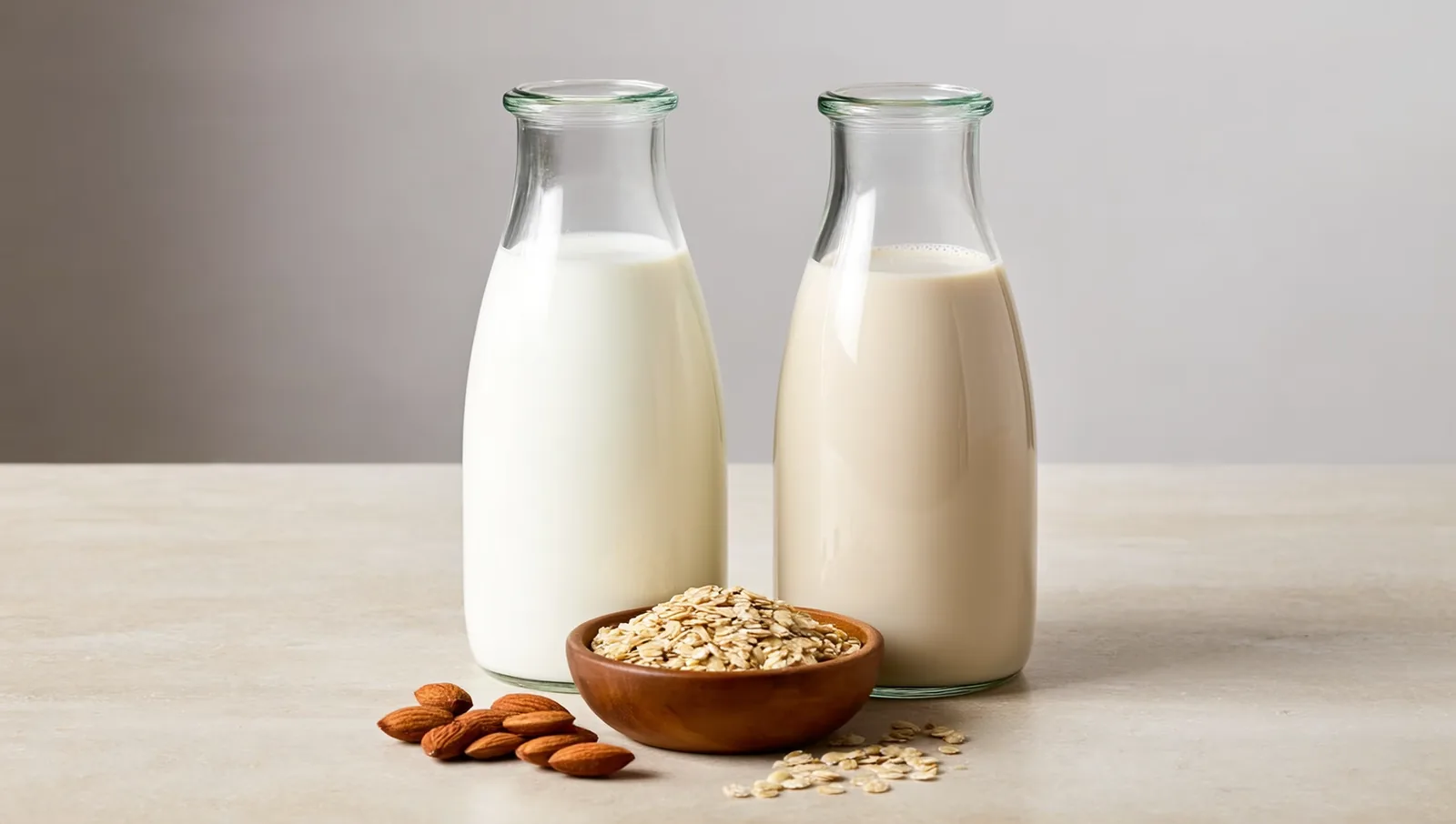
The taste case is real. In Nectar’s blind tests, blended milks and cheeses (products with at least 30 percent of their animal ingredients swapped out) averaged 4.8 on a seven-point liking scale, ahead of dairy-free products at 4.4 and behind conventional dairy at 5.7. Only four blended products were tested and none was an ice cream, so read that as a signal, not a verdict.
Hybrids are neither new nor common yet. Green Queen’s February trend report lists earlier blended milks, including a half dairy, half oat or almond line in the United States, that were discontinued. The current push is mostly European, led by a Dutch supermarket’s own-label milks and yogurt with 30 to 40 percent plant ingredients, and the same report says shoppers are most open to the idea in yogurt and ice cream.
For a dairy-free shopper the hazard is the framing. A hybrid is not vegan, not dairy-free, and not lactose-free unless the dairy in it has been treated, yet it is sold on its oats or its almonds. Kids With Food Allergies, the patient organization, says it plainly: “plant-based” is a marketing term, and plant-based foods can contain milk.
The two trends can also meet in one carton. The Australian and New Zealand regulator’s labeling assessment warns that a plant name such as “oat milk” or “cashew cheese” on a product with added fermentation-made casein could lead a shopper with a milk allergy to assume it is safe.
How the Label Handles It
In the United States the protection is the one you already use. The FDA’s position, set out in that 2020 letter and again in the 2025 guidance, is that milk protein from a fermenter must be declared as milk, in the ingredient list or in a Contains line, exactly like milk protein from a cow. Nothing is required on the front. The guidance suggests that extra wording such as “Contains milk-derived protein” may help, and leaves it there.
Regulators elsewhere have pushed further:
- Canada. When Health Canada cleared a yeast-made beta-lactoglobulin in January 2024, with ice cream and plant-based beverages among the intended uses, it said label claims should not give the impression that a food containing it is free from dairy without qualifying the risk to people allergic to milk.
- United Kingdom. The Food Standards Agency warned businesses in June 2026 that “animal free” can be conflated with “plant-based” or even “dairy free,” which could put people with allergies at risk.
- Australia and New Zealand. In July 2026 the regulator proposed that dairy substitutes containing the fermentation-made casein carry a front-of-pack statement that they are not suitable for people with a milk allergy, on top of declaring milk. Consultation closed on August 20.
The consumer research behind that proposal explains the worry. In a five-country survey the regulator reviewed, 26 percent of people linked “animal-free” with plant-based products before the process was explained to them. UK research in the same review found that only half of consumers who react to allergens of animal origin knew a vegan product might not suit them.
Hybrids follow ordinary dairy rules, so milk appears in the ingredient list and the Contains line. The product name is less help. US standards reserve “ice cream” for a product with at least 10 percent milkfat and no other fat as a base, so a blend that leans on plant fat has to be sold as something else, typically a “frozen dairy dessert” or simply a “frozen dessert.” Most plant-based pints are called frozen desserts too.
The Panel Wording to Scan For
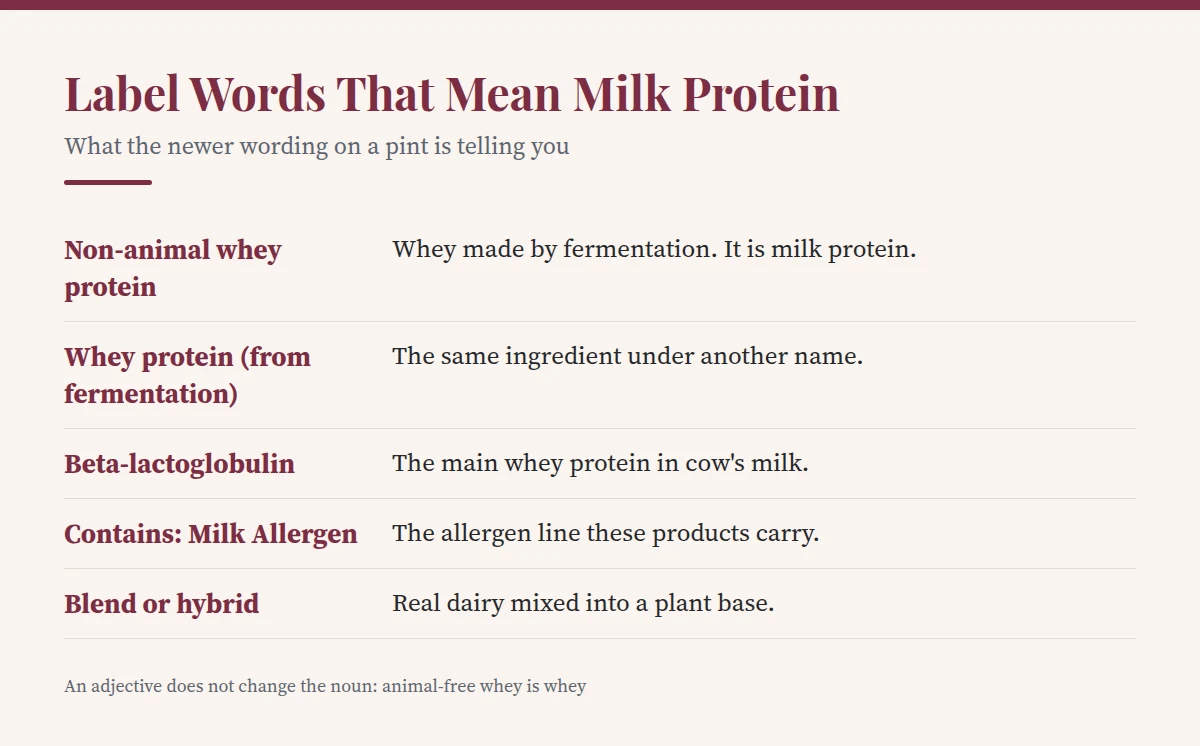
My field guide to reading a dairy-free label lists the classic hidden-dairy names. These are the newer ones to add.
In the ingredient list:
- Non-animal whey protein, animal-free whey protein, animal-free dairy protein or animal-free milk
- Whey protein (from fermentation)
- Beta-lactoglobulin, casein, beta-casein or lactoferrin, whatever adjective sits in front
- Yeast-derived whey protein, the naming convention in Canada
- In a blend: milk, cream, skim milk powder, milk protein concentrate or whey, listed beside the oats or nuts
In the allergen statement:
- Contains: Milk
- Contains: Milk Allergen, or Contains: Milk Protein
- Contains milk-derived protein
On the front, as a cue to turn the tub over:
- Animal-free or animal-free dairy
- Lactose-free, which usually signals real milk protein with the sugar dealt with
- Blend, or a dairy word and a plant word sharing the name
The rule underneath all of it: an adjective does not change the noun. Animal-free whey is whey, and non-animal casein is casein.
At a scoop shop or restaurant there is no panel to read, and Kids With Food Allergies notes that animal-free milk may turn up in vegan dishes there. With a milk allergy, ask what the vegan base is made from and whether it contains any whey or casein, fermentation-made included. My guide to dairy-free ice cream away from home has the rest of the counter questions.
Who These Products Are Actually For
- Milk allergy: neither. Treat animal-free whey exactly as you treat whey, and a hybrid exactly as you treat ice cream.
- Lactose intolerance: animal-free dairy is a fair option when the label says lactose-free. It is real whey protein without the milk sugar, the same trade that lactose-free dairy ice cream makes, and it serves the large share of adults who make less lactase after childhood. A hybrid contains ordinary milk ingredients, lactose included, unless the label says otherwise.
- Vegan: a hybrid is not vegan. Animal-free dairy involves no animal in its production but copies an animal protein, and whether that counts is a question of values, not of safety.
The Bottom Line
The front of the tub tells you what the maker wants to be known for: animal-free, plant-forward, blended. The ingredient list tells you what is in it. Fermentation-made whey and casein are milk proteins to the FDA, to the other regulators cited here and, most to the point, to an allergic immune system. Hybrids are dairy products with a plant ingredient on the billing. With a milk allergy, scan every pint for whey, casein, lactoglobulin and the Contains: Milk line, including the pints on the plant-based side of the freezer. And when a pint’s pitch is that it tastes exactly like dairy, check whether that is because it is.
Further reading (sources)
- U.S. Food and Drug Administration in its 2020 response letter on beta-lactoglobulin made by fermentation
- U.S. Food and Drug Administration with allergen labeling guidance that covers proteins made through genetic engineering (question B.16)
- Ham and colleagues, reviewing how fermentation-made food proteins are assessed for allergenicity
- Kids With Food Allergies on avoiding animal-free milk with a milk allergy, with its list of milk ingredients
- Food Standards Australia New Zealand for its labeling assessment of a fermentation-made beta-casein
- UK Food Standards Agency on why animal-free wording can mislead shoppers with allergies
- Health Canada with its novel food decision on yeast-made beta-lactoglobulin
- Food Allergy Research & Education hosting the protein maker’s own labeling rules for brands that use it
- Food Ingredients First on ingredient suppliers moving toward dairy and plant hybrids
- Dairy Foods for how processors are formulating hybrid dairy products
- FoodBev Media with where plant-based dairy stands on taste in 2026
- Nectar for blind taste data on dairy-free and blended dairy products
- Green Queen on which hybrid dairy launches lasted and which were pulled
- DairyReporter covering the retail decline of early animal-free dairy brands
- DairyReporter on investment returning to precision-fermented dairy in 2026
- 21 CFR 135.110, defining what may be called ice cream