The Multi-Allergy Family's Guide to Dairy-Free Ice Cream: Soy-Free, Nut-Free, Gluten-Free, and Egg-Free Options
Published on June 1, 2026

For most shoppers, “dairy-free” is the finish line. For a family managing more than one food allergy, it is barely the starting line. A pint can be free of milk and still be built on cashews, bound with a soy lecithin emulsifier, studded with wheat-based cookie pieces, or scooped from a tub that shares a line with all three. When a household is juggling a milk allergy plus tree nuts, or soy plus gluten, or any stack from the top nine allergens (milk, egg, peanuts, tree nuts, soy, wheat, fish, shellfish, and sesame), the question stops being “is this dairy-free?” and becomes “is this free of everything on our list, all at once?” This guide maps where the other allergens hide in frozen desserts, which products and scoop shops tend to clear more of the stack, and what to make at home when nothing on the shelf fits.
The Base Is Your First Allergen
The single most useful habit is to read a dairy-free frozen dessert by its base before anything else, because the base is usually an allergen in its own right. Almond and cashew bases are tree nuts. Coconut is botanically a fruit, but U.S. labeling law classifies it as a tree nut, so it appears in bold on the allergen line even though most people with tree nut allergies tolerate it (confirm with your allergist before assuming). Oat bases are gluten-free as a grain but are very often processed alongside wheat, so only an oat product carrying a certified gluten-free claim is safe for celiac disease. Soy milk bases, plus the soy protein and soy lecithin used as emulsifiers, put soy on the label.
Watch a single chain illustrate the problem. Baskin-Robbins has rotated its non-dairy base from almond butter to oat milk and more recently to coconut, which means the “same” dairy-free line has carried a tree nut, then a gluten cross-contact risk, then a differently labeled tree nut over just a few years (Go Dairy Free, 2026). The base is not a footnote. It is the first ingredient you screen.
Where the Other Allergens Hide
Once the base checks out, the mix-ins and the manufacturing are where a multi-allergy order gets tripped. The usual culprits:
- Soy: soy lecithin and soy protein used as emulsifiers, soybean oil, and the chocolate chips, sprinkles, and peanut butter swirls folded in on top. I cover the soy-derived emulsifiers, and their sunflower alternatives, in the stabilizers and emulsifiers reference.
- Tree nuts and peanuts: the base itself (almond, cashew, coconut), chopped-nut inclusions, and peanut butter or Reese’s style swirls. Shared equipment is common because so many premium dairy-free lines run on nuts.
- Gluten and wheat: cones above all, plus cookie dough, brownie chunks, sandwich-cookie pieces, and malt. Oats add a cross-contact angle even when no wheat is listed.
- Egg: less common in frozen desserts, but real in custard or French style bases and in some marshmallow toppings. Baskin-Robbins marshmallow topping, for one, contains egg (Go Dairy Free, 2026).
A coconut or oat base never promises a milk-free mix-in. Milk-chocolate chips, caramel swirls, brownie pieces, and cookie dough routinely carry dairy, so read past the base into every inclusion, then re-check the bold “Contains” line, the part of the label legally required to tell the truth. My label-reading field guide walks through that line in detail.
Vegan, Dairy-Free, or Lactose-Free: Which Claim Clears Which Allergen
The three labels that shoppers use interchangeably do different allergen work, and the difference matters most to a multi-allergy family:
- Vegan is the most useful single shortcut, because it removes both milk and egg by definition. A certified vegan pint takes two of your allergens off the table at once, though it says nothing about soy, nuts, or gluten.
- Dairy-free addresses milk only, and no U.S. agency enforces the phrase, so it is only as trustworthy as the ingredient list beneath it.
- Lactose-free is the trap. It is usually real dairy ice cream with the lactase enzyme added, so casein and whey are fully present and it is unsafe for a milk allergy. I unpack that gap in vegan versus dairy-free ice cream.
One newer red flag belongs here. “Animal-free” and “precision fermentation” dairy proteins are real whey and casein brewed without a cow, which means they are off-limits for a milk allergy despite the plant-friendly marketing. Graeter’s briefly sold a line called Perfect Indulgence built on these engineered proteins; it was labeled “animal free” but was never dairy-free, and the company has since discontinued it (Go Dairy Free, 2026). Read “animal-free” as “still contains milk protein” until the label proves otherwise.
At the Scoop Shop: Questions That Lower the Risk
A scoop shop is a shared-equipment environment by design, so the safest order is a conversation, not a guess. The cross-contact failures are predictable: at Cold Stone Creamery, dairy-free orders are mixed to order on the same shared frozen stone as everything else, and at Graeter’s the staff use the same scoops in the ice cream and the sorbet (Go Dairy Free, 2026). Both shops will accommodate a careful request.

The questions that actually change your risk:
- Can you open a fresh, unopened tub and use a clean scoop? (This is the standard ask at Graeter’s and Cold Stone.)
- Can you mix on a cleaned surface or in a separate container rather than the shared stone?
- What is in the cone? Cake, sugar, and waffle cones almost always contain wheat and often soy, and some sugar cones contain honey, which matters for a vegan order. Baskin-Robbins waffle cones contain dairy outright.
- Is the dairy-free base nut-based, coconut, or oat? That answer decides a tree nut order on the spot.
- Are the toppings dairy-free here specifically? Do not assume across chains: Graeter’s peanut butter and fudge toppings both contain milk, so do not count on a dairy-free swirl just because the base is sorbet.
If gluten is on your list, a handful of shops now stock certified gluten-free cones. Stella’s Ice Cream, for example, carries gluten-free waffle cones, sugar cones, and cakes alongside its dairy-free items (Post Register, 2026). When in doubt, a cup sidesteps the single most common gluten source in the building.
Some chains also help families who live far from a safe scoop shop. Salt & Straw keeps at least two vegan options year round and ships its rotating dairy-free series nationwide, so you can order ahead and read every label at home before anyone takes a bite (Go Dairy Free, 2026).
Recall Red Flags Worth Knowing
Undeclared milk is one of the most frequent recall triggers for frozen desserts, and a multi-allergy household should treat a few patterns as warnings. Pareve and “dairy-free” wording is not a guarantee. A documented case report describes a milk-allergic toddler going into anaphylaxis after a pareve-labeled raspberry sorbet that turned out to contain milk, because it had been packaged on equipment previously used for ice cream, at a level reaching 11 percent of the protein in nonfat dry milk (Annals of Allergy). The same lesson covers “animal-free” labeling and any product whose advisory line admits a shared line with milk. If a milk allergy is in the house, subscribe to FDA recall alerts and re-read the panel on every purchase, because brands reformulate and suppliers swap ingredients without telling the shopper.
When Nothing Fits: The Homemade Safe Base
Sometimes the restriction stack is tight enough that no commercial pint clears it, and that is where homemade wins. Two starting points cover almost every combination:
- Sorbet. Fruit, sugar, and water, with no creamy base at all, is naturally free of all nine major allergens. It is the most allergen-friendly frozen dessert there is, as long as you make it on clean equipment. I compare it with gelato in understanding gelato and sorbet.
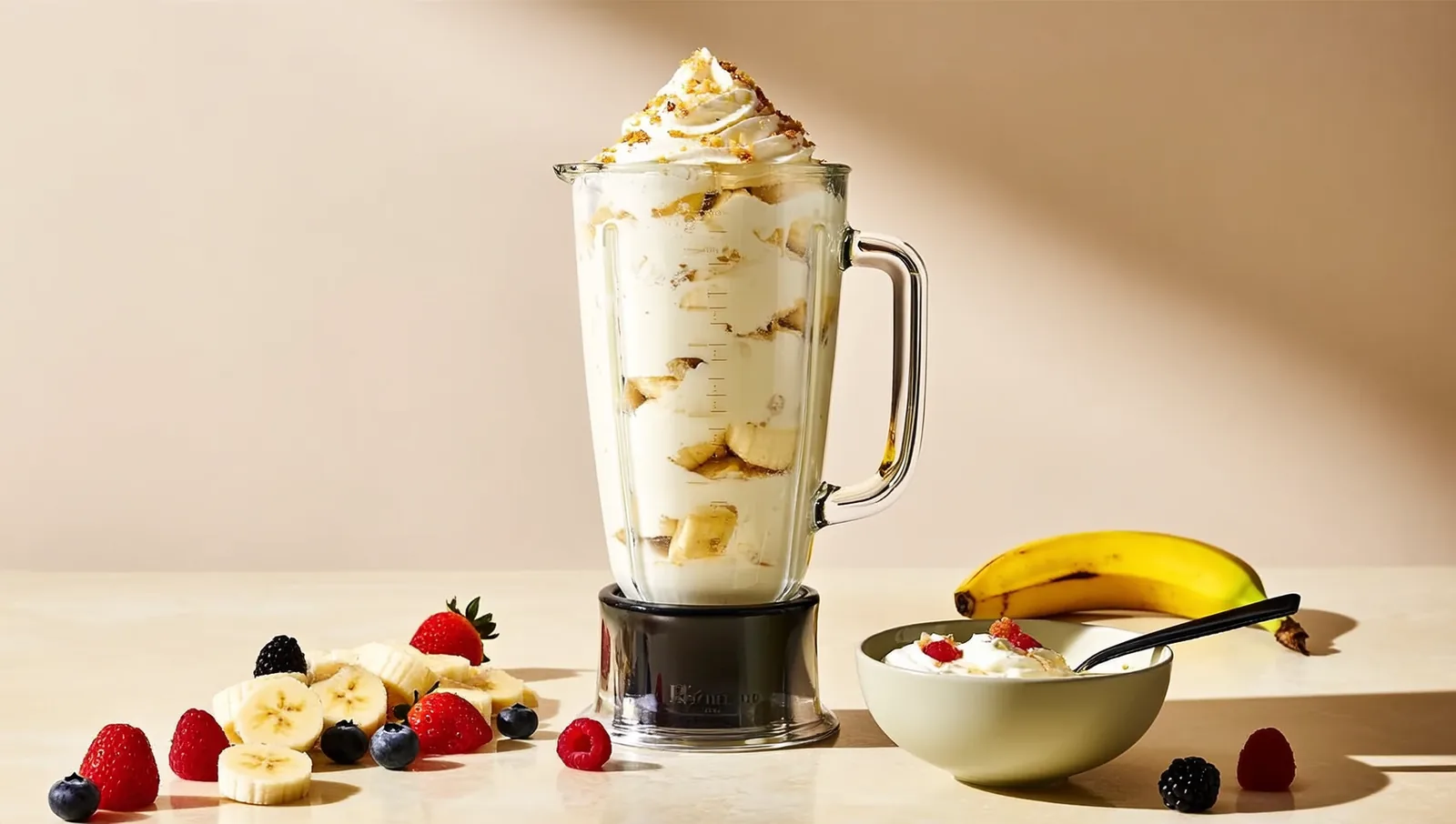
- Banana nice cream. Frozen ripe bananas blended smooth give you a creamy scoop free of all nine major allergens, provided you blend on clean, dedicated equipment. From there you can build flavor with cocoa, vanilla, or berries, and thicken a homemade dairy-free shake on the same principle.
For a richer custom base that still dodges the common allergens, sunflower seed butter or hemp milk stands in for nut milks, sunflower lecithin replaces soy lecithin, and certified gluten-free oats keep an oat base celiac-safe. Seeds and hemp are not top-nine allergens, though seed allergies exist and these products can share equipment too, so check those labels as well. The real payoff of making it yourself is total control of the ingredient list, which is the one thing a multi-allergy family can never fully get from a freezer case.
Living with more than one food allergy turns ice cream into a label exercise, but it does not have to take ice cream away. Screen the base first, read every mix-in, lean on vegan certification to clear milk and egg together, ask the scoop shop the right questions, and keep a banana or a sorbet recipe in reserve for the nights when nothing on the shelf measures up. Then verify the label one more time, because that habit is what keeps the treat a treat.
Further reading (sources)
- Go Dairy Free on ordering dairy-free at Baskin-Robbins, base by base
- Go Dairy Free for the cross-contact cautions at Cold Stone Creamery
- Go Dairy Free with Graeter’s sorbet allergen notes and the animal-free warning
- Go Dairy Free covering Salt & Straw’s rotating dairy-free decadence series
- Post Register reporting a scoop shop adding gluten-free cones and dairy-free options
- Annals of Allergy documenting anaphylaxis from a milk-contaminated pareve-labeled sorbet