Handel's Goes Dairy-Free: What's in the New Oat Milk Scoops and How to Order Them Safely
Published on July 29, 2026
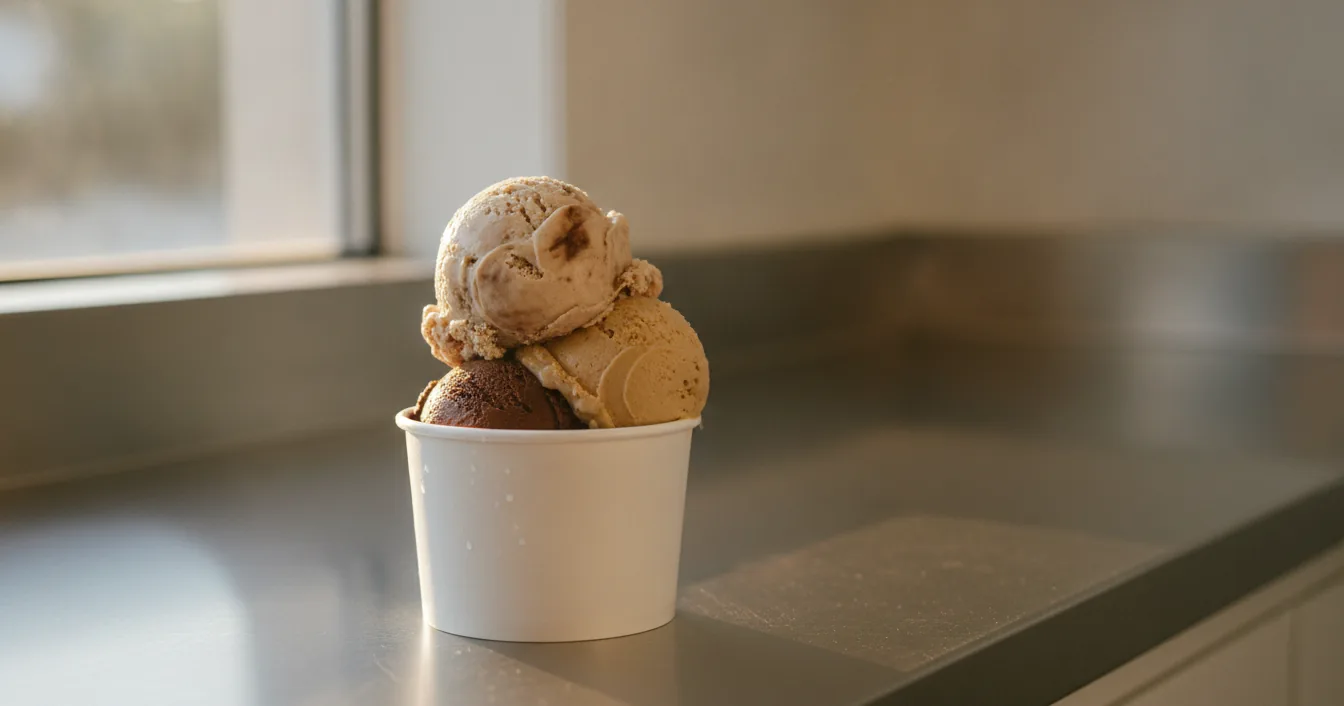
Handel’s has been selling ice cream since 1945, when Alice Handel started scooping out of her husband’s gas station in Youngstown, Ohio using fruit she picked in her own backyard. Eighty-one years and 175-plus stores later, the chain has finally put something in the case that does not come from a cow.
On July 1, 2026, timed to National Ice Cream Month, Handel’s launched three non-dairy flavors built on Oatly’s Full Fat Oatmilk. It is the first non-dairy push in the brand’s history, and it took the company just under a year to get the recipes where they wanted them.
That is genuinely good news if you have been walking past Handel’s for years. It is also a launch that deserves a careful read before you order, because a non-dairy scoop at a dairy-first counter is a different proposition from a sealed pint at the grocery store.
The three new flavors
All three are made with Oatly Full Fat Oatmilk, and Handel’s built them to mirror flavors already popular on the dairy side rather than to sit in a separate plant-based ghetto at the end of the menu.
- Non-Dairy Peanut Butter. The simplest of the three. Peanut butter oat milk ice cream, nothing folded in.
- Non-Dairy Coffee Truffle. Coffee oat milk ice cream with chocolate truffles.
- Non-Dairy Chocolate Peanut Butter Brownie. Chocolate oat milk ice cream with a Reese’s peanut butter ripple and brownie pieces.
“We were very passionate that we wanted to make sure we had some flavors that were nondairy, but also really resembled some other flavors that we have in Handel’s,” Jody Nerone, the company’s vice president of product innovation, told WKBN. Chief marketing officer Hillary Frei framed it as demand-led: “Our fans have been asking for more non-dairy options, and we’re excited to deliver them through this partnership with Oatly.”
Through July, every Handel’s location carried at least two of the three. They join a rotation that runs to roughly 140 flavors chain-wide, and the company has said they are staying rather than passing through as a summer promotion. You can order them in a dish, a cone, a shake, or a hand-packed pint.
Worth noting that these are not Handel’s first dairy-free items. The chain already lists a Coconut Milk flavor, a Chocolate Almond Milk flavor, and five sorbets (mango, strawberry, mixed berry, pomegranate, and vanilla pineapple). What is new is a non-dairy option that tastes like the indulgent stuff the rest of the menu is built on.
Why oat milk, and what that means on the label
Oatly’s Full Fat Oatmilk is the first product collaboration to use that particular ingredient, and the choice tells you a lot about the texture Handel’s was chasing. Full Fat runs around 3.7 percent fat, most of it added as expeller-pressed canola oil rather than coming from the oats themselves. Oat milk also brings its own dissolved sugars from enzymatic breakdown of the starch, which lowers the freezing point and keeps a base scoopable instead of icy.
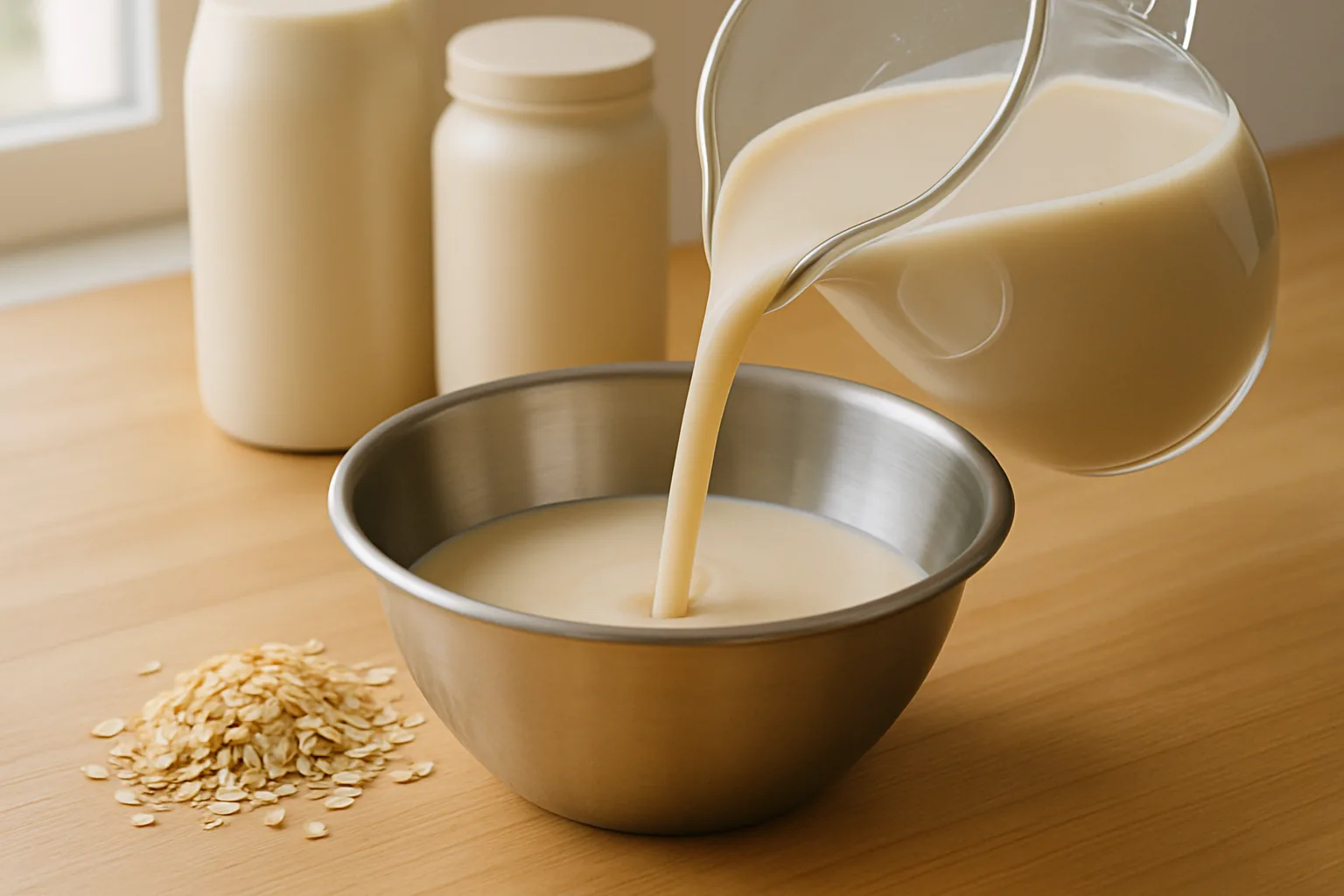
That is exactly why oat has become the default for chain rollouts: it is neutral in flavor, it whips reasonably well, and it dodges the two allergens that scare foodservice operators most (tree nuts and soy). The full ingredient deck on Oatly Full Fat also includes dipotassium phosphate, calcium carbonate, sea salt, algal DHA oil, and a vitamin package. If you want the longer comparison of how oat stacks up against coconut, cashew, and pea, I go base by base in the guide to plant milk bases in dairy-free ice cream.
Two things the base does not tell you, though.
Oatly Full Fat is certified gluten-free, but the flavors are not. Brownie pieces are wheat. Anyone ordering Non-Dairy Chocolate Peanut Butter Brownie on a gluten-free diet should skip it.
Non-dairy is a base claim, not a whole-product claim. The mix-ins are where milk sneaks back into otherwise plant-based frozen desserts, and the Chocolate Peanut Butter Brownie flavor names a branded confectionery ripple. Handel’s does not publish full ingredient lists for individual flavors, only an allergen report. Until you have seen the milk line on that report for that specific flavor, treat “non-dairy” as describing the ice cream and ask about the ripple and the brownie separately. If you need a reminder of how far a front-of-pack claim can drift from what is actually inside, the Ben & Jerry’s Doggie Desserts hack is a useful cautionary tale.
Non-dairy is not the same as vegan
Handel’s is marketing these as non-dairy. It is not calling them vegan, and that gap is deliberate often enough that it is worth respecting. A non-dairy claim addresses the milk base. It says nothing about eggs (brownie pieces frequently contain them), about honey, or about processing aids. If you are avoiding animal products rather than managing an allergy, these three flavors need confirming rather than assuming. I unpack why the two labels keep getting conflated in vegan versus dairy-free ice cream.
There is also an allergen shape here that is easy to miss: two of the three new flavors are peanut-forward. If peanut is on your list, the new line effectively offers you one option, Coffee Truffle, and that one still shares a counter with the other two. For households stacking multiple restrictions, the multi-allergy guide to dairy-free ice cream covers where the rest of the top allergens tend to turn up.
The cross-contact question at a dairy-first counter
This is the part that matters most, and Handel’s is refreshingly blunt about it. From the company’s own allergen page:
Our ice cream makers hand craft our various flavors using the same equipment. This means our ice cream is always fresh and guests can taste the difference; it also may increase the possibility of cross contamination.
And more directly:
Please be aware that due to the risk of cross contamination within our stores as well as our suppliers, we cannot guarantee that any of our products and flavors will be completely allergen free.
That is not Handel’s being unusually risky. It is an honest description of how nearly every hand-dipped scoop shop works. The tubs sit side by side in one cabinet. The scoops move between them. The dipper well of running water that scoops rest in is a food-safety device for bacteria, not an allergen control, and it will not remove milk protein from a scoop in any reliable way.

So the questions to ask at the window, in the order that gets you the most useful answers:
- “Can you use a clean scoop from the back, not one out of the well?” This is the single highest-value request, and most counters will do it without fuss if you ask before they start.
- “Is the non-dairy tub stored in its own cabinet or in the same one as the dairy?” Shared cabinet means splash and drip between tubs, which no scoop protocol fixes.
- “Does the non-dairy flavor have a dedicated scoop during service?” Some locations do this; it is worth knowing whether yours is one.
- “For a shake, is the spindle shared with dairy shakes?” Almost always yes. A milkshake made on a shared spindle is a meaningfully bigger exposure than a scoop in a dish.
- “Can I see the current allergen report?” Handel’s publishes one and updates it. Ask for the current version rather than relying on the menu description.
For milk allergy specifically, a cone from a shared dispenser and a topping bar with shared tongs are the other two spots to slow down on. Lactose intolerance gives you more room to make a judgment call here. A true IgE milk allergy does not.
What this launch actually signals
Handel’s is one of the last big legacy scoop chains to add a plant-based line, and its arrival is part of a wave rather than a one-off. But that wave has undertow worth knowing about. Carvel partnered with Oatly in 2024 and rolled dairy-free soft serve into 18 states, then quietly ended the partnership about a year later. It is now test-marketing a pea protein brand, Klimon, in a handful of New York shops.
The lesson is not that these programs are doomed. It is that a chain-wide dairy-free line is a business decision that can be reversed between one summer and the next, and the ingredient supplier can change without the menu language changing much at all. Verify per visit rather than per year. That habit is the through-line in my broader guide to ordering dairy-free at ice cream chains in 2026, and it applies here too.
For now, this is a real win. Three indulgent non-dairy flavors on a permanent rotation at 175-plus stores, built to taste like the flavors people actually queue for rather than like a consolation prize. Order the clean scoop, check the allergen report for the ripple, and enjoy it.
Further reading (sources)
- RestaurantNews on the Oatly partnership behind the three new non-dairy flavors
- WKBN for the Youngstown launch and how long the recipes took to develop
- Handel’s Homemade Ice Cream with its own shared-equipment and cross-contamination disclaimer
- Handel’s Homemade Ice Cream listing the current non-dairy, almond, coconut, and sorbet flavors
- Oatly on what goes into the Full Fat Oatmilk the line is built on
- Go Dairy Free tracking how Carvel’s dairy-free program changed suppliers
- Food Dive covering the Oatly and Carvel rollout that came before it