Coconut-Free Dairy-Free Ice Cream: Which Pints Actually Skip the Coconut
Published on August 8, 2026
Pick up almost any dairy-free pint and turn it around. The front of the carton says oat, or almond, or cashew. The ingredient list, three lines down, says coconut oil. That gap between the base a brand advertises and the fat it actually churns with is the most frustrating thing about shopping coconut free, and it catches people out constantly.
If you have a coconut allergy, follow a diet that restricts coconut, or simply cannot stand the way coconut flavor bleeds through every scoop, the plant-based freezer case can feel like it was built for somebody else. That is starting to change, and there is a reliable way to read your way through it in the meantime. Here is why coconut became the default fat, what a recent labeling change means for spotting it, which pints genuinely skip it, and how to build a creamy base without it at home.
Why Coconut Became the Default Fat
Coconut is not in your pint because someone loved the flavor. It is there because it behaves like butterfat.
Ice cream needs a fat that stays firm at freezer temperature and melts near body temperature. That is what gives a scoop its structure, its slow melt, and the coating richness on the tongue. Dairy cream manages it because milk fat is roughly two-thirds saturated. Coconut oil is the only cheap, neutral plant fat that comes close: it runs over 80 percent saturated and sets solid around 76 degrees Fahrenheit. Swap in a liquid oil like canola or sunflower with no other changes and you get something thinner and icier.
So coconut oil ends up doing the structural work in pints whose front label never mentions it. It is worth stating plainly that the base and the fat are two separate questions. I walk through how each base behaves in the full guide to plant milk bases, but a base mostly sets flavor, protein, and allergen profile. The fat is its own line item, and for most brands that line item is coconut.
The Label Change That Made This Harder
Here is the part most coconut avoiders have not caught up with yet.
U.S. labeling rules used to treat coconut as a tree nut, which meant it appeared in the bold “Contains” line on the package. That was an accident of regulatory classification, since coconut is botanically a drupe rather than a nut, but it was genuinely useful, because it put coconut in the fastest part of the label to scan.
That changed. In guidance effective January 6, 2025, the FDA cut its list of tree nuts requiring allergen labeling from 23 down to 12 and dropped coconut, along with ten others including shea, chestnut, and ginkgo (Allergic Living, 2025). The practical consequence, in FARE’s words, is that you will no longer see coconut listed in a “Contains: tree nuts (coconut)” statement (FARE, 2025).
Two things are worth holding onto:
- Coconut still has to appear in the ingredient list under its common name. It has not gone invisible. It has moved out of the bold summary line and into the fine print.
- The FDA removed a labeling requirement, not an allergy. Coconut allergy is real and entirely unaffected by the reclassification. It is uncommon, with one 2023 analysis finding roughly 1 in 260 Americans report symptoms consistent with an IgE-mediated coconut allergy, but uncommon is not zero. FARE has encouraged manufacturers to keep declaring it voluntarily.
If your habit has been to screen pints by glancing at the Contains line, that habit will now miss coconut entirely. Read the full ingredient list. My label-reading field guide covers the rest of that panel.
What to Scan For
Coconut turns up in frozen desserts under more than one name. Work down the ingredient list looking for:
- Coconut oil and organic coconut oil, by far the most common. This is the structural fat.
- Coconut cream and coconut milk, usually the base itself in premium pints.
- Desiccated coconut, coconut flakes, or shredded coconut, which show up in inclusions and swirls rather than the base.
- MCT oil and fractionated coconut oil, both coconut derived, appearing mostly in keto and no-sugar-added lines.
- Natural flavor with a parenthetical, as in “natural flavor (coconut)”. Some brands do disclose it there.
- Coconut sugar is the odd one out. It comes from the sap of the coconut palm flower, not the fruit, so whether it matters depends on how your restriction was defined. Ask your allergist rather than guessing.
A Real Signal: Califia Farms Drops Coconut Cream
The most telling development this year is not in the freezer case at all. It is in the refrigerated creamer section, and it says something about where plant dairy is heading.
Califia Farms reformulated its almond creamer base, cutting the sugar and taking out the coconut cream, specifically so that every flavor in the line is coconut free (Go Dairy Free, 2026). The standard version now leans on sunflower oil and sunflower lecithin for body, while the organic varieties skip added oils and gums altogether, running on almondmilk, sugar, and flavor.
That matters twice over. First, a mainstream brand treated coconut free as a feature worth reformulating for, not a niche complaint to absorb. Second, it settles the technical argument: sunflower oil and a lecithin can carry a creamy almond product that previously needed coconut cream. The same chemistry works in a frozen dessert.
Which Pints Are Genuinely Coconut Free
Be skeptical of roundup lists here. Plenty of “coconut free vegan ice cream” articles name brands whose own labels say otherwise, including several that confidently recommend pints I checked and found built on coconut oil. Verify the ingredient list yourself. Here is where things stood when this was written.
Usually coconut free:
- Cado, the avocado line, uses avocado puree and avocado oil as its fat, with no coconut in any flavor. Go Dairy Free also lists it as nut free and soy free, though the company notes that coconut based products run in the same facility with cleaning between runs, which matters if your concern is allergy rather than taste.
- Eclipse Foods builds its base from cassava, potato, corn, and oat, with expeller-pressed canola oil as the fat, and markets it as made without coconut, nuts, or soy.
- True fruit sorbets and sorbettos, which are fruit, sugar, and water with no added fat, sidestep the problem structurally. Talenti’s Roman Raspberry, for instance, is raspberries, water, sugar, dextrose, lemon juice, and carob bean gum. The same brand’s coconut and cold brew coffee sorbettos do contain coconut oil, so the format is a strong bet rather than a blanket guarantee.

Check carefully, because the base name misleads:
- Oatly Frozen Dessert is oat based and still lists coconut oil, blended with rapeseed oil, as its fat.
- Ben & Jerry’s Non-Dairy uses coconut oil across both the almond and the oatmilk lines.
- So Delicious Cashewmilk pints list organic coconut oil third, right after the cashewmilk and cane sugar.
- Van Leeuwen builds both its oat milk and its cashew milk vegan lines on organic coconut cream and coconut oil, alongside cocoa butter.
None of those are bad products. They are simply not coconut free, and most are sold under a base name that implies otherwise. This is precisely the gap the multi-allergy family guide leaves open, since it maps soy, nuts, gluten, and egg.
At a scoop shop, ask about the fat and not just the base. A counter that has added an oat milk line, the way Handel’s did with its oat milk non-dairy launch, has not necessarily added a coconut free one. Ask to see the tub.
One more habit worth building: re-read the panel every few months on anything you buy regularly. Califia’s own reformulation is proof that these lists move.
Churning Creamy Without Coconut Fat
Home is where coconut free gets easy, because you control the fat outright. The core problem is replacing a saturated fat with a liquid one without ending up with an icy brick. Three approaches work.
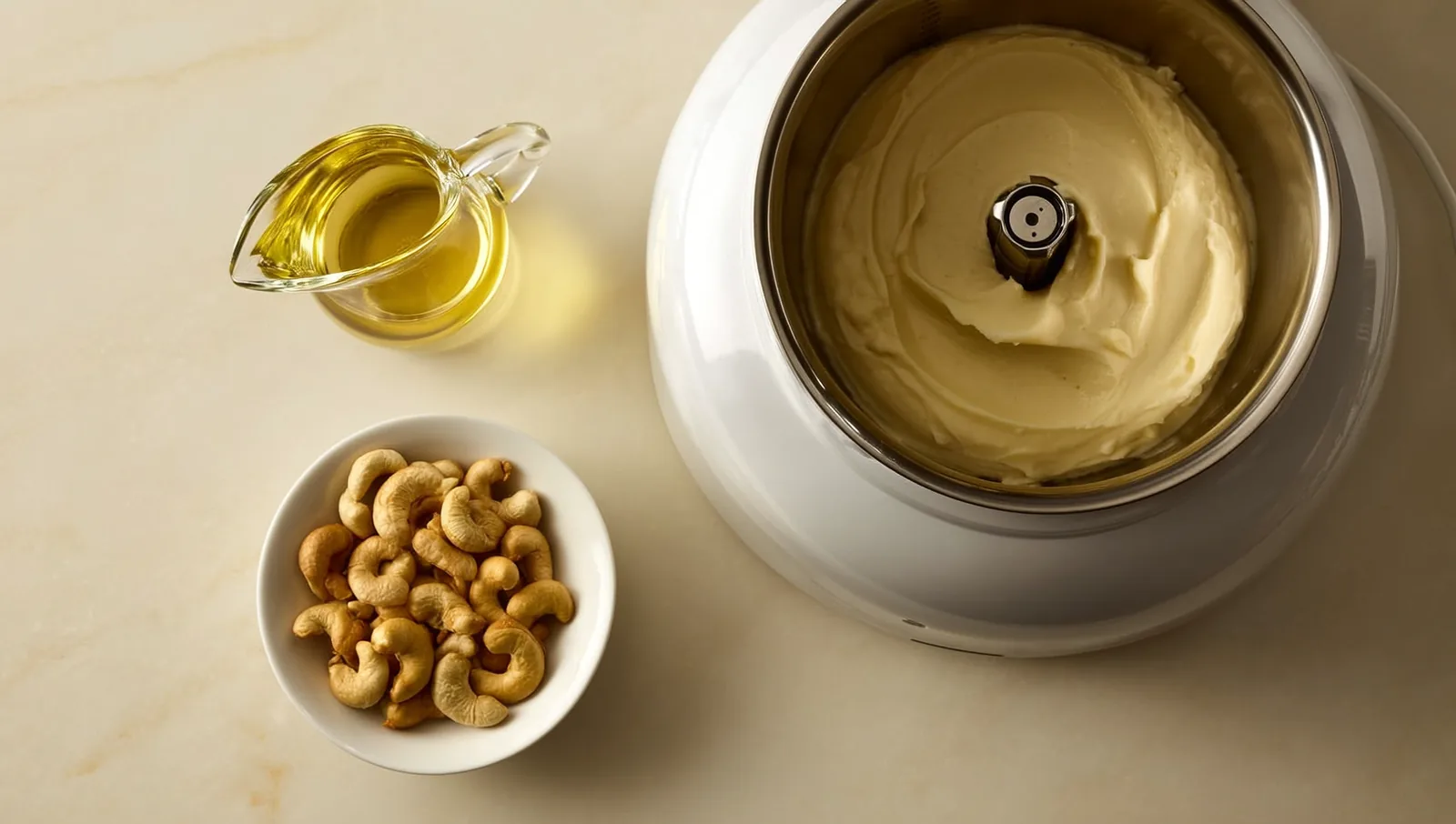
Emulsify a neutral liquid oil. Go Dairy Free’s no-coconut chocolate chip recipe blends unsweetened plant milk with sugar, then drizzles rice bran oil in very slowly with the blender running, building a stable emulsion before the base ever reaches the machine. Pea protein milk is the recommended liquid, because the protein helps hold that emulsion together. Canola stands in for rice bran perfectly well. The result lands somewhere between ice milk and full ice cream, which is a fair trade for a clean label.
Use whole nuts or seeds instead of extracted oil. Raw cashews, soaked and blended smooth, deliver fat, protein, and starch at once, and the protein does emulsifying work that a bare oil cannot. Sunflower seed butter does the same job without nuts. This is the richest route and the most forgiving.
Lean harder on stabilizers and sugar. With no saturated fat holding the structure, a small gum blend earns its keep. Locust bean and guar together, or a little tara gum, will keep ice crystals down, and sunflower lecithin picks up the emulsifying role coconut fat had been quietly playing. The stabilizer and emulsifier reference has working ratios. Nudging the sugar up slightly also lowers the freezing point and keeps the scoop softer, at the cost of a sweeter finish.
Cocoa butter deserves a mention as the other plant fat that is solid at room temperature and could stand in structurally. It works, but it brings chocolate flavor with it and costs considerably more, so treat it as a chocolate-forward option rather than a neutral swap.
The Short Version
Coconut free and dairy free are not the same shopping trip. The base name on the front of the carton tells you about flavor, protein, and allergens, not about fat, and coconut oil is sitting in a great many oat and cashew pints. Since January 2025 it no longer appears in the bold Contains line, so the ingredient list is the only place left to catch it. Avocado bases, engineered plant bases, and true fruit sorbets are the dependable retail options, and at home a well emulsified liquid oil or a whole cashew base will get you a creamy scoop with no coconut anywhere near it. Then check the label again next time, because as Califia has just demonstrated, formulations move.
Further reading (sources)
- Go Dairy Free on Califia reformulating its almond creamer to be coconut free
- FARE with what the updated FDA allergen guidance changes on a label
- Allergic Living for the reasoning behind dropping coconut from the tree nut list
- Go Dairy Free reviewing an avocado based pint with no coconut in any flavor
- Go Dairy Free covering which sorbetto flavors stay clear of coconut oil
- Go Dairy Free with a no-coconut base built on slowly emulsified oil
- Eclipse Foods listing the cassava and canola base behind its plant ice cream