When 'Vegan' Doesn't Mean Dairy-Free: Lessons from the 2026 Ice Cream Recall
Published on June 22, 2026
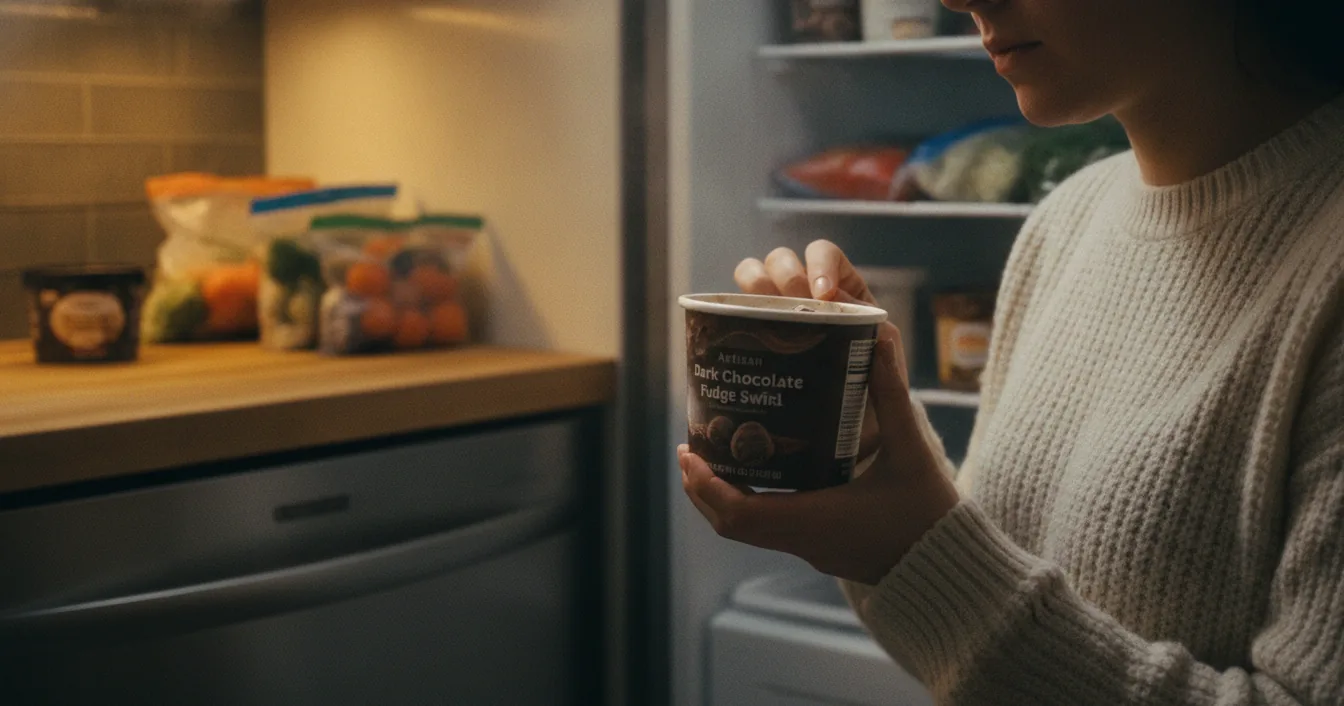
“Dairy-free” and “vegan” are the two most reassuring words in the freezer aisle, and most of the time they earn the trust. In March 2026 they did not. The Canadian Food Inspection Agency issued a food recall warning for a brand called Delight Chocolate, pulling its dairy-free vegan chocolate ice cream off shelves because the tubs contained milk that was nowhere on the label. The recall covered the 500 millilitre and 112 millilitre sizes (the larger one carried UPC 627987197297), it was triggered by a consumer complaint, and the agency confirmed that reactions had already been reported by people who ate it (Canadian Food Inspection Agency, 2026).
That is the part worth sitting with. A product built and marketed as vegan, the single strongest shorthand for “no animal products, milk included,” still put milk in front of allergic shoppers. This is not a story about one bad brand. It is a story about how the word on the front of the tub and the protein inside it can come apart, and what that means if you or your child has a milk allergy. I have written separately about how to read a dairy-free label end to end; this piece is about the failure behind the recall, and what to do when one lands on something in your freezer.
A “Vegan” Label Describes the Recipe, Not the Result
Start with what the claim actually promises. “Vegan” and “dairy-free” are formulation claims. They describe the ingredients a maker chose to put in, not a test of what the finished, packaged product turns out to contain. The two usually match. They come apart the moment milk gets into the food by some route other than the recipe.
It helps to hold the three common terms apart, because shoppers lean on them as if they were interchangeable safety grades. Dairy-free should mean no milk-derived ingredients. Vegan means no animal products at all, so every vegan ice cream is also dairy-free on paper. Lactose-free is the odd one out and usually means real dairy with the lactase enzyme added, which leaves the milk proteins fully intact and unsafe for a milk allergy. I unpack that gap in vegan versus dairy-free ice cream. None of those three words, though, is an allergen test. A milk allergy reacts to the proteins casein and whey, and those proteins do not read marketing copy.
How Milk Gets Into a Vegan Pint
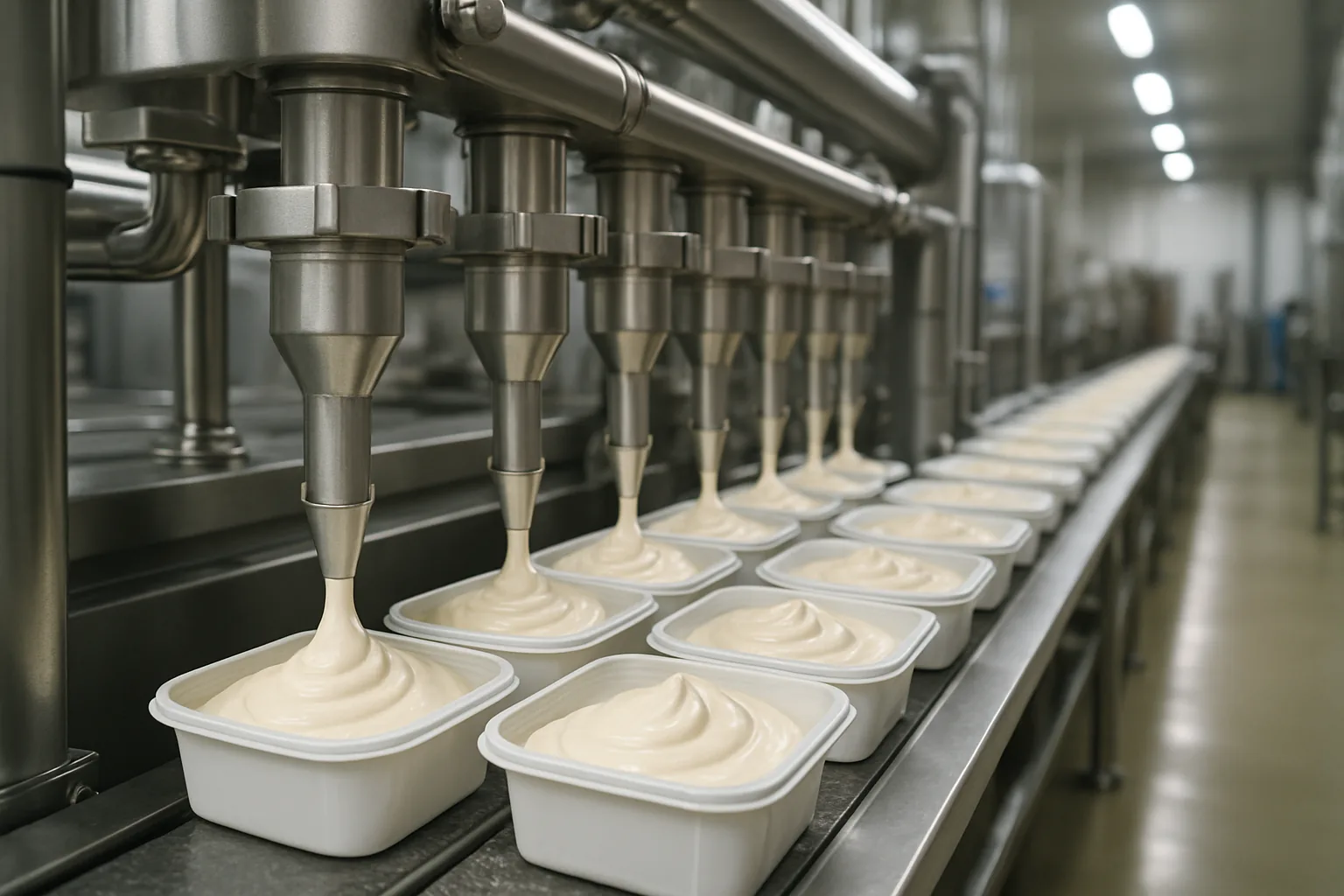
Almost no small plant-based brand owns its factory. Most rent time on a co-manufacturer’s line, often called a co-packer, and those facilities frequently run conventional dairy ice cream on the same equipment the rest of the week. That shared environment is where a clean recipe goes wrong, usually in one of three ways:
- Incomplete cleaning between runs. A line that made dairy ice cream on Monday and a vegan batch on Tuesday has to be stripped and sanitized in between. If a freezer barrel, a hopper, or a filler nozzle is not fully cleaned, milk residue carries into the plant-based batch.
- A supplier swap. The dairy can ride in on an ingredient rather than the line. A chocolate coating, a flavor base, a cookie piece, or a “vegan” chip can be reformulated by a supplier, or contaminated at their plant, and arrive carrying milk the brand never ordered.
- Rework and mix-ups. Leftover product fed back into a later batch, a mislabeled tote, or the wrong tub on the fill line can all put dairy where it does not belong.
This is not theoretical. A long-cited allergy case report describes a milk-allergic child who went into anaphylaxis from a sorbet labeled pareve, a kosher term for a food with neither meat nor dairy, after it was packaged on equipment previously used for ice cream (Annals of Allergy). Sorbet is naturally milk-free, and it still sent a child to the hospital, because the equipment did not care what the recipe said. The same hazard shows up at the scoop shop counter, where shared scoops and a shared mixing surface are the real risk rather than the flavor list, something I cover in the guide to ordering at ice cream chains.
The Labeling Rules That Are Supposed to Catch It
In the United States, the Food Allergen Labeling and Consumer Protection Act names milk as one of the major allergens that must be declared in plain language whenever it is an intentional ingredient, either inside the ingredient list or in a “Contains: Milk” line beneath it. Canada’s system, which governed the Delight Chocolate recall, treats milk as a priority allergen the same way. When a maker knows milk is in the food, the law is clear and the label has to say so.
The gap is cross-contact. Neither system requires a “may contain milk” advisory, defines what one means, or sets a contamination threshold behind it, so milk that arrives through a dirty line or a swapped ingredient can slip past the label entirely until someone reacts and complains. That is exactly why undeclared allergens, with milk among the most frequent, rank as one of the leading causes of food recalls in both countries. The recall is the system’s backstop, not its first line of defense, which puts a premium on knowing how to read one.
How to Read an FDA or CFIA Recall Alert
A recall notice is dense on purpose, because matching the exact product matters more than recognizing the brand. When an alert lands, check these fields against the package in your hand:
- Brand and product name, plus the specific flavor and variety.
- Package size and form. The Delight Chocolate recall named the 500 millilitre and 112 millilitre tubs specifically.
- The UPC and any lot codes, batch numbers, or best-by dates. These pin down which production runs are affected. The recalled 500 millilitre tub carried UPC 627987197297, and matching that number beats eyeballing the artwork.
- The hazard and the distribution area, so you know what is wrong (undeclared milk) and whether your region was covered.
United States recalls also carry a class. A Class I recall means a reasonable probability that the product will cause serious harm or death, which is the category undeclared milk usually falls into once it reaches an allergic consumer, so do not let “just a labeling issue” lull you. You can find these notices on the FDA recalls page and on FoodSafety.gov, and the CFIA posts its food recall warnings the same way. If there is a milk allergy in your household, subscribe to the email or feed alerts so a notice reaches you before the freezer does.
If You Already Ate a Recalled Product
First, stop serving it and set the package aside rather than tossing it immediately, because the lot code and UPC are what you need to report a reaction and to confirm you have the affected batch. The CFIA’s standing guidance on these recalls is blunt: do not eat a recalled product you are allergic or sensitive to, and either throw it out or return it to the store.
If the person exposed has a milk allergy, watch them, do not just reassure them. Reactions can begin within minutes to a couple of hours. Mild signs include hives, an itchy mouth, or stomach upset. The dangerous ones are throat tightness, trouble breathing, repetitive coughing, vomiting, a drop in blood pressure, or a sense of impending doom, and any of those points to anaphylaxis. The response to anaphylaxis is epinephrine first, right away, followed by a call to emergency services, not an antihistamine and a wait. Antihistamines only touch mild symptoms and do nothing for a closing airway. If you carry auto-injectors, this is the moment they exist for.
Then report it. Consumer complaints are not a formality, they are the trigger that started the Delight Chocolate recall in the first place. In the United States you can file with the FDA through MedWatch or the Safety Reporting Portal; in Canada the CFIA and Health Canada take consumer reports. Your report can be the one that pulls a contaminated lot before it reaches the next allergic family.

The Real Lesson, and How to Lower Your Risk
None of this is a reason to abandon plant-based ice cream, which is perfectly safe across the overwhelming majority of pints on the shelf. It is a reason to treat “vegan” as the start of the check rather than the end of it. For a true milk allergy, lean toward brands that run dedicated dairy-free facilities or carry a credible allergen certification, weigh any “may contain” advisory as a real signal rather than legal noise, and re-read the allergen statement on every purchase, because suppliers change and co-packers rotate. If your household juggles more than one allergy, the multi-allergy guide to dairy-free ice cream maps where the other big allergens hide in these same products.
The 2026 recall did not prove that vegan ice cream is dangerous. It proved that the word on the front and the allergen line on the back do two different jobs, and only one of them is bound by law to tell you the truth. Read that line, learn how a recall reads, and keep enjoying the scoop.
Further reading (sources)
- Canadian Food Inspection Agency on a vegan chocolate ice cream recalled for undeclared milk
- U.S. Food and Drug Administration for how milk and the other major allergens must appear on a label
- U.S. Food and Drug Administration with how recalls are classified and posted
- FoodSafety.gov covering recall alerts you can sign up to receive
- Food Allergy Research & Education on recognizing anaphylaxis and using epinephrine
- Annals of Allergy documenting anaphylaxis after a milk-contaminated pareve-labeled dessert