Dairy-Free Ice Cream on a Low-Fat Diet: Gallstones, Pancreatitis, and Gastroparesis
Published on October 13, 2026
If you have just been told to cut fat, after a gallbladder attack, a bout of pancreatitis or a gastroparesis diagnosis, the dairy-free freezer door looks like the obvious place to start. For fat, it is the wrong door. Taking the milk out of a frozen dessert changes nothing about the fat unless the maker sets out to lower it, and most do not. When Craig and Brothers recorded the labels of 358 dairy-free pints, the median serving held 12 grams of fat, and a 2024 survey of Swedish supermarkets found plant-based ice cream at least as fatty as dairy, gram for gram. The same aisle does hold a genuinely fat-free option, and the three conditions differ more than most diet handouts admit. Treat what follows as background for a conversation with your doctor or dietitian, whose numbers outrank mine.
Dairy-Free Is a Milk Category, Not a Fat Category
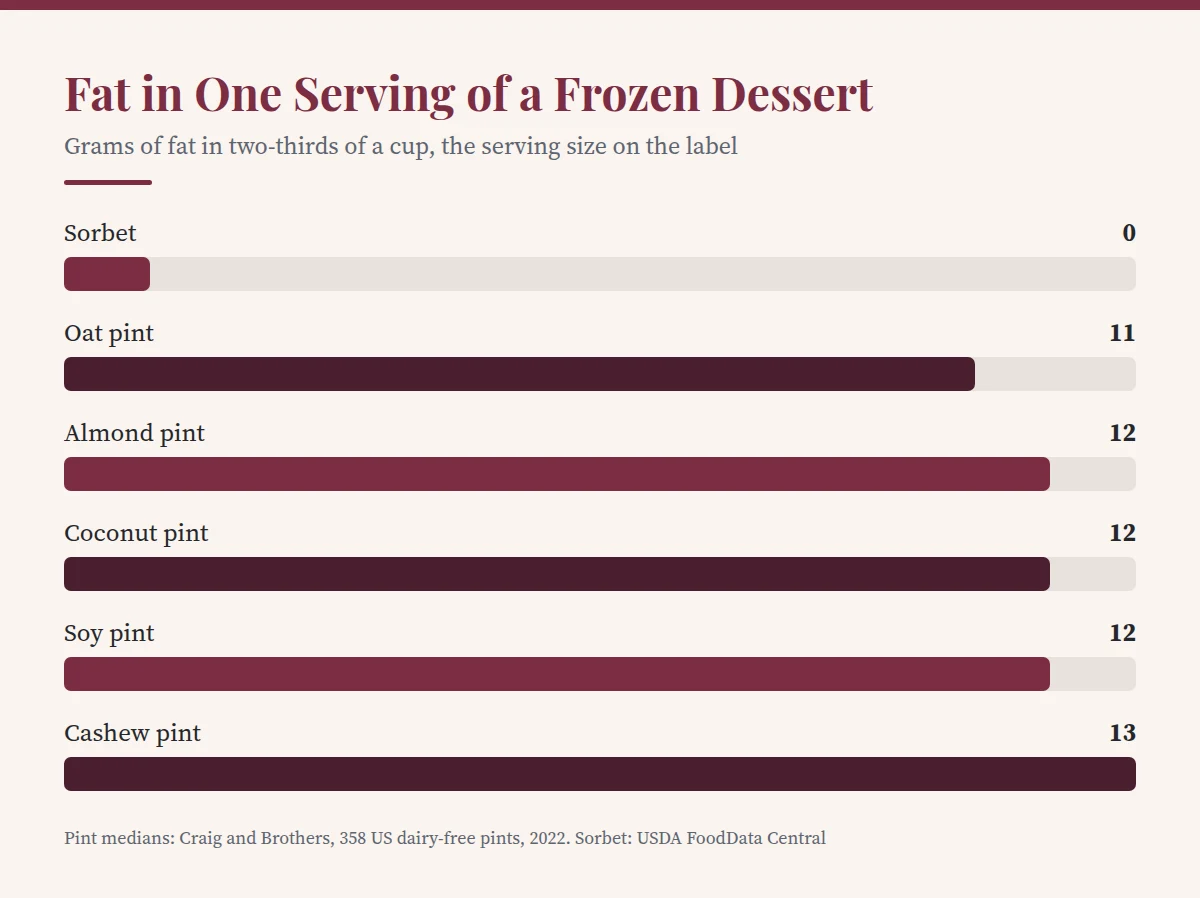
Craig and Brothers gathered the nutrition panels of the dairy-free pints sold in western US supermarkets and on brand websites in early 2022. The plant named on the front barely moved the fat. Median fat per serving was 11 grams for oat pints, 12 for almond, coconut and soy, and 13 for cashew. About a quarter of all the pints (24 percent) went over 15.5 grams, a fifth of the Daily Value in a single serving.
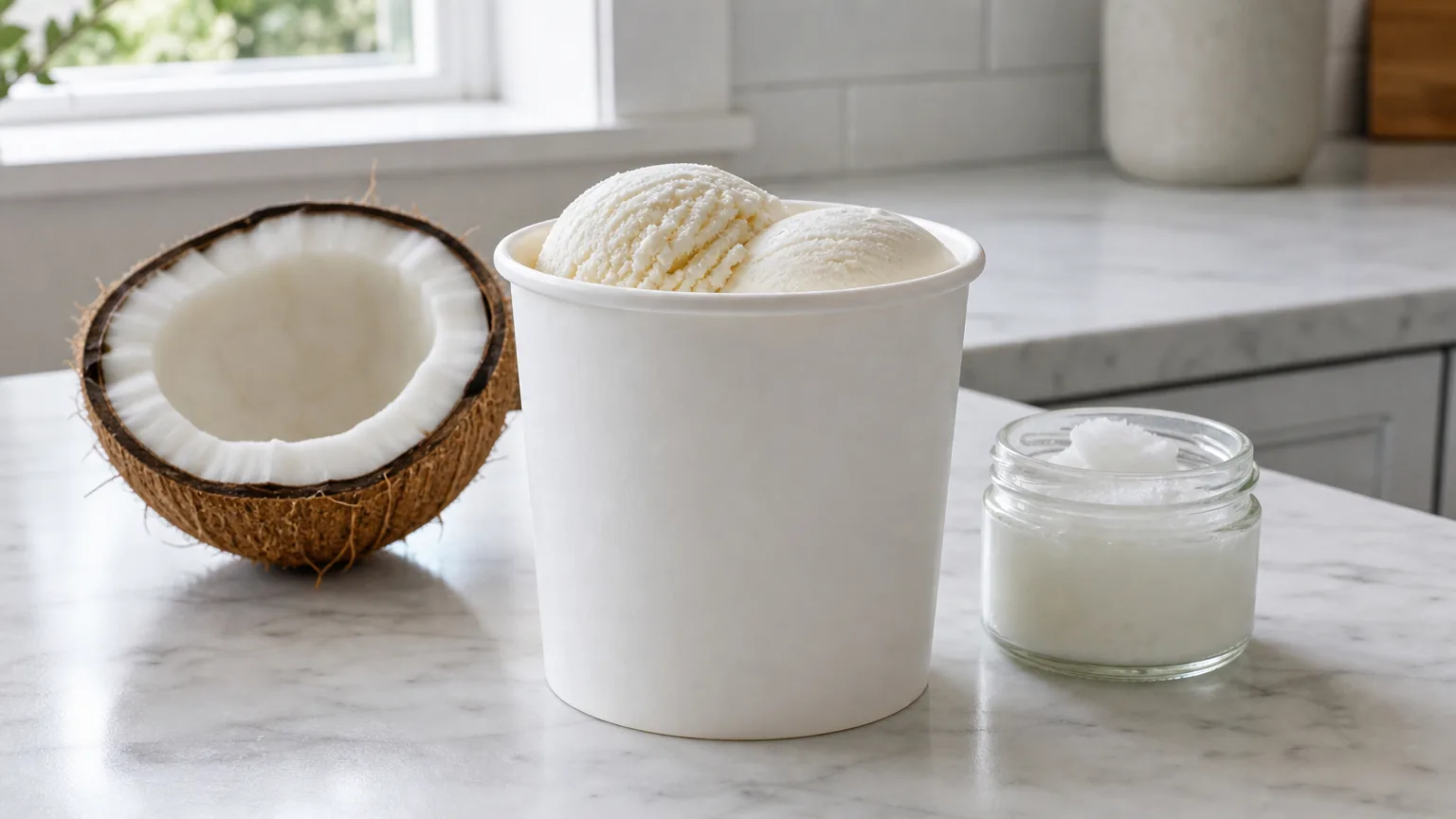
The base shows up in saturated fat instead. Soy pints had a median of 3 grams of saturated fat, almond 7, oat and cashew 9, and coconut 10. Oat lands so close to coconut because many oat pints are churned with coconut oil whatever the front of the tub says, a gap I dig into in coconut-free dairy-free ice cream.
A few uncommon bases came in lower (olive oil pints at 8 grams, apple and hemp at 6, faba bean at 0), but each group held fewer than ten pints. They prove that lower-fat pints exist; only the panel tells you which.
Dairy is no heavier. Moshtaghian and colleagues compared 23 plant-based ice creams sold in Sweden with 12 dairy ice creams and found a median of 11 grams of fat per 100 grams for the plant-based group against 9.4 for dairy, with saturated fat at 6.6 and 5.5 grams. Neither gap was statistically significant. Whichever you pick up, a creamy pint is a high-fat food.
Ranking the Freezer Case by Fat
From least fat to most, per two-thirds cup, which is the serving size federal labeling rules set for ice cream and frozen desserts:
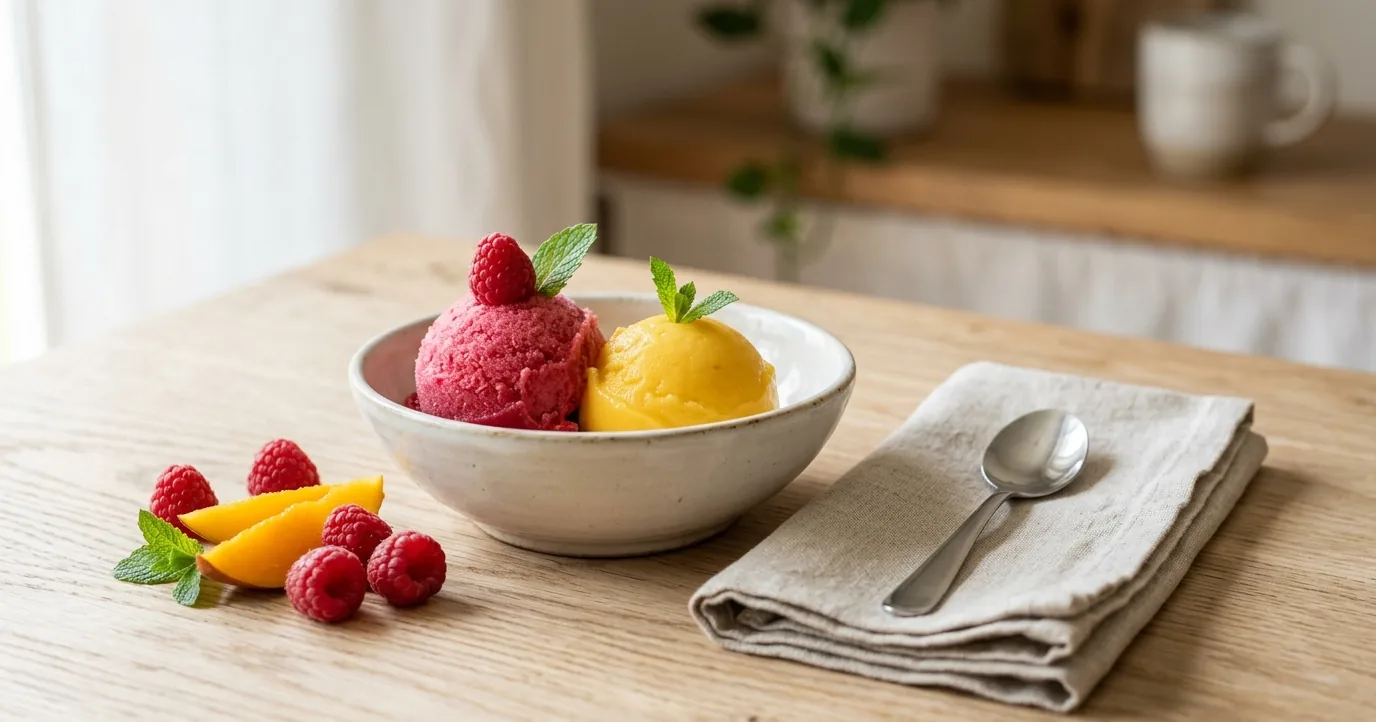
- Sorbet, fruit ices and fruit juice bars. Fruit, sugar and water, with nothing in them to carry fat. USDA’s FoodData Central lists sorbet at 0.05 grams of fat per 100 grams, well under a tenth of a gram a serving. The exceptions are sorbets made creamy with coconut milk or coconut oil, so read the ingredients on anything sold as a coconut sorbet or a sorbetto.
- Anything labeled “low fat” or “fat free.” These are defined terms. Under FDA rules, a frozen dessert can call itself low fat only at 3 grams or less per serving, and fat free only below half a gram. Plant-based, oat milk, creamy and the rest promise nothing about fat.
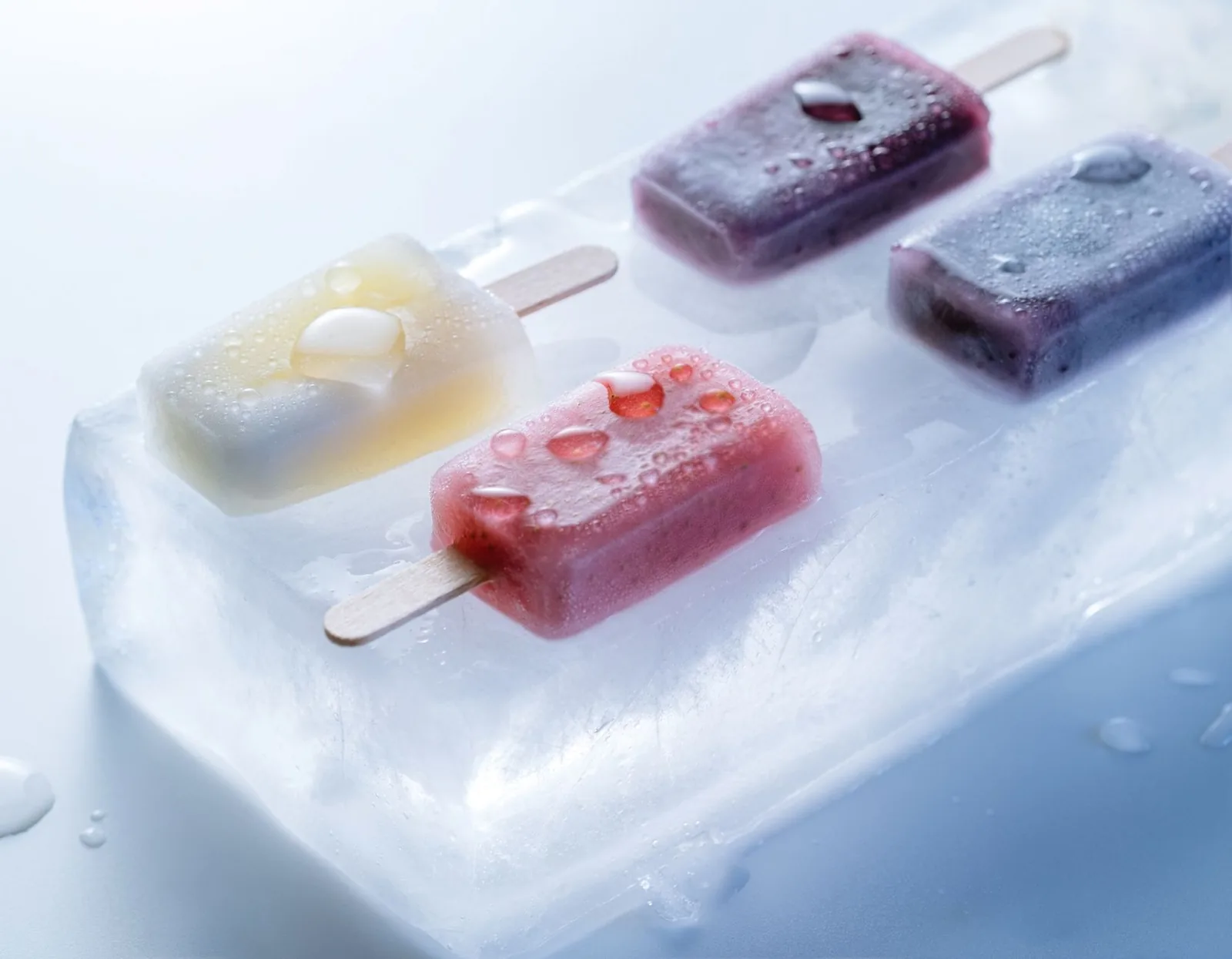
- Creamy bars and sandwiches. The non-dairy bars and sandwiches in Craig and Brothers’ survey had a median of 7 grams of fat a serving, but the 23 coconut ones had 12. A creamy bar is a pint on a stick. Paletas split the same way: paletas de agua are fruit pops, while paletas de leche are cream pops that a dairy-free maker has to rebuild on coconut or another plant cream, as I explain in the field guide to dairy-free frozen dessert types.
- Pints, whatever the base. Eleven to 13 grams at the median, with a quarter of them above 15.5. Chunky flavors with nut butter or chocolate pieces bring fat of their own.
Mind the arithmetic, too. A pint is two cups, which makes three servings, so finishing a median tub on the couch adds up to 36 grams of fat.
After a Gallbladder Attack: Less Fat, Not No Fat
Gallstones cause trouble when one blocks a bile duct. The National Institute of Diabetes and Digestive and Kidney Diseases (NIDDK) notes that gallbladder attacks often follow heavy meals and usually strike in the evening or at night, and that after one attack, more are likely to follow. The usual treatment is surgery to remove the gallbladder, so the dessert question often covers the wait for an operation and the months after it.
Fat in a meal makes the gallbladder contract and push out bile. In one weight-loss trial, a meal with 10 grams of fat was enough to bring the gallbladder to its full squeeze, and a single serving of a median dairy-free pint carries more than that.
Yet NIDDK’s eating advice for gallstones is not a no-fat diet. It recommends more fiber, fewer refined carbohydrates and less sugar, plus healthy fats such as fish oil and olive oil, because those keep the gallbladder emptying on a regular basis. What it tells you to avoid is “unhealthy fats, like those often found in desserts and fried foods.” A coconut pint, at a median 10 grams of saturated fat a serving, is a fair example of that line. Sorbet solves the fat and leaves the sugar, which NIDDK also asks you to cut, so it is a better dessert rather than a free one. If you want something creamy, soy pints carried the least saturated fat of the common bases (3 grams), though they had the same 12 grams of total fat.
Going to zero is not the safe extreme either. In weight-loss studies on very low calorie diets, cutting fat to almost nothing left the gallbladder sitting idle. Gebhard and colleagues stopped their trial early after gallstones formed in four of six people on a 520-calorie diet with under 2 grams of fat a day, and in none of the seven on a 900-calorie diet with 30 grams, including one 10-gram fat meal daily. Festi and colleagues saw the same split: stones in 6 of 11 dieters on 3 grams of fat a day, and none on about 12. Those were people with obesity losing weight fast, not everyone with gallstones, but NIDDK makes the same warning, noting that fast weight loss can keep the gallbladder from emptying properly. Ask your doctor for a fat target rather than aiming for none.
After the gallbladder comes out, NIDDK says a small number of people have softer and more frequent stools, usually for a while rather than for good. A low-fat diet is still routinely handed out after the operation, yet when Ribas Blasco and colleagues followed 83 patients for six months, quality of life improved after surgery whatever their fat intake. More than half noticed a change in bowel habit, and 23 percent still did at six months. It was an observational study, with a randomized trial under way, but it suggests a lifetime of fat-free desserts is not required. If rich food sends you running, a lighter dessert is a sensible experiment.
Pancreatitis: The Recovery Diet and the Chronic Diet
Pancreatitis comes closest to a plain low-fat prescription. Once you can eat again after an attack, NIDDK says, your doctor will prescribe a healthy, low-fat eating plan with small, frequent meals. It also says to drink plenty of fluids, limit caffeine, and avoid alcohol completely, even after a mild case.
Two of those lines reach into the freezer. Coffee flavors usually bring caffeine with them. And boozy sorbets and liqueur-spiked pints, which I cover in boozy dairy-free sorbets, are off the menu however fruity and fat-free they look.
Eating restarts sooner, and with more solid food, than it used to. The American College of Gastroenterology’s 2024 guideline suggests that people with mild acute pancreatitis begin eating within 24 to 48 hours as tolerated, starting with a low-fat solid diet rather than stepping up from clear liquids. The European Society for Clinical Nutrition and Metabolism (ESPEN) likewise recommends a low-fat, soft diet when eating restarts. Among the trials the ACG cites, Jacobson and colleagues randomized 121 patients and found a low-fat solid first meal about as well tolerated as clear liquids, with more calories. A sorbet or fruit ice fits that stage. A 12-gram serving of a creamy pint does not.
If very high blood fats caused your pancreatitis, the limit can be much tighter. For familial chylomicronemia syndrome, a rare inherited cause, a panel of dietitians advises under 15 to 20 grams of fat a day, so one serving of a median pint would take most of a day’s allowance. The same guidance puts high-sugar products on its list of foods to avoid, alongside alcohol, which makes most sorbets an occasional food there too.
Chronic pancreatitis has moved the other way. Patients were long told to eat low fat, and ESPEN’s guideline notes that Dutch studies found 48 to 58 percent still restricting fat. Its recommendation now is that people with chronic pancreatitis do not need a restrictive diet: a well-balanced one if your nutrition is normal, and high-protein, high-energy food in five or six small meals if you are malnourished. When fat is not being absorbed, the fix is enzyme capsules taken with meals and snacks that contain fat, and ESPEN gives fruit as an example that does not need them. In freezer terms, a scoop of a creamy pint is a fatty snack to ask your team about dosing for, and a fruit sorbet is not. If chronic pancreatitis has brought diabetes with it, which NIDDK lists among its complications, the sugar in that sorbet belongs in the eating plan your team builds.
Gastroparesis: Melted Helps, Low Fat Helps More
With gastroparesis the stomach empties too slowly, and diet advice centers on smaller meals with less fat and fiber and more of the food in liquid form. Homko and colleagues put that advice to the test in 12 patients, giving each a high-fat solid, a low-fat solid, a high-fat liquid and a low-fat liquid meal on separate days. Symptoms ran in exactly that order, worst to best, and nausea more than doubled after the high-fat solid meal.
A frozen dessert melts into a liquid, which works in its favor. A sorbet is a low-fat liquid, the best-tolerated meal in that study. A scoop of a creamy pint behaves more like the high-fat liquid, kinder than a fatty solid meal but rougher than sorbet. The American College of Gastroenterology’s 2022 guideline also recommends a small-particle diet, which in dessert terms means smooth: no nut pieces or cookie chunks. Keep the serving small, since a big bowl is a big meal whatever its texture. I cover the wider gastroparesis advice, along with IBS, reflux and other gut conditions, in my condition-by-condition guide to dairy-free ice cream and your gut.
Reading the Panel When Fat Is Your Number
On a low-fat plan, the nutrition panel outranks anything printed on the front of the tub. Three checks do most of the work:
- Fat per serving, and the serving size. The serving for frozen desserts is two-thirds of a cup, and a pint holds three. A one-cup bowl is one and a half servings.
- Any fat claim. “Low fat” means 3 grams or less a serving and “fat free” less than half a gram. Nothing else on the front is a promise about fat.
- Where the fat comes from. Coconut oil or coconut cream near the top of the ingredient list means a mostly saturated fat, and the saturated fat line on the panel will confirm it.
The rest of the label, from hidden dairy to the allergen statement, is in how to read a dairy-free ice cream label.
The Bottom Line
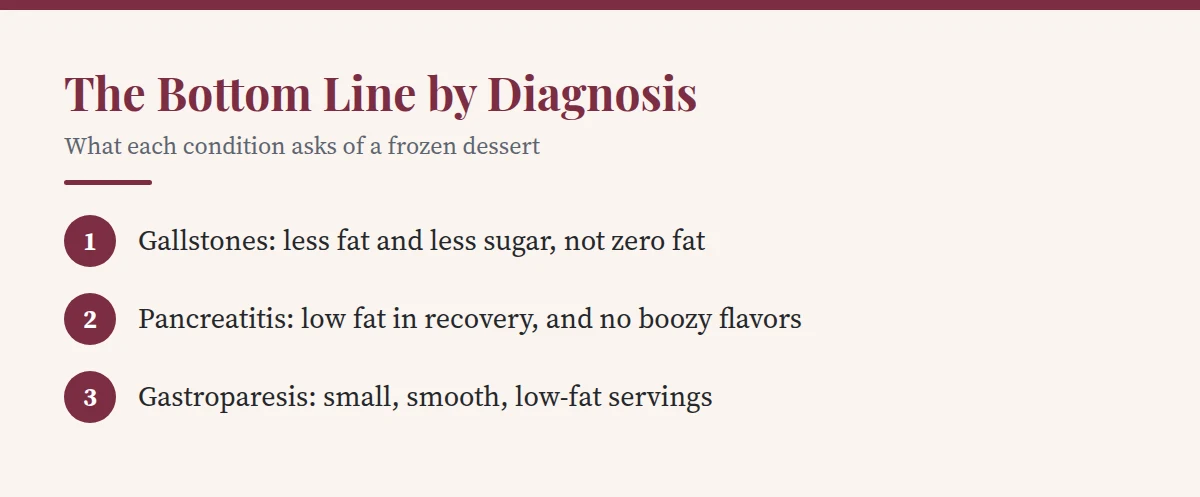
Dairy-free answers a milk question. On fat, a dairy-free pint is probably within a couple of grams of the dairy one it replaced, whichever plant is on the front. Sorbet, fruit ices and fruit juice bars are the formats that genuinely fit a low-fat plan. After a gallbladder attack, aim lower in fat and sugar rather than at zero. With pancreatitis, keep dessert low in fat while you recover, drop the boozy flavors for good, and ask whether a chronic diagnosis still calls for any restriction. With gastroparesis, go small, smooth and low in fat. Recipes change, so read the panel on every tub, and take the numbers to the team that knows yours.
Further reading (sources)
- NIDDK with its full guide to gallstones, from what sets off an attack to eating, dieting and surgery
- NIDDK on pancreatitis causes, treatment and the low-fat eating plan
- Craig and Brothers for fat and saturated fat in 358 dairy-free pints and 55 bars, base by base
- Moshtaghian and colleagues, comparing plant-based and dairy ice cream on the Swedish market
- USDA FoodData Central listing the nutrient profile of sorbet
- Code of Federal Regulations setting the two-thirds cup reference serving for frozen desserts, 21 CFR 101.12
- Code of Federal Regulations defining when a label may say low fat or fat free, 21 CFR 101.62
- Gebhard and colleagues on gallbladder emptying and gallstones during a near fat-free weight-loss diet
- Festi and colleagues comparing gallstone formation on 3 and 12 grams of fat a day
- Ribas Blasco and colleagues asking whether a low-fat diet helps after gallbladder removal
- Tenner and colleagues for the American College of Gastroenterology’s 2024 acute pancreatitis guideline, early low-fat feeding included
- Jacobson and colleagues on a randomized trial of clear liquids against a low-fat solid first meal after mild pancreatitis
- Arvanitakis and colleagues with ESPEN’s guideline on nutrition in acute and chronic pancreatitis
- Williams and colleagues, setting out the very-low-fat diet for familial chylomicronemia syndrome
- Homko and colleagues testing how fat and meal texture change gastroparesis symptoms
- Camilleri and colleagues for the American College of Gastroenterology’s 2022 gastroparesis guideline and its small-particle diet