The Complete Dairy-Free Frozen Dessert Guide for Fall and Thanksgiving
Published on September 12, 2026
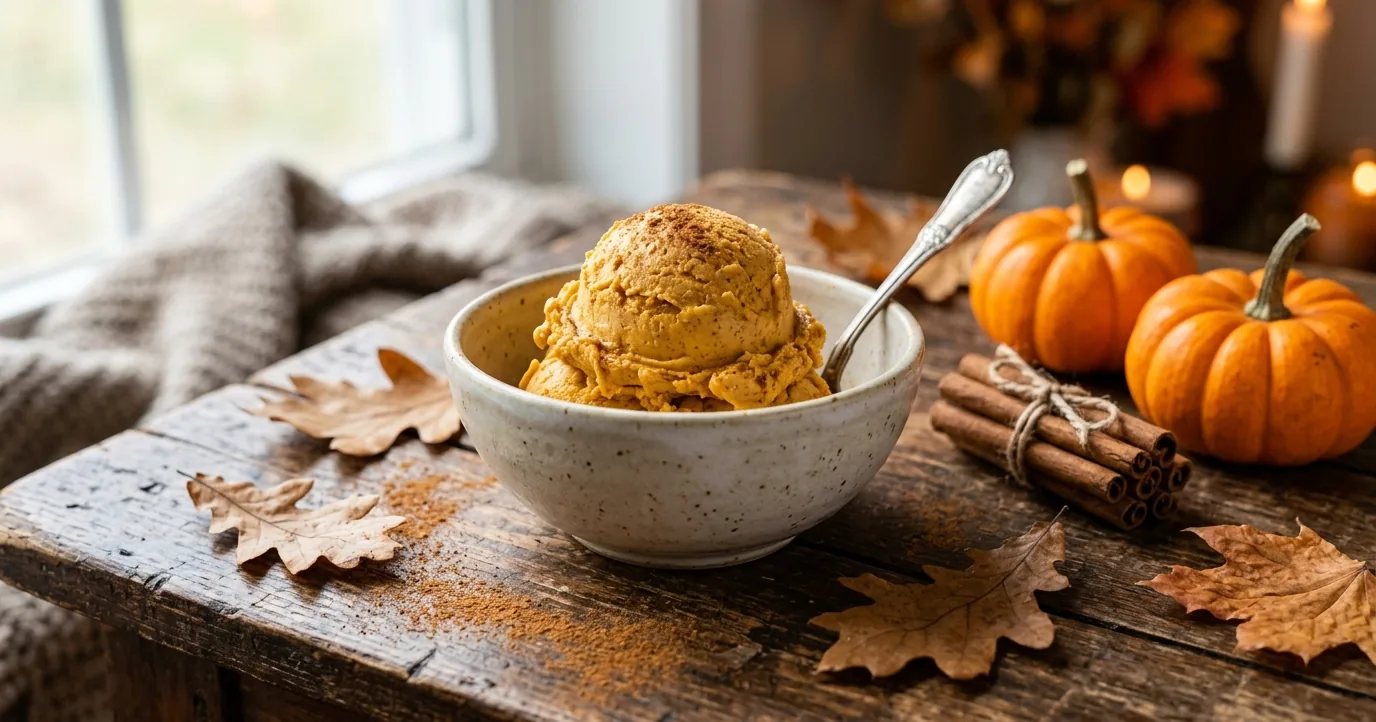
Frozen dessert gets written off the moment the weather turns. That is a hosting mistake, not a seasonal truth. A frozen pumpkin pie takes up no oven space on the one day of the year when oven space is the whole problem, and a cider sorbet cuts through a plate of food that was mostly fat and salt. The dairy-free cook has an extra reason to plan ahead: the autumn dessert canon runs on heavy cream, evaporated milk, and butter, and almost every version you will be handed at a potluck contains at least one of them.
This is the full season, from the first apple pick through the Thanksgiving table. The recipes below are built to be made days early, because that is when you will actually have time to make them.
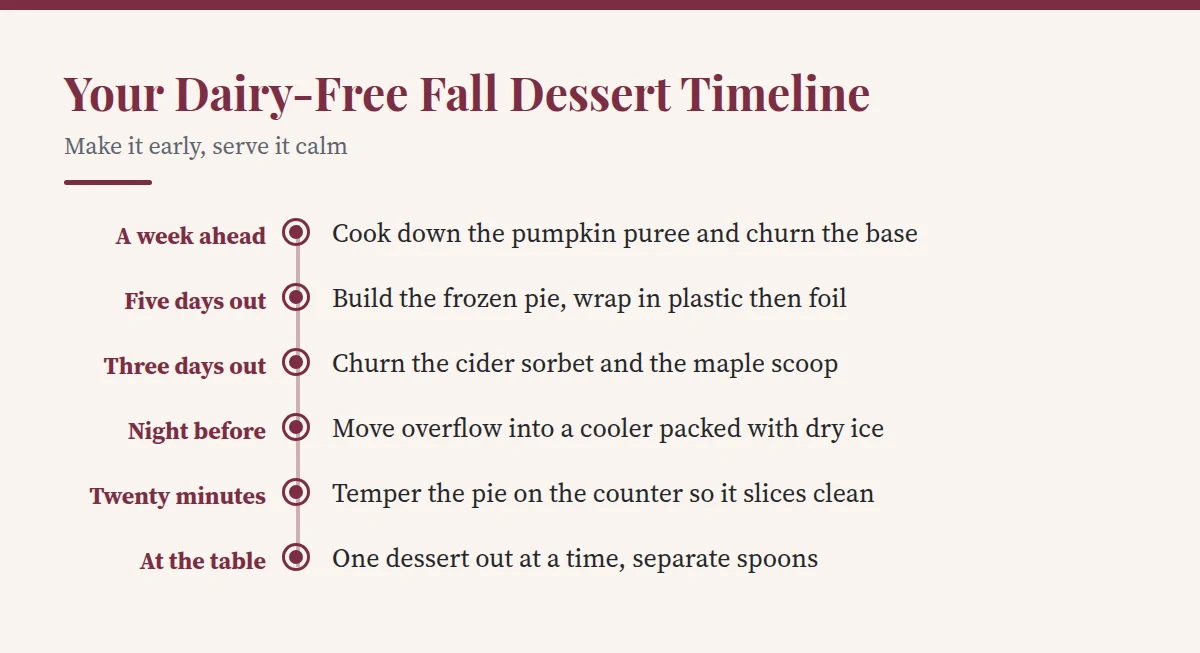
Why Pumpkin Bases Turn Gritty (and the Fix)
Pumpkin is the flavor everyone wants and the ingredient most likely to wreck the texture. Canned puree is roughly ninety percent water, and that water does not sit quietly. It freezes into crystals you can feel on the tongue, and the fiber left behind reads as chalky rather than creamy. Plenty of home cooks blame their machine for what is really a water problem.
Cook it down first. Put the can of puree in a wide skillet over medium heat and stir it for eight to ten minutes until it darkens, tightens, and pulls away from the pan in a mass. You are looking to lose about a third of the volume. This does two things at once: it removes the free water that would otherwise crystallize, and it concentrates the flavor so you need less puree to taste like pumpkin. A base carrying two thirds of a cup of cooked-down puree tastes stronger than one carrying a full cup raw.
Then bloom the spices in fat rather than stirring them into a cold base. Cinnamon, ginger, nutmeg, clove, and allspice are all fat-soluble, so thirty seconds in the warm pan with the puree gets more out of them than a tablespoon dumped into a cold mix. It is the same logic behind a good dairy-free pumpkin spice creamer, which builds its flavor into a fat base rather than dusting spice on top.
Fat is the other half of the answer. Pumpkin has none of its own, so the base has to supply it. Full-fat coconut cream is the reliable choice at around twenty percent fat, and the spice load is heavy enough to bury any coconut note. Cashew is the alternative if coconut is off the table for you. Oat alone will taste thin under this much spice unless you add a neutral oil.
A quarter teaspoon of xanthan or a half teaspoon of tapioca starch per quart will hold the rest of the water in place. That is the difference between a scoop that stays smooth for a week and one that goes sandy by Thursday. The full reference on which gums do what in a plant-based base covers the dosing if you want to tune it.
Cider Sorbet, and Why It Needs Boiling First
Apple cider sorbet is the sleeper hit of the season, and it fails for a sugar reason rather than a flavor one. Fresh cider runs around eleven to thirteen percent sugar. A sorbet needs somewhere near twenty-five percent total sugar to stay scoopable, so straight cider freezes into a solid pane of apple ice.
Reduce four cups of cider down to about one and a half over medium heat, which takes twenty-five minutes and turns the flavor from juice into something closer to apple caramel. Add three quarters of a cup of sugar, a cinnamon stick, a strip of lemon peel, and a pinch of salt while it is still warm, then chill it completely before churning. Boiled cider sold by the bottle works too, cut roughly one part to three parts fresh cider.
A shot of bourbon or calvados stirred in at the end keeps the sorbet soft and rounds out the finish, but alcohol depresses the freezing point fast and two ounces per quart is the practical ceiling before it refuses to set at all. The guide to how much alcohol a frozen dessert can carry has the full math, including which liqueurs quietly contain dairy.
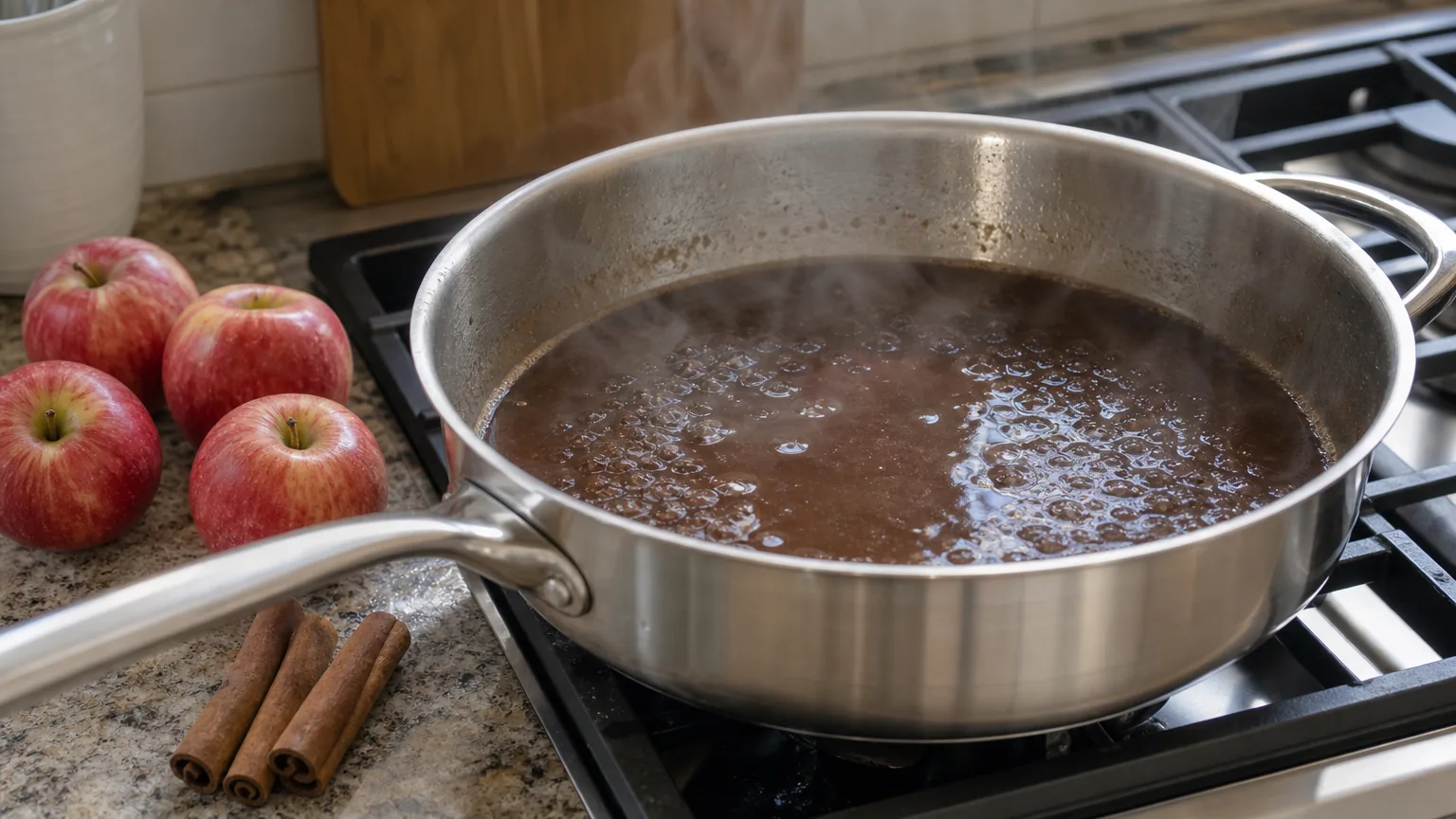
Maple is the other autumn sweetener worth building a dessert around, and it behaves differently from cane sugar. Maple syrup is about a third water, so it thins a base you have not adjusted for, and its glucose and fructose content lowers the freezing point more aggressively than sucrose does. The result is a softer, faster-melting scoop. Use Grade A Dark for flavor that survives freezing, hold it to about half the total sweetener, and expect to serve it a few degrees colder than usual. Our full breakdown of sweeteners in frozen desserts explains why the swap is never one for one.
If the orchard trip came home with more than apples, the last of the season’s peaches and plums still churn beautifully in early fall, and the stone fruit methods carry over directly.
The Make-Ahead Frozen Pie
This is the single best argument for a frozen dessert on Thanksgiving. It is finished days in advance, it needs no oven, and it survives a crowded table better than a custard pie does.
Build it in three layers in a nine-inch springform or a deep pie dish. The crust is crushed ginger snaps or graham crackers bound with melted coconut oil, pressed hard and frozen for twenty minutes while you work. Check that box: most commercial graham crackers contain honey and some contain butter, and ginger snaps vary by brand.
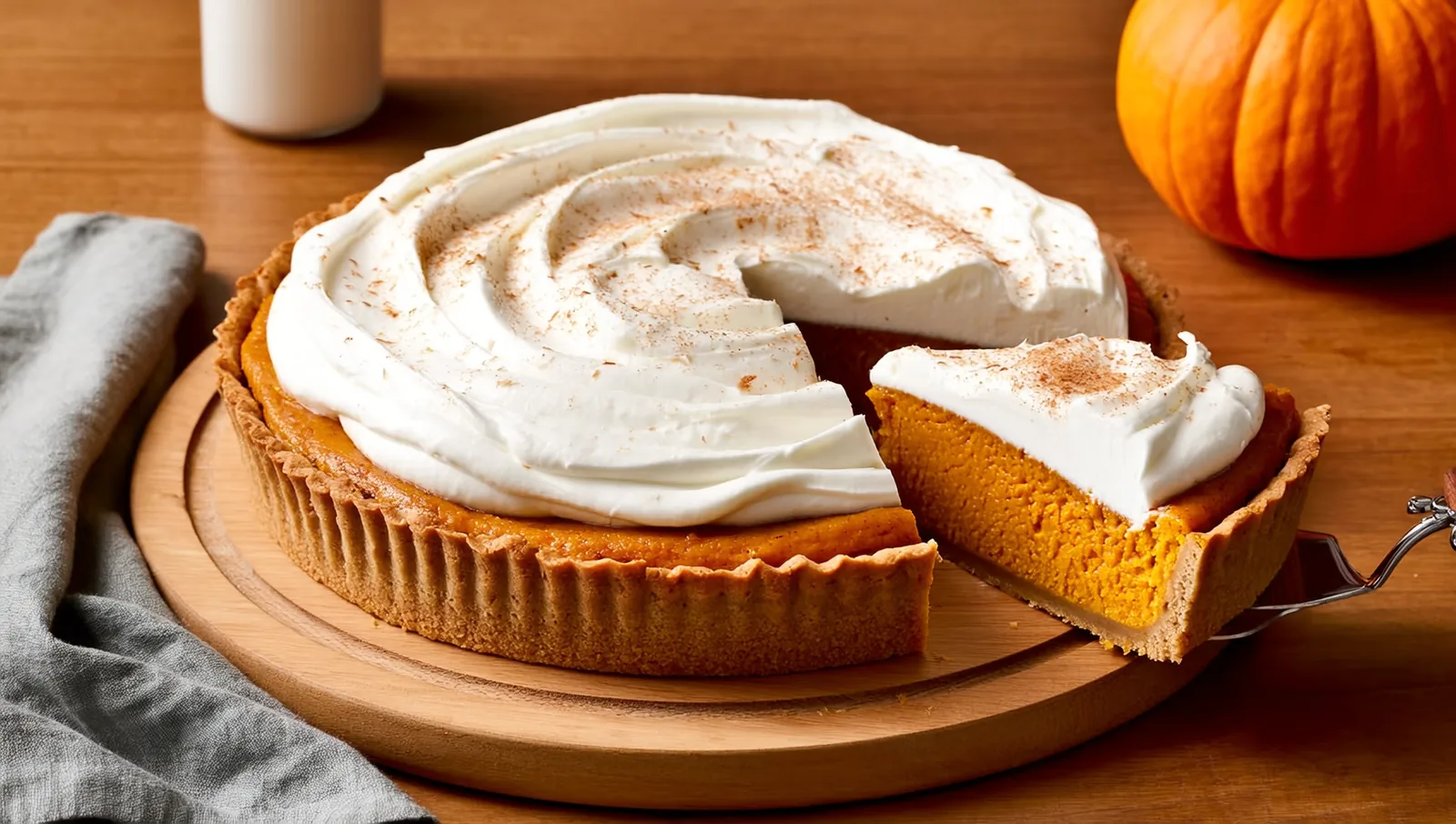
The filling is the cooked-down pumpkin base from the first section, churned and then spread while still soft. Drop in a swirl of maple caramel made with coconut cream if you want a second texture. Top it with a thick layer of whipped coconut cream, chilled overnight and beaten with a spoonful of powdered sugar and a little vanilla.
Freeze it uncovered for an hour so the top sets, then wrap the whole dish in plastic and again in foil. It will hold a week without losing anything. The bombe version is the same idea packed into a plastic-lined bowl, frozen solid, and turned out as a dome. It looks like far more work than it is.
Serve it after twenty minutes on the counter, not straight from the freezer. A frozen pie cut at zero degrees shatters rather than slices, and it tastes muted because cold suppresses sweetness and aroma. Dip the knife in hot water between cuts.
Holding Dessert in a Freezer That Is Already Full
Every make-ahead plan for a big meal collides with the same wall: the freezer is full of a turkey, stock, and pie dough by mid-November, and frozen desserts are the first thing to suffer for it.
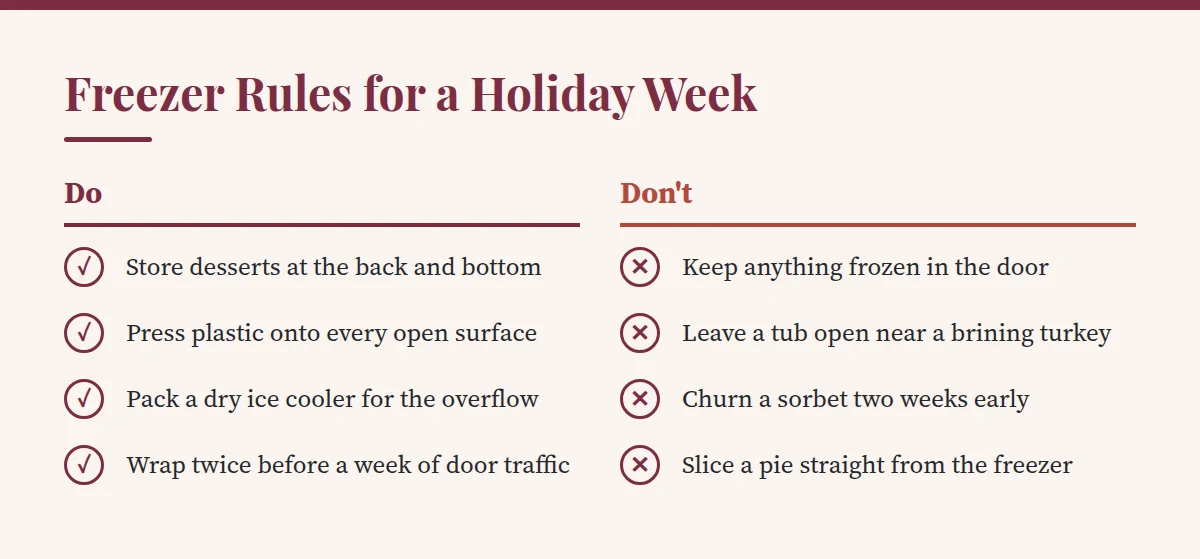
Temperature stability matters more than temperature itself. Every time the door opens, the surface of a dessert warms slightly and refreezes into larger crystals, and a week of that turns a smooth pumpkin base grainy. Keep desserts at the back and bottom where the swing is smallest, never in the door, and never next to the ice maker.
Plan for overflow before the week starts. A cooler packed with dry ice holds frozen desserts for a day or two and costs very little. Failing that, churn the sorbets closest to the day. Three days in a crowded freezer does a cider sorbet no harm, but two weeks of door traffic will coarsen it.
Wrap everything twice and press plastic directly onto the surface of any open container. Freezer burn is sublimation, not spoilage, and the cure is contact. Open air is also how a dessert picks up the smell of a brining turkey, which is not a flavor note anybody wants in maple ice cream.
The Store-Bought Shelf: Seasonal Is Not the Same as Dairy-Free
Autumn brings a wave of limited-edition pints, and the seasonal end of the freezer case is where the labeling gets sloppiest. A few rules hold up year to year.
Most major plant-based lines run a pumpkin or spiced flavor in the fall, and the base tells you what you are getting: coconut lines carry spice best, oat lines go creamier and milder. Check the current year’s label rather than trusting last year’s formula, because seasonal SKUs get reformulated more often than core flavors do.
Watch the mix-ins, which is where dairy hides in autumn flavors specifically. Caramel and dulce de leche swirls are milk-based by default. Cookie and graham pieces frequently contain butter. Anything calling itself pumpkin cheesecake is worth reading twice, since the cheesecake element is the usual culprit. And a front label reading “pumpkin spice” tells you nothing at all about the base. The label decoder walks through the allergen statement and the advisory language in detail.
One more distinction for a mixed table: a lactose-free seasonal pint is still real dairy with the milk sugar split, so it is not safe for anyone with a milk allergy. Serve it on the dairy side of the table, labeled honestly.
Running the Table
Put out one dessert at a time and keep the rest frozen. Label each dish with its ingredients rather than a claim, because “coconut cream, pumpkin, maple” answers an allergic guest’s question and “dairy-free” only starts a conversation. Give the plant-based desserts their own serving spoons and set them out first, before spoons have wandered.
Then take the win. You made dessert on Sunday, and on Thursday you take it out of the freezer.
Further reading (sources)
- Minimalist Baker on the pumpkin recipes that hold up without dairy
- Minimalist Baker for building pumpkin spice flavor into a dairy-free fat base
- Foods on how plant-based frozen desserts are formulated for texture
- U.S. Food and Drug Administration for how major allergens must be declared on packaged foods